Articles in this Volume

Research Article Open Access
The Dual Mechanisms Through Which Prepaid Membership Fees Influence Consumer Spending: A Mental Accounting and Status Signaling Perspective
With the swift rise of prepaid membership programs, the spending behavior of consumers has been affected. However, the psychological mechanisms underlying the way in which membership fees can affect post-membership consumption behavior remain unclear. The existing studies are mainly based on the mental accounting perspective. The status signaling perspective has been given relatively little consideration, thus, there are ambiguities in the relationship between the two mechanisms in influencing consumer spending behavior. This paper proposes a dual-mechanism framework, integrating mental accounting and status signaling, to investigate the effects of prepaid membership fees on post-membership consumer spending behavior. Quantitative and qualitative methods are used together in the research process. It is found that mental accounting significantly mediates the relationship between prepaid membership fees and consumer spending behavior, while the indirect effect through status signaling on consumers' post-membership spending behavior is not significant. This paper provides insight into the dual-mechanism structure of the prepaid membership fee effect.
Show more
Read Article PDF
Cite
Research Article Open Access
Financial Shared Services at SAIC Motor: Market Response and Outcomes
Under the background of digital transformation of enterprises, the financial sharing center has gradually transformed from accounting reimbursement center to data value creation center, and the construction of financial sharing architecture of large diversified groups has become a hot spot in practice. This paper takes SAIC as a research case to explore the market performance and implementation effect of the financial sharing model of automobile manufacturing diversification group. It is found that SAIC has achieved results in reducing operating costs, strengthening capital risk management and promoting the integration of industry and finance by adopting the differentiated path of building financial sharing centers in different sectors, but at the same time, there are practical pain points such as non-uniform standards, insufficient cross-departmental coordination, redundant approval process and difficult personnel transformation. This study enriches the case study of financial sharing of automobile diversification groups and provides practical reference for similar large-scale automobile enterprises to optimize the construction of financial sharing and release the value of digital financial management.
Show more
Read Article PDF
Cite
Research Article Open Access
Research on Supply Chain Disruption Risk Prediction Model Based on Machine Learning
Supply chain disruptions feature sudden occurrence, transmissibility and severe losses. Traditional risk management approaches relying on manual scoring and post-incident response fail to identify complex nonlinear signals in a timely manner. Targeting the demand for predictive decision-making in operations and supply chain management, this paper constructs a machine learning prediction framework consisting of data governance, feature engineering, model training, risk interpretation and response linkage, and compares Logistic regression, support vector machine, random forest and gradient boosting tree. The study demonstrates the model evaluation process using reproducible exemplary simulation data, and measures prediction quality comprehensively through accuracy, recall, F1-score and area under the receiver operating characteristic curve. The study holds that the value of machine learning does not lie in the mere pursuit of algorithmic accuracy, but in converting risk probabilities into operational actions such as inventory adjustment, multi-source procurement, transportation rerouting and supplier collaboration. The implementation of the model should be accompanied by the simultaneous establishment of data standards, threshold governance, interpretability mechanisms and rolling update systems. This framework can effectively integrate professional capabilities including supply chain management, risk statistical modeling, predictive analytics and AI-enhanced business analytics, providing actionable research insights for supply chain resilience building.
Show more
Read Article PDF
Cite
Research Article Open Access
Analysis and Prediction of the Debt Scale and Interest Rate Trends in Japan and Canada by Differential Equations
Article thumbnail
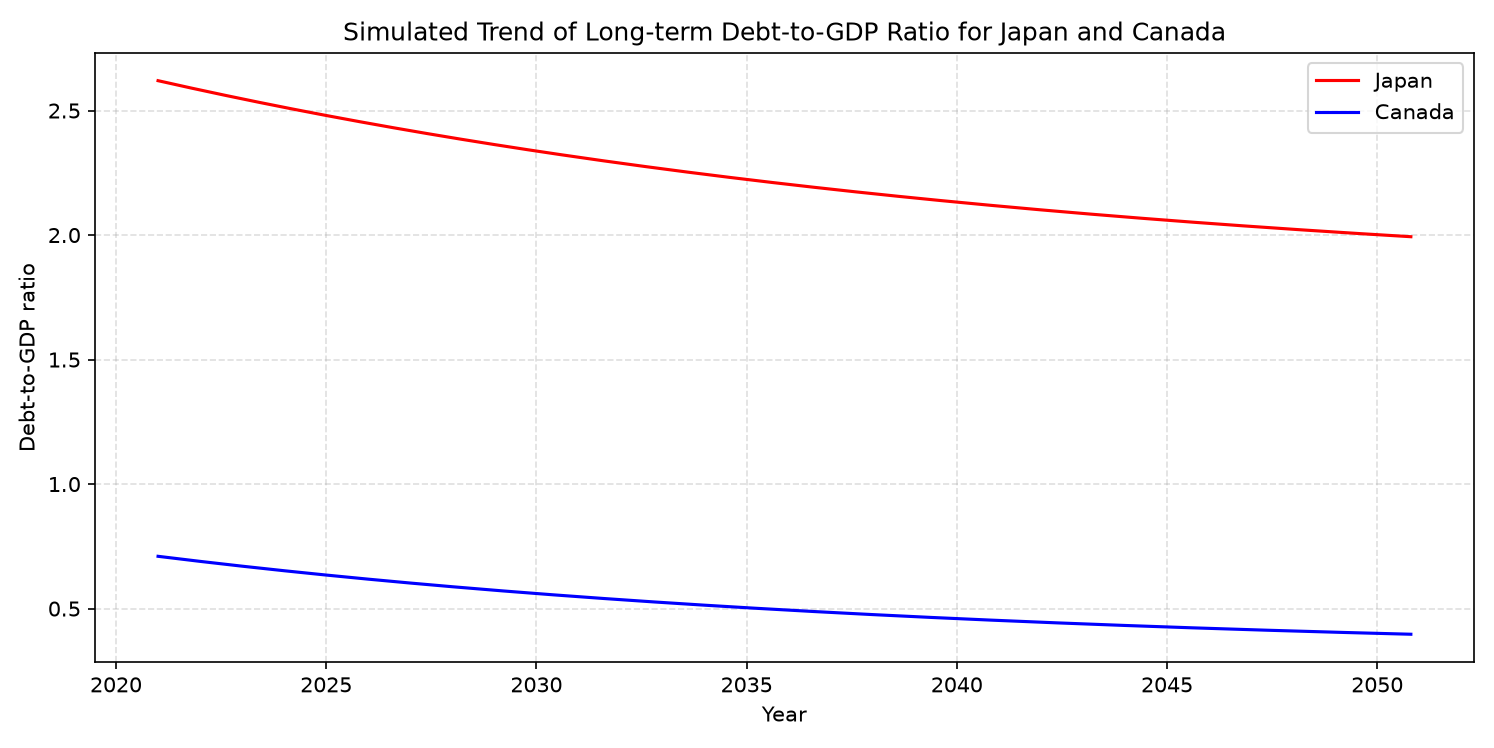
Advanced economies such as Japan and Canada have experienced long run fiscal deficits amid population ageing and public health crises, yet their debt to Gross Domestic Product (GDP) ratios follow markedly different growth paths. This paper builds a first order linear differential equation debt model incorporating the Bohn fiscal feedback rule, and adopts the integral factor method to explore debt evolution divergence and interest rate trends for the two sample economies. Results indicate that comparable deficit levels do not guarantee similar debt trajectories, as the interest growth gap and fiscal feedback intensity serve as core constraints for debt sustainability. Both countries meet the mathematical convergence condition for their debt systems, but Japan features a much higher steady state debt ratio that demands sustained fiscal adjustment. A critical upper bound of financing interest rate is identified; exceeding this threshold triggers exponential debt divergence even under fiscal rectification. Persistent primary deficits raise theoretical steady state debt levels and impede the realisation of long-term equilibrium. This study compensates for limitations of static debt models and provides quantitative references for sovereign debt risk evaluation and the optimisation of government financing strategies.
Show more
Read Article PDF
Cite
Research Article Open Access
Business Structure and Environmental Sustainability Strategy in China's EV Battery Industry: A Comparative Case Study of CATL and BYD
This study examines how business structure shapes the design and implementation of environmental sustainability strategies in China's EV-battery industry by comparing CATL, a specialised battery supplier, with BYD, a vertically integrated battery-and-vehicle producer. Using a qualitative comparative case-study design, it analyses corporate ESG and annual reports, official policy documents, academic literature and market-share data from 2023 to mid-2025. Drawing on sustainable supply chain management, global value-chain governance and the natural-resource-based view, the analysis identifies two overlapping coordination pathways. CATL's model is associated with more formalised inter-organisational carbon governance, supplier coordination and product-footprint accounting. BYD's integration supports closer links among battery-vehicle design, manufacturing efficiency and internal energy management, while still requiring upstream supplier governance. Market leadership can amplify implementation capacity but does not measure sustainability. The study shows that organisational boundaries shape where sustainability decisions and capabilities are coordinated across the value chain.
Show more
Read Article PDF
Cite
Research Article Open Access
Who Bears the Blame? Responsibility Attribution and Subsequent Donation Intentions Following Deceptive Nonprofit Crowdfunding
This paper analyzes how responsibility is allocated among non-profit organizations, crowdfunding platforms, and direct perpetrators after deceptive non-profit crowdfunding campaigns, and examines how these attributions relate to subsequent donation intentions. A cross-sectional, scenario-based quantitative survey was administered to Chinese participants, yielding 273 valid responses after comprehension-based screening. Participants evaluated responsibility assigned to the non-profit, platform, and perpetrator and then responded to three subsequent fundraising contexts involving repeated or different organizations and platforms. Multiple regression, ordinal and binary logistic regression, and nonparametric tests were used to examine the relationships among responsibility attribution, donation attitudes, and hypothetical donation amounts. The results show that participants assigned similarly high responsibility to all three actors rather than concentrating blame on a single party. Greater blame toward the non-profit and platform was associated with more negative attitudes toward a subsequent campaign involving the same non-profit, while responses toward unrelated charitable appeals remained comparatively positive. Donation attitudes were also positively associated with hypothetical donation amounts in two contexts. These findings suggest that deceptive crowdfunding may produce target-specific withdrawal rather than generalized avoidance of charitable giving, highlighting the importance of accountability, verification, and governance by both non-profit organizations and crowdfunding platforms.
Show more
Read Article PDF
Cite
Research Article Open Access
Information Advantage, Differentiated Pricing and Consumer Surplus: Algorithm Driven Dynamic Pricing of Online Ride Hailing Platforms
Article thumbnail
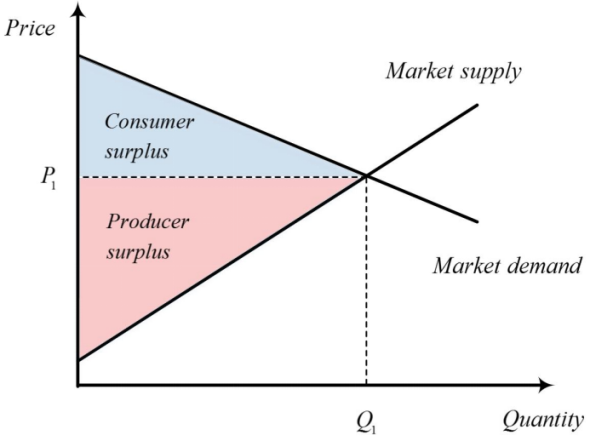
With the development of digital platforms, algorithmic dynamic pricing has been gradually applied to ride‑hailing and other markets. Taking ride‑hailing platforms as the research object, this paper analyzes how platforms leverage consumer demand differences and information advantages to implement dynamic pricing based on third‑degree price discrimination, two‑sided market theory and game theory, and discusses its impacts on market equilibrium and consumer surplus. The differences in consumers' willingness to pay and price elasticity provide the basis for the platform to implement differentiated pricing, and the information advantage of the platform further enhances its price adjustment ability. In the strategic interaction, dynamic pricing can not only adjust the relationship between supply and demand, but also transfer some consumer surplus to the platform. There are differences in the impact on high- and low-elasticity consumers. Therefore, this paper believes that dynamic pricing itself has a certain role in resource allocation, but when the advantages of algorithmic information are used for excessive differentiated pricing, it may damage consumer welfare. In this regard, regulatory measures including price constraints and algorithm information disclosure can curb the excessive expansion of platform pricing power while preserving the efficiency of dynamic pricing.
Show more
Read Article PDF
Cite
Research Article Open Access
Application of the Differential and Lagrange Mean Theorems to the Existence of Market Equilibrium and Consumption Stratification
The accumulation of household consumption data in the data economy provides a foundation for studying consumption differences. Traditional economics mostly relies on qualitative analysis, with insufficient mathematical deduction, making it difficult to depict consumer stratification and market equilibrium. This article is based on the Lagrange mean theorem and differentiation as tools, combined with consumption statistics data to explore the conditions for market equilibrium and the characteristics of consumer stratification among residents. By using differentiation to reflect the instantaneous changes of economic variables, the Lagrange mean theorem is applied to analyze the average variation law of indicators within the interval. Empirical analysis is carried out using official Consumer Price Index (CPI), agricultural wholesale price and household income expenditure panel data from Chinese statistical authorities. Studies show that, by combining two mathematical tools, the income threshold for consumption stratification can be determined, verifying that market equilibrium still holds in some non-traditional scenarios. This study applies mathematical theory to economic reality, providing mathematical references for consumer trend analysis and related economic decision-making.
Show more
Read Article PDF
Cite
Research Article Open Access
AI Washing and Stock Returns: Evidence from Chinese A-Share Firms
Artificial intelligence has become increasingly prominent in corporate disclosure, yet firms' AI-related narratives may not always be supported by observable investment in technology or human capital. Using AI-related keywords from annual reports, AI patents, and AI-related job postings of Chinese A-share firms from 2020 to 2025, we construct a firm-year measure to examine this disclosure-investment gap. We classify a firm as an AI washer when its AI-related disclosure is above the industry-year median, while both AI patent activity and AI-related recruitment remain below their corresponding medians. Firms meeting this definition are associated with lower annual stock returns, and the result remains qualitatively unchanged when we use alternative methods to identify AI patents. Additional tests point to two related market responses: AI washing is accompanied by more negative media coverage and weaker investor sentiment. The return discount is also more pronounced among firms with higher institutional ownership and among firms in regions with stronger local AI policy support. These results suggest that investors do not treat AI-related disclosure independently of observable corporate activity. Instead, the impact of AI narratives on stock returns appears to depend partly on whether firms can support those narratives with technological development and hiring.
Show more
Read Article PDF
Cite
Research Article Open Access
Mechanisms of Brand Authenticity Erosion in AI-Generated Advertising: A Systematic Review
The rapid adoption of generative artificial intelligence (GenAI) in advertising since 2022 has transformed content production while raising concerns about the preservation of brand authenticity, a critical foundation of consumer trust and brand relationships. This study examines how AI-generated advertising influences perceived brand authenticity, identifies the mechanisms driving authenticity erosion, and explains the contextual factors that account for inconsistent findings in prior research. Following PRISMA 2020 guidelines, this review synthesizes 13 studies published between 2022 and 2026 retrieved from the Web of Science Core Collection and EBSCOhost databases. Through thematic synthesis, this study identifies three interrelated mechanisms through which AI-generated advertising may undermine brand authenticity: disclosure effects, failed anthropomorphism, and sincerity erosion. The findings further reveal that the effects of AI-generated advertising on authenticity perceptions are contingent upon individual characteristics, product and brand contexts, and source-related factors, including AI capability beliefs, product type, luxury positioning, and communicator characteristics. This study develops an integrated framework explaining when and why AI-generated advertising enhances or undermines brand authenticity, thus providing theoretical insights for consumer research and practical implications for AI-enabled marketing decision-making.
Show more
Read Article PDF
Cite