Articles in this Volume

Research Article Open Access
Pain Points and Optimization Paths of the Last-Mile Supply Chain under the Community Group-Buying Model: A Case Study of Meituan Select
Driven by the growth of Internet retail and local life services, community group buying has emerged as a new retail format that distributes fresh produce and daily consumer goods in residential communities through a model of online pre-sales, centralized platform procurement, and next-day pickup. Taking Meituan Select as a case study, this paper examines the last-mile supply chain of the community group-buying model, and analyzes pain points in its last-mile fulfillment system from the dimensions of grid warehouse operation and logistics coordination. The core bottlenecks of Meituan Select's last-mile supply chain include low manual sorting efficiency, unstable coordination between line-haul transportation and last-mile delivery, insufficient cold-chain protection for fresh products, weak governance over grid warehouses and community group leaders, and limited end-to-end information synergy. These problems mainly stem from the mismatch between rapid business expansion and infrastructure construction, increased management difficulty caused by dispersed last-mile nodes, and insufficient investment in digital and intelligent facilities. To address these issues, this paper puts forward four optimization proposals: promoting the standardization and digital upgrading of grid warehouses, strengthening coordination between line-haul and last-mile operations, improving the cold-chain fulfillment system for fresh products, and optimizing the governance mechanism for franchisees and community group leaders.
Show more
Read Article PDF
Cite
Research Article Open Access
Digital Finance Alleviates the Financing Problems Faced by Small and Medium-Sized Enterprises
The funding problem is a big challenge in the development of Small and Medium-sized Enterprises (SMEs), although SMEs play an important role in economic development. In the rapidly developing digital finance era, how to leverage digital finance to solve the financing issues of SME has become an important research topic. However, in terms of existing research, mainly studies on the positive side of digital finance in the context of financing of SMEs are found. This paper uses literature review method, analyzes the current situation of digital finance and SME financing, comprehensively discusses the two-way influence relationship between digital finance and SME financing, not only provides opportunity but also the potential risk for SMEs to solve the financing problem, discusses the countermeasures from the three perspectives of SMEs, financial institutions and government, to jointly improve the financing ability of SMEs, help SMEs solve the financing problem, provide reference for SMEs to improve financing ability.
Show more
Read Article PDF
Cite
Research Article Open Access
Social Media Content Marketing and Brand Value of Celebrity IP Derivatives: A Comparative Case Study of TF Entertainment and HYBE's Weverse Ecosystem
In recent years, digital entertainment and fan‑driven consumption have gained rapid popularity worldwide. With the rapid development and widespread use of diverse social media platforms, celebrity IP derivatives have become a vital and fast‑expanding segment of the fan‑economy market; mainstream platforms such as TikTok and Xiaohongshu play a decisive role in shaping and sustaining the long‑term brand value of celebrity‑related products. This essay combines literature analysis with practical case review, exploring how social‑media‑based content marketing constructs fan engagement and deepens emotional connection between audiences and idols, so as to generate and enhance the brand value of celebrity IP derivatives. This paper adopts a comparative case analysis approach, selecting two representative idol‑operation enterprises, TF Entertainment and HYBE with its Weverse ecosystem, to systematically compare their content output strategies, community‑building modes, and commercial transformation paths. It further discusses prominent potential industry risks, including excessive commercialization, fan emotional burnout caused by repetitive content and high‑intensity fan labor, as well as product quality mismatches. The conclusion offers targeted suggestions for sustainable celebrity IP management and practical references for marketing contemporary cultural and fan‑oriented products.
Show more
Read Article PDF
Cite
Research Article Open Access
From Repetition to Maintenance: How Digital Transformation in Chinese Manufacturing Reshapes Workers' Skill Requirements
In recent years, China's manufacturing sector has undergone rapid digital transformation, creating a growing demand for a workforce with capabilities relevant to smart manufacturing, while educational requirements for factory based positions are generally on the rise. However, existing research has focused primarily on job displacement and wage gaps, leaving the transformation of individual-level worker skill requirements largely under-explored, and failing to provide targeted actionable evidence for local vocational training system design. This paper examines how digital transformation shifts skill requirements for manufacturing workers in China from repetitive manual tasks toward machine operation, equipment maintenance, and digital systems management. This paper adopts a theoretical approach, drawing on existing academic literature and statistical data, supplemented by a practitioner interview with a Chinese manufacturing company owner, to examine how digital transformation in Chinese manufacturing reshapes workers' skill requirements. This paper finds that digital transformation contributes to a K-shaped labor market, where high-skill workers benefit while low-skill workers face displacement and wage stagnation. To adapt, manufacturing workers must develop new competencies including equipment operation, maintenance, and digital systems management. The paper further argues that targeted government vocational training policies and corporate training programs are essential to support workers through this transition.
Show more
Read Article PDF
Cite
Research Article Open Access
International Market Entry Strategies in the Fashion Industry: A Comparative Analysis of Three Entry Models
Article thumbnail
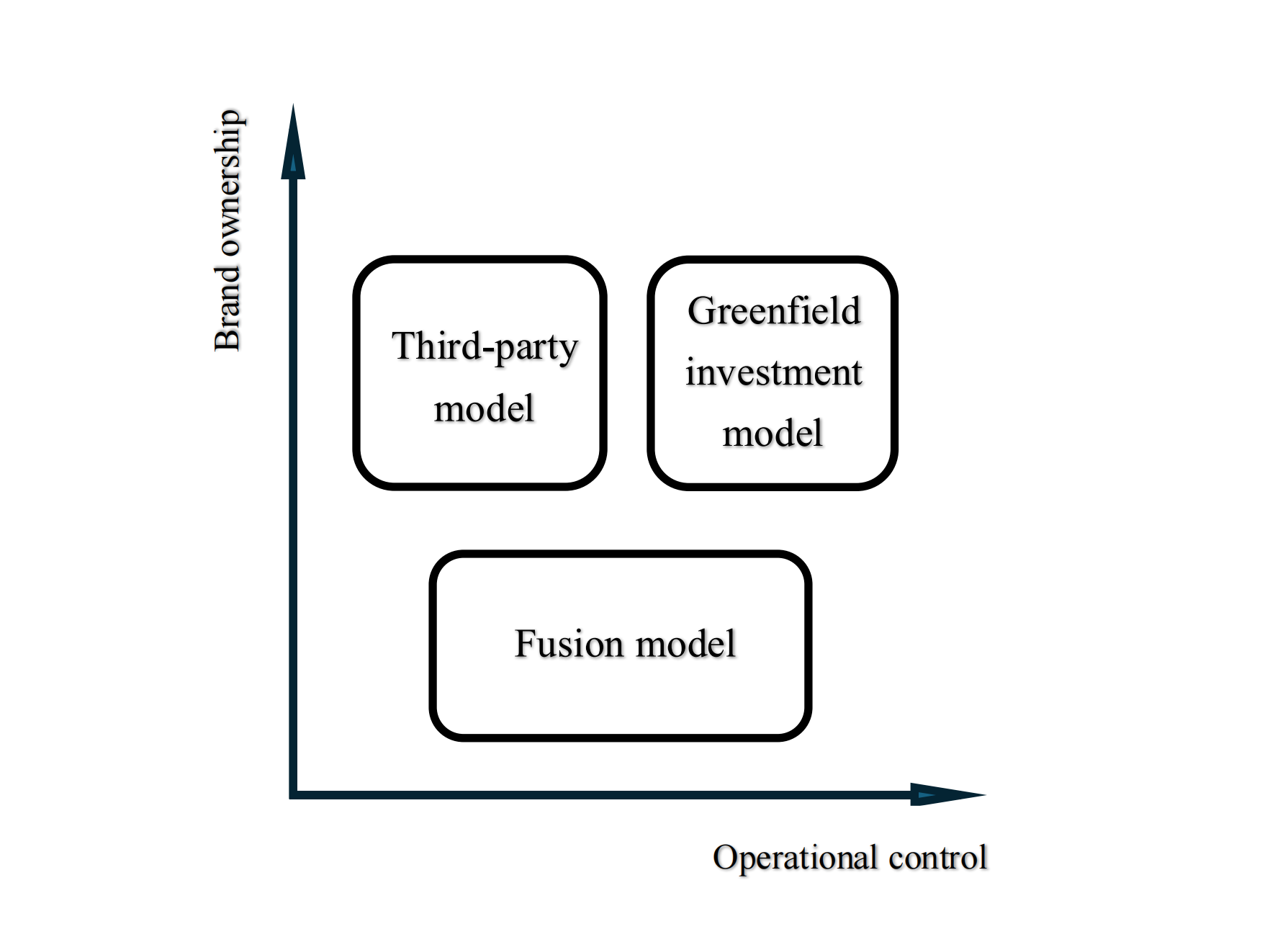
Amidst global supply chain realignments and intensifying competition in the fashion industry, international market entry has become imperative for brands seeking expansion beyond domestic saturation. Considering fashion companies' unmatched desire to find fitting globalization strategies, this paper classifies and compares common patterns for garment companies to enter new foreign markets. This study adopts literature research and case study methodologies to analyze the entry methods that famous international fashion brands applied and categorize common entry strategies from existing research. As a result, three models are classified based on the principal company's autonomy and control over the offshore business. The greenfield investment model enables the company the greatest flexibility and control with the greatest risk and potential return. The third-party model compromises slight autonomy and gains assistance from local intermediaries. The fusion model shares portions of the subsidiary's ownership with the partners, lowering the control and risk exposure simultaneously. This classification is oversimplified but provides several classic alternatives, allowing fashion companies to reflect on and tailor a strategy based on the three models.
Show more
Read Article PDF
Cite
Research Article Open Access
Artificial Intelligence in National Security: Applications, Risks, and Governance Pathways
With the rapid development of artificial intelligence (AI), its applications have gradually expanded from the commercial and civilian sectors to national security fields such as military security, cybersecurity, and critical infrastructure protection. Using a literature review and case analysis approach, this article examines the main applications of AI in different security scenarios and the risks they bring. The study finds that AI can improve the information processing and response capabilities of the national security system by enhancing the efficiency of multi-source information processing, strengthening threat identification and prediction capabilities, and increasing the autonomy of military systems. However, enhanced AI capabilities do not necessarily lead to higher levels of security. Its national security applications face three interconnected risks: technical unreliability, malicious use, and strategic instability arising from the security dilemma. Therefore, this article argues that AI governance cannot rely solely on technological improvements. Instead, it requires a governance path comprised of technical safeguards, risk-based regulation, and international cooperation. This should be achieved through testing, auditing, human-in-the-loop mechanisms, and confidence-building measures (CBMs) to mitigate the risks posed by technological errors, malicious misuse, and strategic miscalculations. Overall, the key to AI governance is not restricting AI's entry into the national security domain, but rather establishing corresponding control, oversight, and international coordination mechanisms while enhancing its security capabilities.
Show more
Read Article PDF
Cite
Research Article Open Access
Marketing Strategies of Enterprises' International Development in a Digital Environment: A Literature Review Based on Cross-Cultural Social Media Communication
Digital transformation has reshaped firms' international marketing practices, with social media emerging as a vital communication channel for global brand outreach, yet cross‑cultural frictions often weaken marketing effectiveness. This paper adopts the literature review method. By sorting out studies collected from mainstream academic databases, it explores digital international marketing, cross‑cultural social media communication and corresponding corporate strategies. It first analyzes how digital platforms and big data analytics remodel traditional ways to enter foreign markets, pushing firms to focus more on long‑term brand relationship building. Drawing on cross‑cultural dimension theories, this work discusses how cultural differences exert moderating impacts on marketing performance, and explores the balance between global standardization and localized operation. It further investigates creator collaboration and interactive two‑way social media tactics, with special focus on resource‑constrained small and medium‑sized enterprises. This literature review also highlights the value of combining digital capabilities with culture‑responsive marketing practices during overseas expansion. Such integration enables firms to lift audience engagement, strengthen brand trust and adapt marketing plans to diverse consumer contexts. Finally, this review identifies research limitations including scarce cross‑national comparative evidence and insufficient studies on long‑term brand reputation. It also offers suggestions for future empirical exploration.
Show more
Read Article PDF
Cite
Research Article Open Access
The Effects of Widespread Application of Personalized Pricing Technology
Article thumbnail
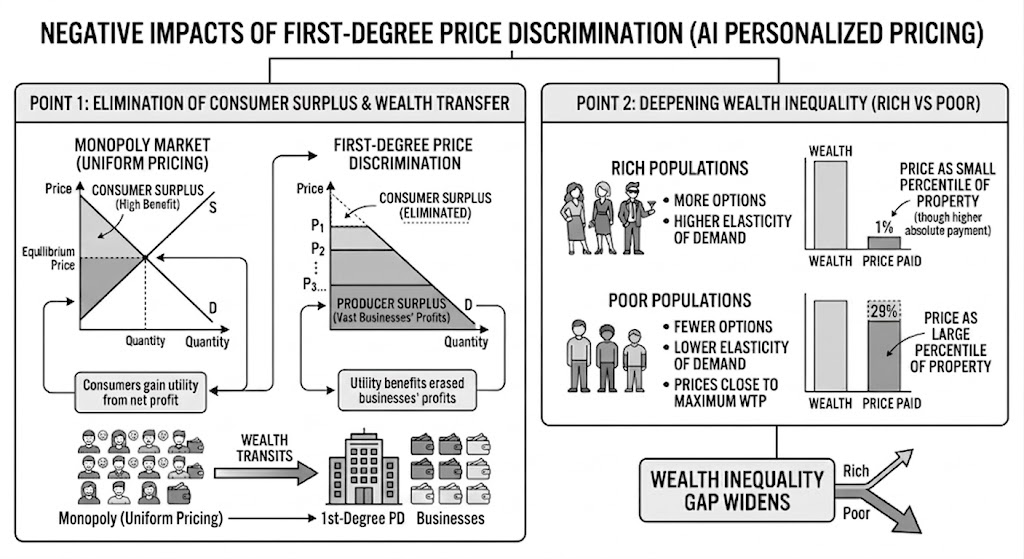
Digital technologies and artificial intelligence enable firms to adopt personalized pricing on an increasing scale. This paper examines the broad consequences if such pricing practices become commonplace, adopting a multi-angle framework covering microeconomics, macroeconomics, social relations and political outcomes. The analysis tracks how market structures may evolve from monopoly towards oligopoly, alongside strategic behavior between buyers and sellers within repeated market exchanges. The analysis confirms that personalized pricing may deliver short-run efficiency gains and higher firm returns at a microeconomic level. In the longer run, however, a wide range of adverse effects emerge: widening wealth gaps, strengthened barriers for new market entrants, weaker innovation incentives, declining consumer confidence and heightened risks of social tension. The paper argues that, without effective oversight, the social and economic burdens of unrestricted personalized pricing exceed its advantages. Targeted governmental oversight and rules governing algorithmic systems are therefore required to reconcile market efficiency with fair outcomes.
Show more
Read Article PDF
Cite
Research Article Open Access
The Effects of Widespread Application of Personalized Pricing Technology
With the advancement of digital and artificial intelligence technology, personalized pricing has gradually moved from theoretical price discrimination to large-scale practical application in market transactions. This study comprehensively explores the multi-dimensional impacts of widespread personalized pricing by integrating microeconomic and socioeconomic analytical frameworks. It analyzes the uncertain effects of this pricing model on corporate profits and economic welfare under different market structures, and further discusses consumers' differentiated attitudes, ethical dilemmas and regulatory challenges brought by personalized pricing. The research finds that the actual influence of personalized pricing depends on multiple core factors including market competitiveness, economic effect proportion, public fairness perception and institutional supervision conditions. This pricing model fails to bring absolutely positive economic and social benefits, and will reshape the balance between economic efficiency and social equity in digital markets.
Show more
Read Article PDF
Cite
Research Article Open Access
The Impact of Social Media Marketing on Blind Box Purchase Intention: A Case Study of Content Dissemination on Xiaohongshu and Douyin
Article thumbnail
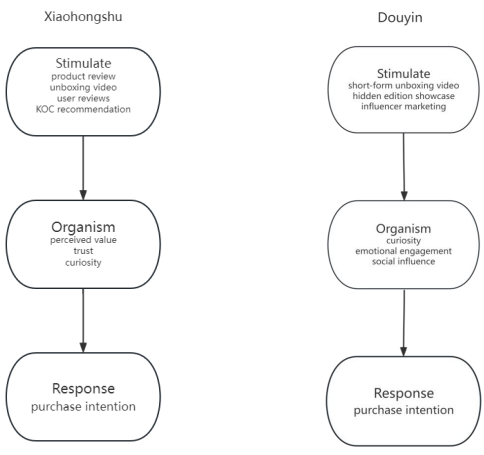
The swift evolution of social media marketing has established platforms like Xiaohongshu and Douyin as pivotal conduits for disseminating product details and engaging with consumers. Concurrently, the inherent characteristics of blind box consumption—namely its unpredictability, entertainment appeal, collectibility, and emotional resonance—have garnered significant attention from young consumers in recent years. The convergence of the blind box economy with social media marketing strategies not only facilitates the transmission of fundamental product information but also ignites consumer curiosity. Factors such as heightened emotional engagement, elevated perceived value, and amplified social influence directly shape purchasing intentions. While existing literature predominantly focuses on individual determinants of blind box consumption or the broader landscape of social media marketing, there remains a notable scarcity of research addressing this topic. This study investigates the variations in how distinct categories of social media platforms impact consumer behavior regarding blind boxes, with a specific focus on comparing Xiaohongshu and Douyin. Grounded in the Stimulus-Organism-Response framework, the research employs a mixed-method approach comprising literature reviews, case studies, and textual analysis to examine blind box-related content on these two platforms. By synthesizing the observed disparities, this paper aims to deepen the understanding of the psychological mechanisms driving blind box purchases within the context of social media marketing. Furthermore, the findings are intended to offer strategic guidance for blind box brands, enabling them to develop differentiated content marketing strategies that align with the unique characteristics of each social media platform.
Show more
Read Article PDF
Cite