Articles in this Volume

Research Article Open Access
The Impact of Public Opinion Response of Beauty Listed Companies on Stock Prices
Article thumbnail
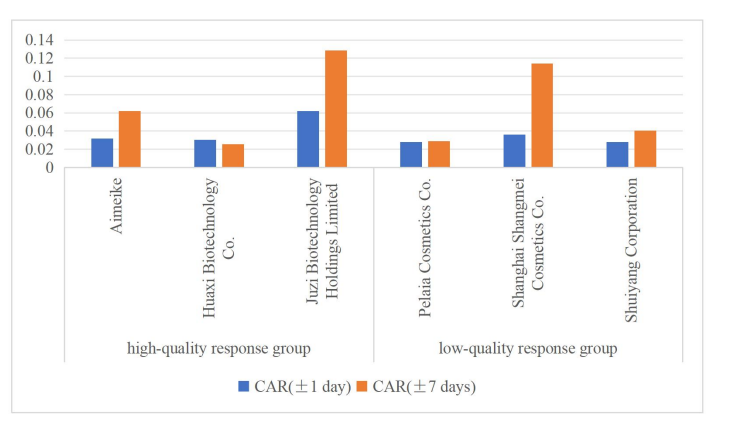
With the development of the Internet and online shopping, the existing research mainly focuses on the stock price changes after the emergence of public opinion, but the impact of the company's public opinion response on the stock price has not been fully considered. This paper selects six typical beauty listed companies as research samples and applies the event study method to collect stock price data before and after public opinion events, as well as corporate responses. Through the short-term event study method, the results show that the quality of the company's public opinion response has a significant impact on the stock price. Among them, the average cumulative abnormal rate of return in the high-quality response group within 7 trading days after the response is 0.302, while the average in the low-quality response group is 0.023, and the average difference between the two groups is 0.279, which has obvious economic significance. The findings expand relevant theoretical research on crisis communication and capital market reactions and provide quantitative references for listed beauty enterprises to optimize public opinion response strategies.
Show more
Read Article PDF
Cite
Research Article Open Access
The Relationship Between Share Repurchases and Corporate Performance: Evidence from Midea Group
Article thumbnail
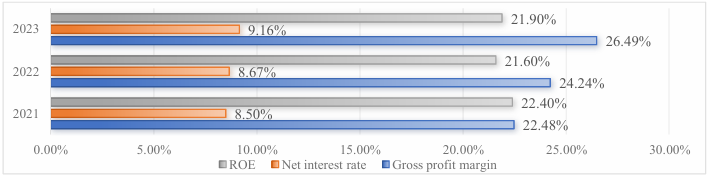
With the increasing prevalence of share repurchases in the A-share market, it has become a common practice for listed companies to optimize capital structures and convey business confidence via share repurchases. Taking Midea Group's share repurchase activities from 2021 to 2023 as the research object, this paper adopts the case study method to analyze the internal relationship between share repurchases and corporate performance from four dimensions: profitability, solvency, operating capacity, and growth capacity. This study finds that Midea Group implements regular share repurchases based on stable revenue and profits as well as sufficient cash flow, which effectively optimizes the capital structure and increases market confidence. Meanwhile, sound operating performance provides financial support for repurchases, and the two form a benign and mutually reinforcing relationship. This paper breaks through the previous one-way causality conclusion and verifies the applicability of the signal transmission theory. It provides a practical reference for listed companies in the household appliances and manufacturing industry to reasonably carry out share repurchase, balance enterprise development and shareholder return, and also provides a basis for investors to rationally judge repurchase behavior.
Show more
Read Article PDF
Cite
Research Article Open Access
Corporate Greenwashing, Information Asymmetry, and Debt Financing Costs
Against the continuous advancement of green financial policies and the dual-carbon goal, corporate greenwashing has gained growing market attention. According to the model of A-share public companies, this paper measures the green drift behavior by using the deviation between practical environmental performance and enterprise environmental information disclosure, and examines the impact on debt costs and the transmission effect of information asymmetry. Empirical results show that higher greenwashing intensity correlates with lower corporate debt financing costs. Further analysis shows that greenwashing behavior will significantly aggravate information disclosure and push up the cost of debt financing through this channel. The results show that bleaching green does not improve the financing conditions of claimant enterprises, but increases the risk compensation requirements of claimants by weakening the authenticity of information disclosure. This paper enriches research on the consequences of greenwashing the economy from the perspective of corporate debt financing and provides substantial evidence for improving the supervision of ESG disclosure and improving the efficiency of debt pricing.
Show more
Read Article PDF
Cite
Research Article Open Access
The Cointegration Between Gold Price and Stock Market Volatilities: Evidence from S&P500
Article thumbnail
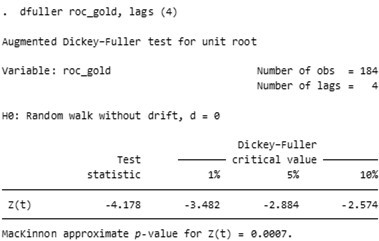
The purpose of this paper is to delve into the relationship between three economic variables: gold price, stock market volatility and oil spot price, employing a 3-variable Vector Autoregression (VAR) model. Among the three variables, stock market volatility is measured by the CBOE VIX index, while oil prices are gauged by the spot price of WTI crude oil. This paper applies monthly data covering the period from January 2010 to October 2025 in order to test research hypotheses that the three variables are interrelated. The paper employs unit root tests and descriptive statistics to ensure data are stationary, a VAR model to measure the directions of the interrelations and a Granger causality test to further confirm the existence of correlation. Model estimation result demonstrates a unidirectional relation from VIX index to WTI spot, while Granger causality test reveals no direct cause-effect relationship in between, so their interaction can be more complicated. The empirical result validates the safe-haven properties of gold, as evidenced by existing literature.
Show more
Read Article PDF
Cite
Research Article Open Access
The Impact of New Energy Vehicle Price Wars on Capital Market Reactions: Evidence from BYD's 2025 Price Cut Event
Against the rapid expansion of China's new energy vehicle sector, major automakers have launched fierce price competition driven by profit-seeking motives, triggering industry-wide price wars. This article focuses on the price war in the new energy automobile industry, explores the mechanism by which the price war affects the capital market, and confirms that media sentiment has a magnifying effect during the price war. Based on the data about stocks from the RESSET database, this article takes the BYD price reduction event that occurred on May 23, 2025, as an example. Adopting the event study approach and market model, this paper explores capital market reactions triggered by industrial price competition. Media news sourced from Sina Finance is collected to verify the amplifying effect of media sentiment on capital market fluctuations during price wars. The study finds that: first, the price reduction strategy of a single enterprise is not the reason for the sharp reaction of the capital market, but the vicious competition of enterprises in the price war. Second, in the price war, media sentiment does have the effect of magnifying the reaction of the capital market. Therefore, this paper reveals that the vicious price war will lead to a negative impact on the capital market, and automobile enterprises should focus on the improvement of technology, from price competition to value competition.
Show more
Read Article PDF
Cite
Research Article Open Access
Financial Self-Media, Emotional Contagion and the Dynamic Evolution of A-Share Thematic Premiums: A Multi-Case Study of the Post-September 2024 Market
China's A - share market has seen a record surge in new individual investors since September 2024. For these first - time market participants, non - traditional platforms like Douyin (TikTok China) and Xiaohongshu have replaced brokerage research reports as their primary source of financial information—a shift that has rewritten how information spreads across the market .Most existing studies focus on sentiment effects from traditional financial media, creating a significant gap in the authors' understanding of these emerging cross - platform influencers and the unique market dynamics driven by young, digitally native investors. Drawing on behavioral finance theories of limited attention, emotional contagion, and noise trading, this paper analyzes seven major thematic market cycles that unfolded after September 2024 to map how financial self - media shape thematic premiums across their entire lifecycle .The authors find that self - media have become the most powerful amplifiers of A - share thematic premiums in this new era. By directing investor attention and accelerating emotional spread, they now dominate price movements in speculative themes and sectors with high information asymmetry. Their role shifts systematically across the premium cycle: they build initial consensus during the launch phase, drive exponential growth during amplification, and accelerate sharp reversals when sentiment collapses .The strength of this effect depends on three key factors: sectors with stronger storytelling potential, weaker earnings verifiability, and higher retail trading participation see far greater self - media - driven price swings.
Show more
Read Article PDF
Cite
Research Article Open Access
The Impact of Environmental, Social, and Governance (ESG) Factors on Corporate Sustainability: A Case Study of Technology Companies
This study examines the relationship between Environmental, Social and Governance (ESG) factors and corporate sustainability performance in the technology industry. As ESG standards increasingly influence investment decisions and public perception, technology companies are under pressure to adopt sustainable business models while maintaining innovation and profitability. Using a qualitative case study approach, this paper analyzes the ESG strategies of Apple and Microsoft, focusing on environmental responsibility, social inclusion, and governance transparency. The findings indicate that firms with stronger ESG performance often achieve better brand reputation, stronger stakeholder trust, and improved long-term competitiveness. Nevertheless, this study also identifies prevailing challenges including high ESG implementation costs, ambiguous regulatory frameworks, and difficulties in quantifying ESG performance. The study concludes that ESG practices should not be viewed solely as ethical obligations, but also as strategic tools that enhance resilience and sustainable growth. The research contributes to current discussions on sustainability management by providing practical insights into how ESG initiatives influence corporate development within the technology sector.
Show more
Read Article PDF
Cite
Research Article Open Access
Transnational Equity Joint Ventures and Enterprise Internationalization: Empirical Evidence from Listed Companies in China
Article thumbnail
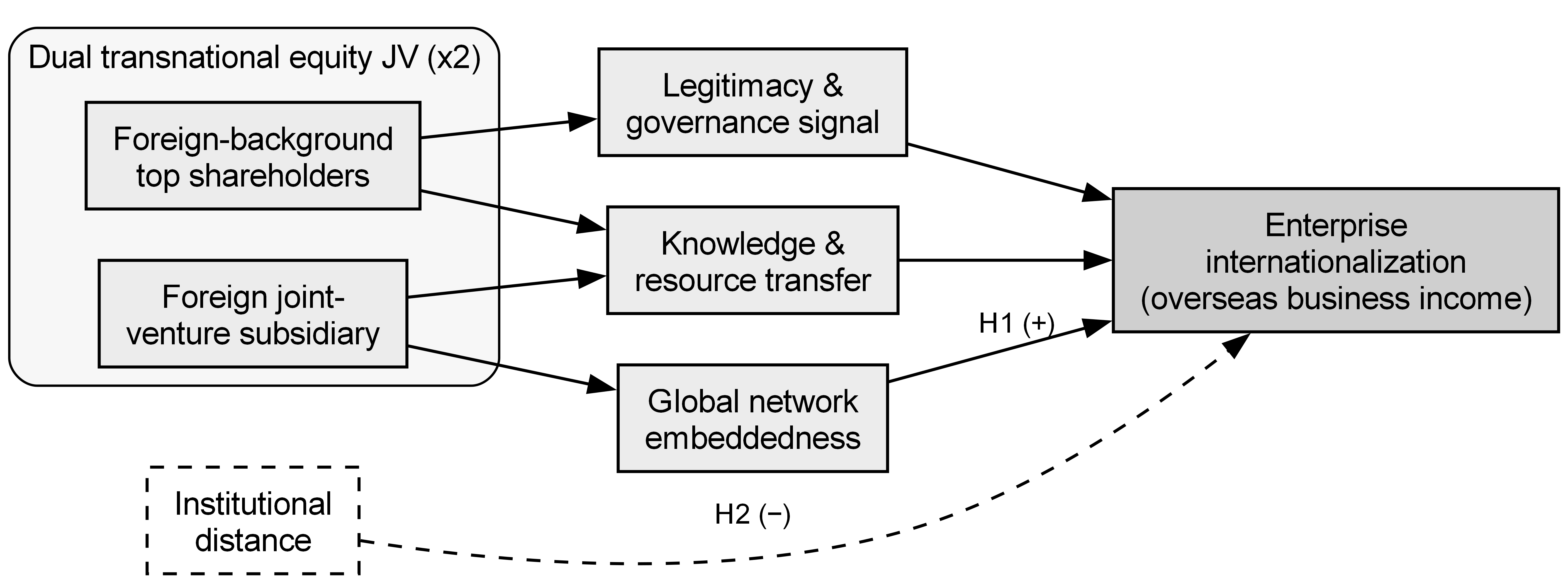
Under the background of high-level two-way opening up, the "double transnational equity joint venture" in which foreign shareholders and foreign subsidiaries coexist is becoming more and more common, but its microscopic impact on the internationalization of enterprises still lacks systematic evidence. This paper takes China's A-share listed companies from 2013 to 2024 as a sample, constructs a double transnational equity joint venture index, and uses the two-way fixed effect model of enterprise and year to test it. The study found that the dual transnational equity joint venture significantly increased the overseas business income of enterprises. The conclusion was to maintain stability under the lag treatment and the six types of robustness test; the relationship of negative adjustment of the institutional distance, the greater the distance, the weaker the promotion effect; heterogeneity analysis shows that the promotion effect is more prominent in non-state-owned enterprises. This article expands the interpretation logic of enterprise internationalization from the perspective of micro-equity structure, which is of reference significance for enterprises to steadily promote "going out" with the help of foreign equity association.
Show more
Read Article PDF
Cite
Research Article Open Access
Science and Technology Finance and the Development of New Quality Productive Forces in the Artificial Intelligence Industry
The artificial intelligence (AI) industry is a strategic emerging sector with strong innovation potential but high financing pressure. In the Chinese policy context, developing new quality productive forces (NQPF) requires financing structures that support technological upgrading, long investment cycles, and high uncertainty. Using firm-level panel results from the original draft, this paper examines how four financing channels—government subsidies, technology credit, internal financing, and equity financing—are associated with NQPF in AI firms from 2020 to 2025. The panel includes 3,906 firm-year observations for 651 firms. A fixed-effects model is used as the baseline specification, with a standardized random-effects model as a robustness check. The baseline results show that government subsidies and equity financing are positively associated with NQPF, while debt financing and internal financing have no significant effects during the sample period. Firm size and net profit margin are negatively associated with the dependent variable in the reported specification. The findings suggest a structural mismatch in the current science and technology finance system: financing channels suited to long-horizon innovation appear more effective, whereas conventional credit and retained internal funds provide weaker support. The paper argues that policy should promote a coordinated financing system based on targeted public support, patient equity capital, and innovation-oriented credit instruments.
Show more
Read Article PDF
Cite
Research Article Open Access
Innovation Investment and Debt Financing Capacity: Evidence from Chinese Listed Companies
Under the background of an innovation-driven development strategy and continuous promotion of science and technology finance policy, R&D investment of enterprises is not only related to technology accumulation and long-term competitiveness, but also may affect the judgment of external capital providers on the growth potential and solvency of enterprises. This study builds firm-year panel data and uses regression models with year fixed effects and industry fixed effects to investigate the effect of business innovation investment on debt financing capacity using A-share listed companies from 2015 to 2024 as samples. It is found that innovation investment has a significant positive impact on the scale of debt financing. After adding control variables, this conclusion is still valid. After further grouping by firm size over the sample period, innovation investment significantly boosts debt financing scale in both large and small firm groups, and the inter-group difference test is significant at the 10% level. The robustness test uses lagging innovation investment, and the result is still significantly positive. Research shows that R&D investment can enhance the debt financing ability of enterprises through signaling and alleviating information asymmetry, and the effect is different among enterprises of different sizes.
Show more
Read Article PDF
Cite