Articles in this Volume

Research Article Open Access
Asset Light and Channel Heavy: the Impact of Industry Characteristics on the Valuation Effect of Financing Structure -- A Comparative Analysis from Apple and McDonald's
This paper focuses on the impact of industry characteristics on corporate financing structure and valuation effect, and takes apple and McDonald's as typical cases to carry out in-depth discussion. As a light asset technology enterprise, Apple's continuous high investment in R&D activities and the active promotion of AI transformation strategy have made its free cash flow and net profit significantly deviate. McDonald's, as a catering enterprise with channel as its core competitiveness, has achieved asset lightweight operation with the innovative mode of "real estate+franchising", and the rental income accounts for nearly 40% of the total income. These two distinct business models fully reflect the differentiated choice of enterprise financing structure under different industry characteristics. Apple mainly relies on internal cash flow and equity financing to support R&D investment, while McDonald's uses asset securitization and franchising to maximize capital efficiency. The research results of this paper provide a new perspective for in-depth understanding of the industry differences of enterprise financing structure.
Show more
Read Article PDF
Cite
Research Article Open Access
Understanding College Graduate Unemployment in China: Causes and Suggestions
Over the past years, college graduate unemployment in China has risen drastically, reaching a high point of 21.3% in 2023 and remaining high with a large regional divide in the country. In the current paper, the causes of Chinese college graduate unemployment and potential policy solutions are discussed based on the analysis of significant indicators in 2019-2024 and the identification of four underlying reasons: regional imbalance, slow employment supply-demand mismatch, and skill mismatch. The research concludes that there are three key trends that are still present: the rapid growth of graduate supply (up 41% 2019-2024), high unemployment levels among the youth (with regional disparities), and the job market being the most challenging in the western region. These results and the four contributors to Chinese college graduate unemployment led to four policy recommendations which include fiscal incentive, part-time internships, flexible enrollment optimization and curriculum reform. The research problem is that the study adds to the current body of knowledge, offering a structural perspective of graduate unemployment and giving some practical consequences to policymakers and institutions of higher learning, which aim to alleviate the graduate employment crisis in China.
Show more
Read Article PDF
Cite
Research Article Open Access
Comparison Analysis Between Inner Mongolia College Admissions Mechanism and Unified National Graduate Entrance Examination Mechanism
Against the backdrop of China's education admission matching systems, the Inner Mongolia college admissions mechanism and the Unified National Graduate Entrance Examination mechanism both limit candidates to one final choice but differ drastically in operation and outcomes. This paper compares their core rules, analyzes candidates' strategic differences, and explores why the theoretically superior Inner Mongolia mechanism was abolished in 2025 while the graduate exam mechanism remains in use. The results of this paper shows that the former is a complete-information dynamic game with high stability, strategy-proofness and Pareto efficiency but suffers from seat occupation, rigid sliding risks and high-score low-placement issues; the latter is an incomplete-information static game with efficiency losses yet fits postgraduate elite selection and is buffered by the adjustment round. This study clarifies the trade-off between theoretical optimality and practical feasibility in mechanism design, providing a reference for improving fairness and efficiency in high-stakes education admission systems.
Show more
Read Article PDF
Cite
Research Article Open Access
Bridging The Digital Gap: Why Culture Matters in Global Social Media Marketing
Online business is booming worldwide, yet technology alone cannot bridge cultural divides. Digital apps offer brands basic tools to reach audiences, but local habits fundamentally shape how consumers perceive advertising. This paper avoids the global–local strategy debate and focuses on specific cultural norms such as risk aversion and collectivism, which directly govern social media usage. By integrating classic cultural theories with modern user data, the study identifies significant engagement gaps: high algorithmic visibility does not translate into genuine audience interest. Detailed analysis of major brands including Apple, Shiseido and IKEA shows that marketing requires real cultural fit rather than mere reach. Large firms should replace simple demographic targeting with advanced user profiling that considers cultural friction and digital trust. The paper proposes a practical model combining AI content creation, human supervision and real-time data tracking. As the digital landscape fragments, respecting local cultures becomes essential for brand success, with culture acting as a bond rather than a challenge to evade.
Show more
Read Article PDF
Cite
Research Article Open Access
The Strategic Role of Investment Banks in Initial Public Offerings: Pricing, Underwriting, and Market Signaling
IPOs are an essential stage in the corporate life cycle whereby private firms transform themselves into publicly held companies that gain access to finance, regulation, and oversight. In such a scenario, it is imperative to consider the strategic importance of investment banks in the IPO process. Investment banks are not just intermediaries; they play almost all roles in the IPO process including valuation, due diligence, book building, underwriting, investor relations, and stabilization after listing. This study aims to investigate the strategic importance of in-vestment banks in the IPO process based on three major themes: pricing, underwriting, and signaling. This paper will focus on the role played by the investment bank in the IPO valuation process and the issue of striking a balance between issuer and investor interests. In addition, this paper will consider the role of investment banks in IPO underwriting in terms of risk transfer, credibility, and execution. Finally, this study will analyze how investment banks add value to the IPO process in terms of reputation, road shows, research coverage, and stabilization against various challenges including conflict of interest, investor psychology, direct listings, SPACs, and regulatory developments.
Show more
Read Article PDF
Cite
Research Article Open Access
Evolution Analysis of Valuation Model of Emerging Technology Enterprises -- Taking Ehang Intelligence as an Example
Article thumbnail
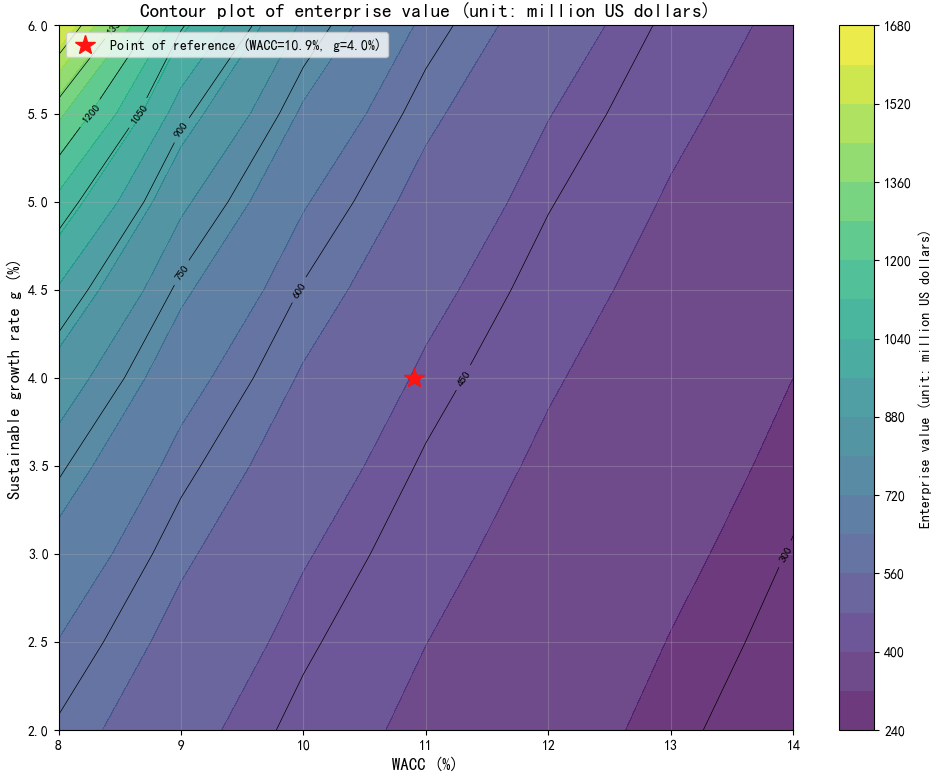
Against the backdrop of the rapid rise of emerging technology enterprises and the inadaptability of traditional valuation models, this paper explores the dynamic evolution of valuation logics for such firms based on the corporate life cycle theory. Taking EHang Holdings, a pioneer in the global urban air mobility sector, as a typical case, it adopts a longitudinal case study method combined with qualitative analysis and quantitative modeling to systematically track the evolution of its valuation models from the start-up to the expansion stage. The study finds that the valuation models of emerging technology enterprises show a high degree of dynamic adaptation to their life cycle stages, with the valuation logics shifting from qualitative assessment driven by non-financial factors to relative valuation based on operating data, and finally to absolute valuation centered on free cash flow creation capacity. It also reveals that the evolution of valuation models is jointly determined by internal enterprise development, external regulatory policies, capital market sentiment and industry competition patterns. This study enriches the dynamic valuation theoretical system for emerging technology enterprises and provides practical references for valuation decision-making in related sectors.
Show more
Read Article PDF
Cite
Research Article Open Access
Research on Development Status and Economic Impact of Sports Training Industry under the Background of College Admission Policy
This study examines China's sports training industry against the backdrop of educational reforms, including physical education entrance examination reform and the integration of sports and education. Using a combination of literature review, field research, and case analysis, the study covers 12 sports training institutions across Guangdong, Hunan, and Zhejiang provinces, with interviews involving institution leaders, coaches, and parents. Key findings reveal that while online-merge-offline transformation is prevalent in first- and second-tier cities, traditional offline models still dominate county-level markets, indicating a supply-demand mismatch. The study systematically analyzes how educational policies drive industry development, assesses current conditions, identifies challenges, and explores multidimensional economic impacts. It proposes stratified, high-quality development strategies from policy, industry, institutional, and societal perspectives. Findings show that college admission policies influence the industry through a cascading mechanism, with different policy types yielding distinct driving effects. Although the industry is expanding rapidly, challenges persist, including structural imbalances, lagging standardization, policy-market misalignment, and insufficient sustainable development capacity. The study suggests that coordinated efforts are needed to promote high-quality development, including improving regulatory systems, optimizing resource allocation, enhancing institutional competitiveness, and building collaborative service systems. The research enriches theoretical frameworks on sports-education integration and sports industry economics, offering practical references for policymakers and industry practitioners.
Show more
Read Article PDF
Cite
Research Article Open Access
CAPM, Fama-French, and APT in Portfolio Optimization: A Comparative Empirical Study
Article thumbnail
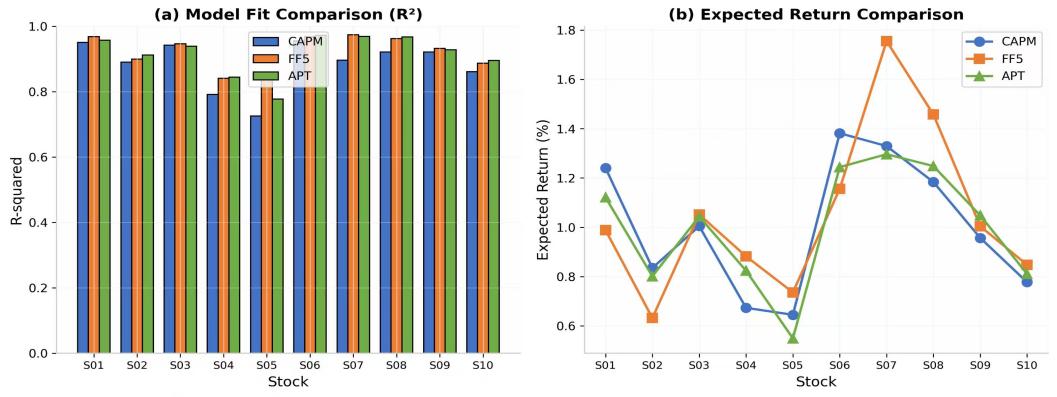
This paper empirically compares the application of the Capital Asset Pricing Model, Fama-French Five-Factor Model, and Arbitrage Pricing Theory in portfolio optimization under the mean-variance framework. Based on the selected representative stock samples, this study estimates the expected returns of each model through time series regression and accordingly constructs the minimum variance combination and tangent combination. Results show a significant divergence between models' in-sample fitting ability and out-of-sample investment performance. The FF5 model has the highest explanatory power, but its scattered expected returns lead to unstable, highly concentrated portfolio weights. In contrast, the expected returns generated by the APT model are more stable, and the investment portfolio constructed performs best outside the sample, with higher risk-adjusted returns and better downside risk control capabilities. CAPM models, due to their single-factor structure, although the results are relatively stable, have limited information content. Overall, the actual value of an asset pricing model does not lie in its statistical goodness of fit, but in whether it can provide a stable and reliable estimate of expected returns. Among the compared models, APT achieved a better balance between flexibility and robustness, making it more suitable for actual portfolio optimization.
Show more
Read Article PDF
Cite
Research Article Open Access
Prada's Listing in Hong Kong: Motives, Pricing, and Performance—A Case Study of the 2011 IPO
The case studied in this article is the IPO of Prada Company on HKEX in 2011, including its listing motives, pricing mechanism, and post-listing performance. This study analyzes various materials such as prospectuses, investment bank reports, and market data. Ultimately, this research shows that Prada's strategic purpose for listing in Hong Kong was to raise funds for its expansion in the Asia-Pacific region (especially in the Chinese mainland), while also enhancing the regional brand awareness. The book-building pricing model attracted strong institutional demand, and it also demonstrated the valuation uncertainty in the luxury industry. The shares of Prada performed relatively weakly in the initial stage of listing, with the closing price lower than the issue price. There were fluctuations in the middle stage. The long-term performance depends on the implementation of regional expansion and the degree of compliance with the governance norms of HKEX. This study provides practical references for cross-border IPOs of luxury brands and analyzes the role of HKEX in global financing.
Show more
Read Article PDF
Cite
Research Article Open Access
The Role of Investment Banks in Mergers and Acquisitions of Cultural and Entertainment Industry: A Case Study of Tencent's Acquisition of Supercell
Against the backdrop of the global digital economy and increasingly active cross-border M&A in the cultural and entertainment industry, the asset-light and IP-driven characteristics pose unique challenges for M&A in the cultural and creative industry in terms of valuation, compliance, transaction structure and post-investment governance. As a professional financial intermediary, investment banks undertake core functions such as valuation, transaction design, regulatory coordination and value integration in cross-border M&A. Taking Tencent's acquisition of Supercell, a Finnish game company, as a typical case, this paper analyzes the role mechanism of investment banks in M&A of the cultural and creative industry based on the theories of information intermediary, reputation capital and relationship network, focusing on their role and practical effects in IP and user value evaluation, transaction structure innovation, EU compliance approval and post-investment governance design. The study finds that investment banks effectively promoted the transaction, balanced the acquirer's control and target independence, and helped cultural and creative enterprises achieve global layout. However, there are also service limitations such as over-reliance on traditional valuation models, insufficient consideration of industry uncertainty, weak financing and capital structure analysis, and overemphasis on transaction completion rather than post-merger integration. Accordingly, this paper proposes optimization directions for investment banks to transform into full-life-cycle value service providers and establish a standardized valuation system for asset-light cultural and creative enterprises. The conclusions can provide references for cross-border M&A of cultural and entertainment enterprises and the service upgrading of investment banks.
Show more
Read Article PDF
Cite