Articles in this Volume

Research Article Open Access
Luxury Pricing and Consumer Trust: Economic Challenges Facing Chanel in the Post-Pandemic Market
Chanel, a renowned French luxury brand, was founded in Paris in 1913 by Coco Chanel. Chanel offers a wide range of products, including clothing, watches, jewelry and accessories, cosmetics, skincare, and perfumes, each renowned for its quality. A brand with a century-long history, Chanel fashion is always characterized by its elegance, simplicity, and exquisite style. While adept at breaking with tradition, it is currently facing challenges in growth. Chanel's sales reached $18.7 billion in 2024, primarily hampered by weak performance in the Chinese market. However, they decided to continue their $1.8 billion capital expenditure from last year, a 43% increase from the previous year, demonstrating the company's determination to strengthen its competitiveness. Furthermore, Chanel will invest $600 million to strengthen its supply chain to further control the production process of its products. This article will analyze the current problems facing Chanel from three aspects: macroeconomic factors, microeconomic conditions, and interbrand competition and rapid product structure. It will also attempt to provide solutions from three aspects: hedging and market optimization, microeconomic enhancements, and customer management.
Show more
Read Article PDF
Cite
Research Article Open Access
Sephora’s Market Challenges in China: Localization, Social Commerce, and Retail Transformation
This paper analyzed although Sephora faces obvious challenges in the Chinese market, and now it continues in expanding globally. It is not scientific to understand Sephora’s retail performances as a simple downward sloping curve, instead, it should be seen as an example of localization difference. This difference is caused by structures of channels, consumption behavior, competitiveness, and retail business’s differences due to different regions. Globally, Sephora continuously uses LVMH’s brand influence and its multi-brand retailing strategies with its high fan loyalty, taking advantage from its rich experience in high-end beauty collections. But in the Chinese market, the consumption of beauty products has already speeded up to platform-based exploration, online shopping, livestreaming, the grown- up of local brands, and a price-sensitive consumption mode. This research concludes that Sephora needs a rapid strategy transformation to practice a deeper localized strategy, strengthens its fusion with social commerce, and improves its overall business adaptation. By modifying these changes, Sephora may be able to align its worldwide ability with detailed environments and later improve its competitiveness in a key growth area.
Show more
Read Article PDF
Cite
Research Article Open Access
Digital Inclusive Finance, Green Innovation and High-Quality Economic Development -An Empirical Study Based on the Northeast Region
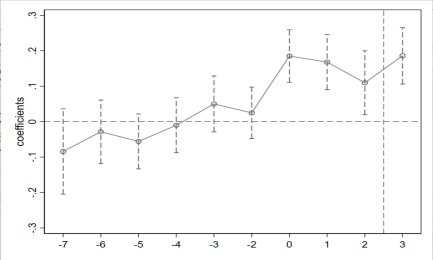
This essay utilizes panel data from Liaoning province, Jilin and Heilongjiang province in Northeast China during 2011-2022 to construct a mediation effect model. This paper empirically explores how digital inclusive finance affects high-quality economic development and the transmission mechanism of green innovation. The results demonstrate that digital inclusive finance significantly promotes high-quality economic development in Northeast China, and green innovation acts as a partial mediator, accounting for approximately 39.5% of the total effect. The positive impact is stronger in Liaoning and Jilin, and is driven mainly by the usage depth and digitalization of digital inclusive finance rather than pure coverage expansion. Based on the empirical outcomes, this paper puts forward policy suggestions, including improving the digital inclusive financial system, encouraging green innovation, and advancing regional coordinated development, so as to provide empirical support for the high-quality development of old industrial bases in Northeast China.
Show more
Read Article PDF
Cite
Research Article Open Access
The Benefit Cliff and Economic Mobility in New York City: A Structural Analysis of Low-Income Working Families
New York City is about as consequential a case as exists: a city running one of the most complex overlapping benefit architectures in the country, against a cost-of-living baseline that strains household budgets well above federal poverty guidelines. The distance between the income level at which benefits expire and the income level at which a family achieves stability is wider here than in almost any other American city, and the cliff between those two states is correspondingly more punishing. This paper examines how that cliff functions as a structural barrier to mobility for low-wage working families in New York City. The central argument is that the benefit cliff is not a fiscal side effect of means-testing but an emergent property of overlapping program architectures, a system where economic immobility becomes, for a significant share of the city's workforce, the utility-maximizing choice. The analysis moves from program context through demographic burden to an original net income simulation, before turning to policy interventions assessed against the twin constraints of fiscal viability and administrative feasibility. The broader implication is that a benefit system designed to alleviate poverty can, through structural incoherence rather than intent, operate to reproduce it.
Show more
Read Article PDF
Cite
Research Article Open Access
Effectiveness of the MA10–MA50 Golden Cross Trading Strategy: Evidence from Kweichow Moutai Stock
Article thumbnail
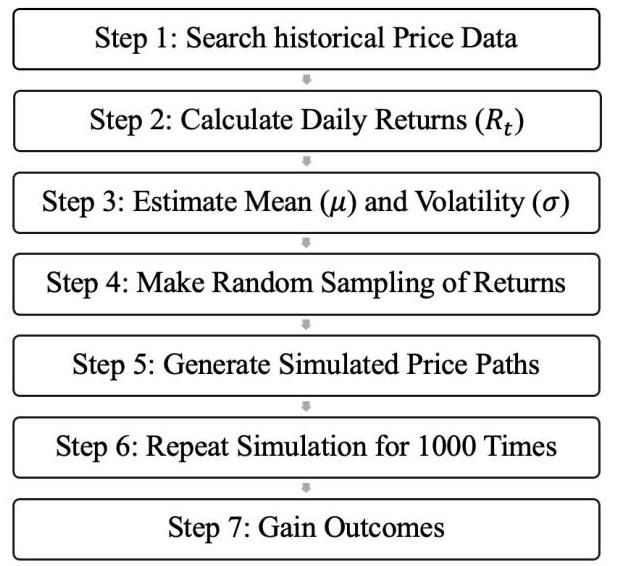
This study examines the performance of a moving average crossover strategy based on MA10 and MA50 using the daily stock prices of Kweichow Moutai. The study constructs the trading signals by analysing the daily stock prices from January 2023 to January 2025 and implements a trading strategy and back-test to assess the performance. The results are compared with a buy-and-hold strategy and the Shanghai Composite Index. The empirical findings show that the MA10-MA50 strategy provides lower total returns than the other strategies. However, it also provides lower volatility and a lower maximum drawdown. The MA10-MA50 strategy thus shows a balance on the trade-off between the return and risk control. To assess the robustness of the MA10-MA50 strategy, a Monte Carlo simulation based on its historical return is implemented to produce several potential price outcomes over the time span of one year. The simulation results indicate the uncertainty of future price movements and suggest that only relying on historical back-testing is insufficient for strategy evaluation. Overall, the findings show that although the moving average crossover strategy cannot consistently outperform the market, it can provide relatively stable performance under certain conditions and can be a complementary tool in quantitative trading and risk management.
Show more
Read Article PDF
Cite
Research Article Open Access
Luxury Brands’ Strategies for Balancing Brand Image and Mass Communication in the Digital Age: an Analysis Based on Social Media Communication Pathways
Article thumbnail
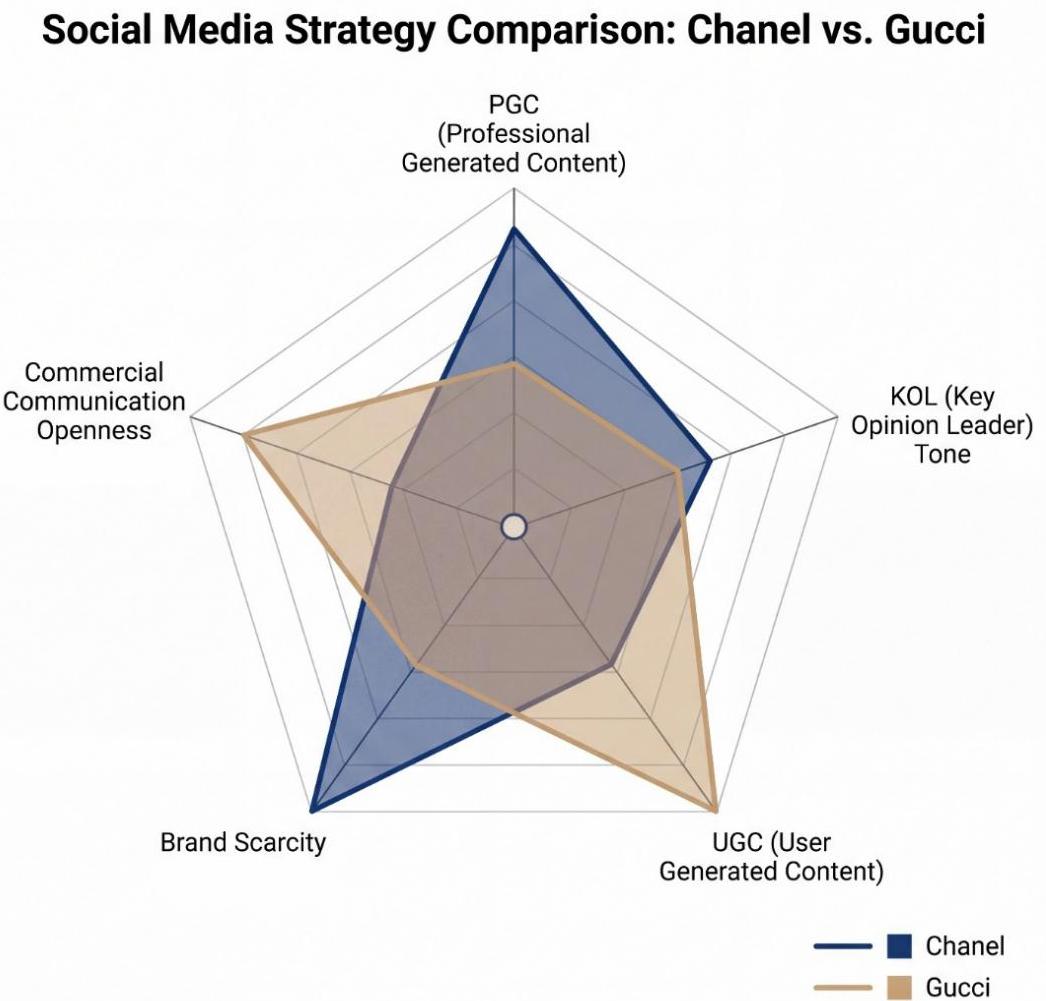
In the current digital environment, social media has become the main link between luxury brand companies and the general public, changing the way brands interact with customers. Nevertheless, the distinctive brand characteristics which luxury brands depend on -the differences between them and mass-produced items-are weakened due to the broad-based and ordinary nature of these platforms, resulting in a loss of the intangible value of luxury brands. This research mainly investigates how luxury brands can keep their basic values in the context of widespread communication. Starting from the communication routes of social media, the present paper uses a case study method to deeply examine the different communication techniques employed by Chanel and Gucci on social media. It is concluded that luxury brands should not avoid using digital media channels for communication, but instead should have a moderate and delicate presence on social media. By relying on the fundamental brand values and skillfully narrating their brand stories on such platforms, while also maintaining an intentional air of mystery and keeping a certain distance from the common people, luxury brands can make use of the strength of social media for promotion without being controlled by the platform. Only in this manner can they preserve their intangible value. According to these results, this paper finally suggests some specific strategic advices.
Show more
Read Article PDF
Cite