Articles in this Volume

Research Article Open Access
Mergers and Acquisitions Pricing Multi-agent Cross-Questioning: Paradigm Evolution and Framework
Article thumbnail
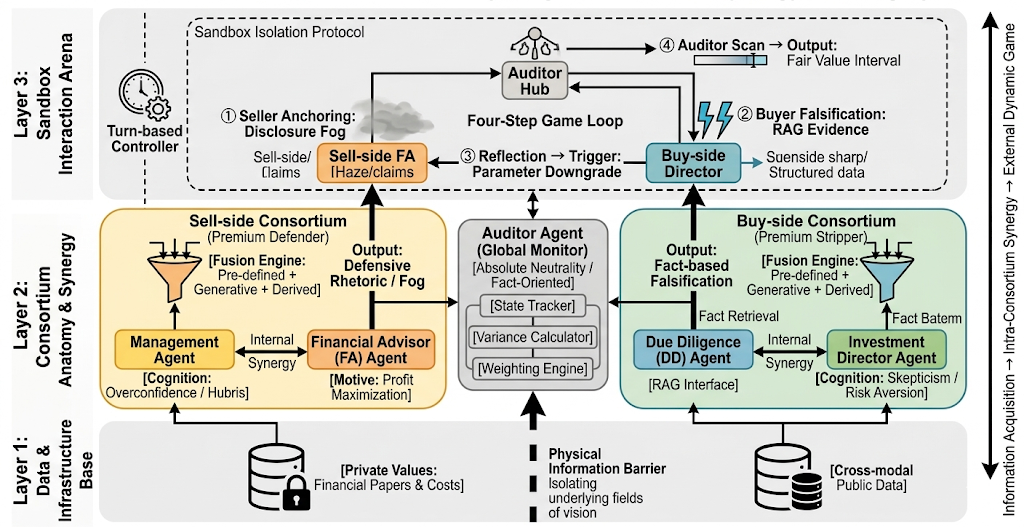
This paper systematically reviews the evolution direction of financial artificial intelligence (AI) from traditional statistical fitting to dynamic confrontation. With the help of functional isolation, evidence-based game theory and parameter correction, this paper analyzes the internal law of the multi-agent cross-questioning mechanism, and summarizes a set of structured analysis frameworks. Relevant studies have shown that compared with a single model, the core purpose of building a specific questioning mechanism using confrontation topology is to get through the logic of transforming unstructured semantic risk into structured valuation parameters, to clearly depict the cross-modal mapping path between the two. This model has significant theoretical feasibility in improving the internal consistency of pricing logic and restraining unreasonable premiums. This paper believes that the dynamic inquiry paradigm is conducive to optimizing and reshaping the existing asset valuation benchmark in a complex trading environment. To truly land the man-machine collaborative pricing system, the core is to focus on how to resolve the technical barriers of reasoning interpretability, privacy protection, collaborative deduction and penetration algorithm audit. Only by achieving substantial breakthroughs in these bottlenecks can the follow-up system construction have a solid foundation.
Show more
Read Article PDF
Cite
Research Article Open Access
Power BI Empowers Digital Transformation of SMEs — From the Perspective of Financial Analysis and Business Decision Optimization
Against the backdrop of iterative artificial intelligence development and the digitalization initiatives under the 14th Five-Year Plan, small and medium-sized enterprises (SMEs) urgently require financial digital transformation. However, due to limitations in talent, technology, and costs, the traditional FSSC financial shared services model requires high investment and heavy operation and maintenance, making it difficult to adapt to SME development. Existing studies predominantly focus on large enterprises, leaving significant research gaps in SME financial digitalization. This paper uses the literature research method, employs Power BI as a tool, leverages Power Query and DAX language, and combines DuPont analysis with an ROI system to build a lightweight financial shared service and dynamic financial analysis model. This solution enables business-finance integration, in-depth report drill-through analysis, cost control and cash flow forecasting, addressing the one-sidedness, time lag and business disconnection inherent in traditional financial analysis. It promotes a shift in financial work from post-event accounting to pre-event forecasting and in-process management, providing a reference for low-cost digital transformation for SMEs.
Show more
Read Article PDF
Cite
Research Article Open Access
Can the Digital Economy Alleviate Local Fiscal Pressure? Evidence from Prefecture-Level Panel Data in China
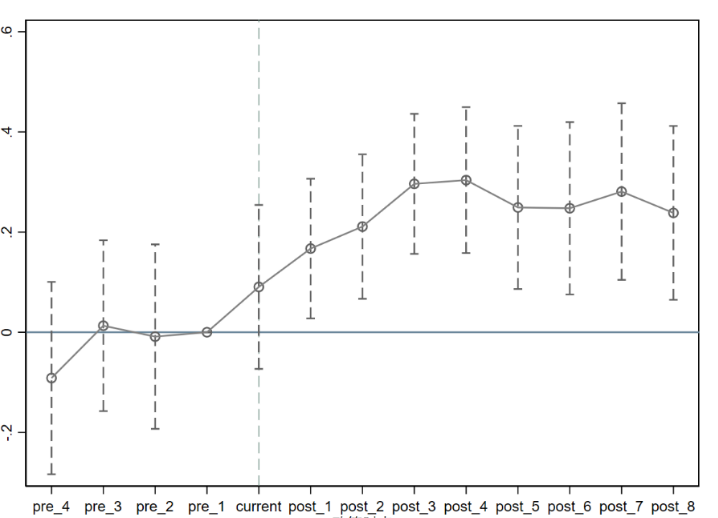
At present, the contradiction between local government fiscal revenue and expenditure is intensifying. Against this background, it is of great significance to explore whether the development of the digital economy can alleviate local fiscal pressure. Taking panel data of prefecture-level cities in China from 2001 to 2022 as samples, this study adopts empirical analysis methods to examine the effect of the digital economy on local fiscal pressure and its transmission mechanism. The empirical results show that the development of the digital economy has a significant alleviating effect on local fiscal pressure. This conclusion remains robust after a series of robustness tests such as winsorization, sample interval sensitivity test, and high-dimensional fixed effect adjustment. The mechanism test shows that the digital economy improves the fiscal situation mainly by improving fiscal expenditure efficiency and reducing the proportion of social security and employment expenditure, rather than simply compressing the scale of public service expenditure, which verifies the governance effectiveness of the digital economy in "improving quality and efficiency". Heterogeneity analysis shows that in regions with heavy fiscal support burdens and fierce tax competition, the marginal effect of the digital economy on alleviating fiscal pressure is more significant. Further analysis indicates that higher fiscal transparency and richer financial resources are important supporting conditions for enhancing the positive role of the digital economy. This study supplements new micro empirical evidence for understanding fiscal governance issues in the context of the digital economy, and provides corresponding policy implications for solving local fiscal dilemmas by means of digital transformation.
Show more
Read Article PDF
Cite
Research Article Open Access
ESG's Impact on Corporate Path Transformation and Path Exploration
Article thumbnail
In the context of the ongoing global campaign for carbon neutrality, ESG has emerged as a pivotal framework for driving corporate transformation and addressing the demands of multiple stakeholders. The present study focuses on the influence of Environmental, Social and Governance (ESG) factors on corporate strategic, digital and governance level shifts and explores the role of ESG in the context of green transformation. The study systematically collects and analyses high-quality literature in Chinese and English and combines it with CiteSpace Knowledge Graph to sort out the research lineage and hotspots related to ESG and corporate transformation paths. The study proposes a theoretical framework for ESG-driven path transformation and finds that ESG plays a multidimensional role in promoting enterprises from a compliance orientation to strategic innovation. The paper emphasises the practical value of ESG in enhancing corporate resilience, strengthening competitiveness, and realising green value creation. This study provides a theoretical foundation and pathway suggestions for enterprises to realise sustainable transformation in the context of "dual carbon" in the future.
Show more
Read Article PDF
Cite
Research Article Open Access
An Analysis of the Impact of Geopolitical and Climate Shocks on Global Supply Chains—A Case Study of the Suez Canal Disruption
The Suez Canal, a maritime chokepoint facilitating 12-15% of global trade, has been disrupted by both climate extremes and geopolitical conflicts in the early 2020s. This study examines how these two types of shocks affect global supply chain resilience. The research aims to compare their impact pathways, response mechanisms, and adaptation strategies, thereby filling a gap in the existing literature concerning the compound effects of dual risks. Using a single-case study design, this research qualitatively analyzes eight peer-reviewed articles and official reports from the United Nations Conference on Trade and Development and the World Bank. Data were processed through thematic coding and comparative analysis. The results indicate that while both shocks significantly weaken supply chain resilience, geopolitical shocks produce more prolonged effects, whereas climate shocks are more sudden and less predictable. In response, firms adopt similar adaptive strategies, including route diversification, inventory buffering, and digital tracking. It is concluded that enhancing supply chain resilience requires a dual-risk analytical framework, practical multi-route planning, and strengthened international coordination for key chokepoints.
Show more
Read Article PDF
Cite