Articles in this Volume

Research Article Open Access
Balancing Brand Growth with Financial Health: The Prospective Evolvement of Tesla’s Marketing Strategy
Article thumbnail
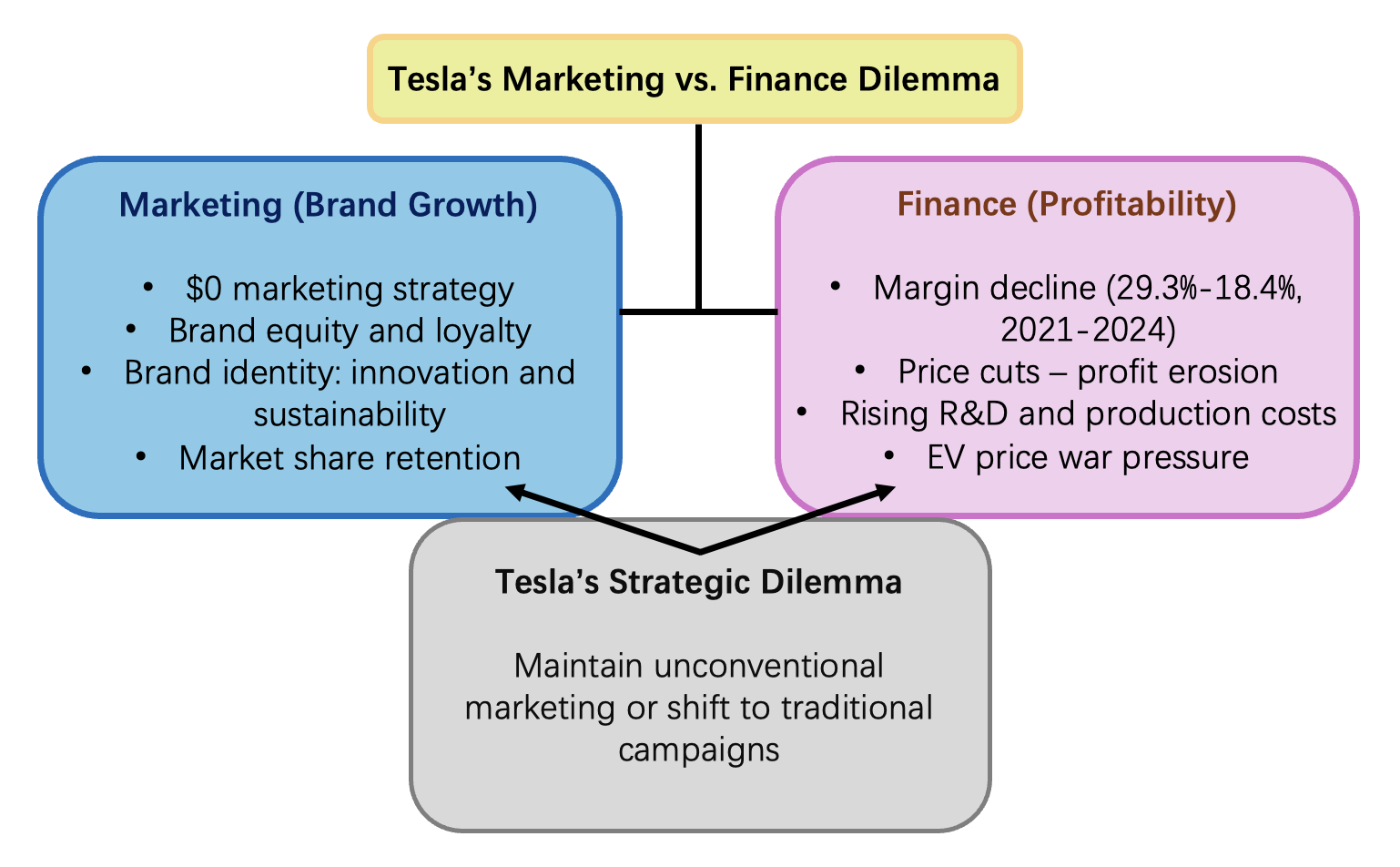
This paper examines the evolving dynamics of Tesla’s marketing strategy in the context of growing financial pressures and intensifying market competition. Tesla’s distinctive “zero-dollar marketing strategy”, driven by product innovation, commitment to sustainable energy, Elon Musk’s influence, and viral brand moments, has historically created strong brand equity without traditional advertising expenditure. However, declines in the company’s automotive gross margin of recent years reflect the significant impact of global EV (electric vehicle) price wars, heightened competition, and changing consumer demands. Focusing on the tradeoffs between maintaining unconventional marketing model and embracing more traditional approaches that align with the innovative brand identity, this paper delves into Tesla’s dilemma in balancing brand growth with financial health. Through an analysis of Tesla’s segmentation, targeting, and positioning, as well as multiple financial metrics, the study suggests that strategic recalibration is necessary. A series of initiatives are recommended, including prioritizing market share retention while increasing cost efficiency, structuring storytelling-based campaigns to communicate technological superiority and sustainability ethos, and closely monitoring balanced KPIs across finance and marketing. In summary, Tesla’s capacity to adapt its marketing efforts without compromising brand authenticity is vital for sustaining leadership in the EV industry and achieving long-term profitability.
Show more
Read Article PDF
Cite
Research Article Open Access
The Application of Blockchain Technology in the Global Economy: A SWOT Analysis and Strategic Recommendations
Blockchain technology is reshaping economic activities globally, with significant potential across healthcare, finance, and supply chain management. Despite regulatory and adoption challenges, it is a disruptive innovation. According to IDC's "2021 V1 Global Blockchain Spending Guide," the global blockchain market is projected to reach $18.95 billion by 2024, with a CAGR of approximately 48.0% during 2020-2024. This study explores the current application status of blockchain technology in the global economy. It integrates SWOT analysis models with case studies and market reports to examine the strengths, weaknesses, opportunities, and challenges of blockchain technology. Based on economic competition theories such as effective competition theory and Porter's competitive theory, the research analyzes how blockchain can gain advantages in intense market competition. It identifies potential opportunities in the global blockchain market over the next five years from technology, industry, and application scenario perspectives. The study provides a holistic assessment of blockchain's application status, offering valuable insights for policymakers and entrepreneurs.
Show more
Read Article PDF
Cite
Research Article Open Access
Discrete Delta Hedging under Stochastic Volatility and Jumps: A Monte Carlo Cost–Risk Frontier
Article thumbnail
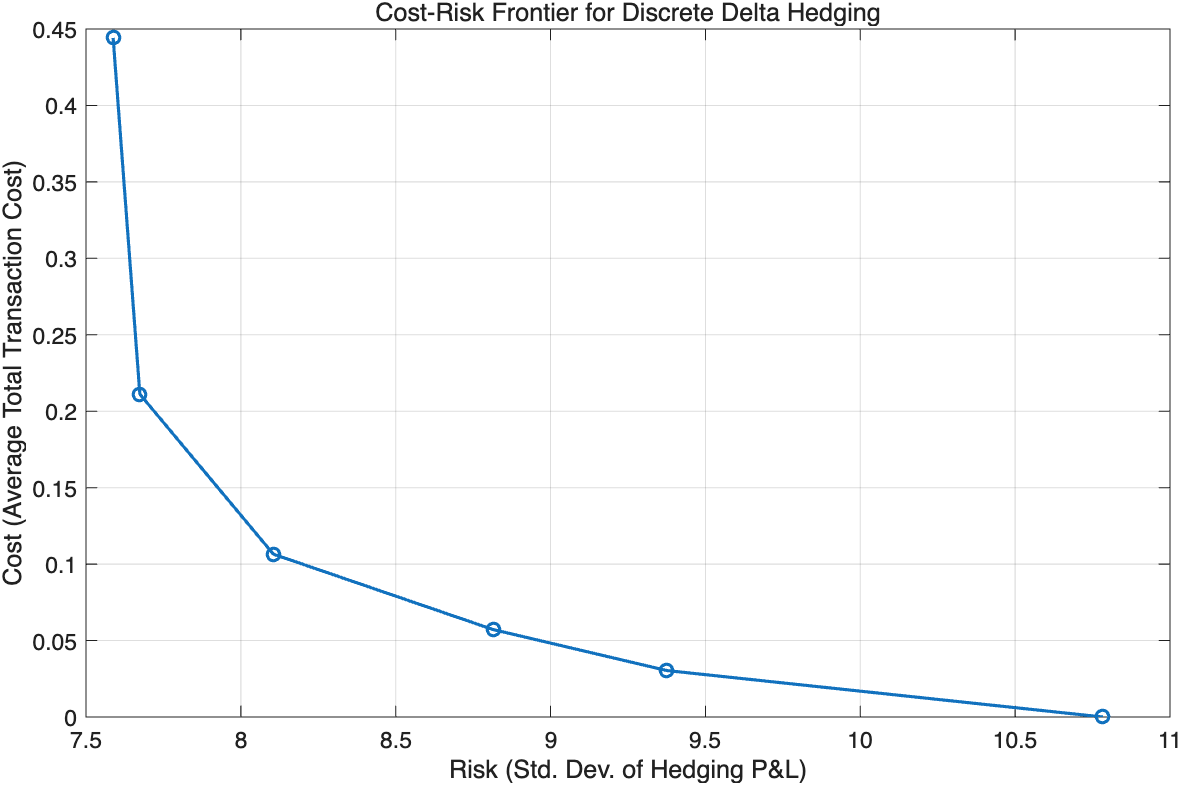
Delta hedging is a fundamental strategy in options risk management, relying on continuous adjustment of a replicating portfolio to eliminate risk. However, real markets exhibit features such as stochastic volatility and jumps that violate the assumptions of the Black–Scholes model, rendering perfect replication impossible and the market incomplete. In such cases, hedging can only reduce risk at best, and frequent rebalancing incurs significant transaction costs. This article investigates discrete delta hedging under stochastic volatility and jump-diffusion dynamics, quantifying the trade-off between hedging cost and risk reduction via Monte Carlo simulation. We construct a cost–risk frontier, analogous to an efficient frontier, that shows the minimal achievable risk for a given cost (and vice versa). The results demonstrate that increasing the hedge frequency (trading more often) generally lowers the variance of hedging errors but at a rapidly diminishing rate and with higher accumulated costs. Even with very frequent rebalancing, a residual risk remains due to jumps and unhedgeable volatility fluctuations. We discuss how this frontier can inform optimal hedging policies, balancing transaction costs against risk appetite, and we compare our findings with prior theoretical and empirical studies.
Show more
Read Article PDF
Cite
Research Article Open Access
The Application and Challenges of Emerging Technologies in Supply Chain Risk Management: A Case Study Based on Manufacturing
In the VUCA era, supply chain disruptions are increasingly frequent and severe, posing significant challenges to global manufacturing industries. This study investigates the application and challenges of emerging technologies, particularly digital twin (DT) technology, in supply chain risk management through a qualitative case study approach. Focusing on six manufacturing enterprises, three of which have deployed DT and three still rely on traditional models, this research aims to reveal the practical effectiveness and implementation obstacles of DT technology in risk identification, assessment, and response stages. Traditional risk management methods, often based on periodic assessments and static contingency plans, have proven inadequate in addressing sudden global crises, as exemplified by the 2023 Red Sea crisis's impact on the European automotive industry. This study employs document analysis of enterprise risk reports, audit records, and emergency response plans to demonstrate how DT technology can transform risk management into a proactive, predictive strategy. The findings show that DT technology enhances supply chain resilience by enabling real-time risk perception, dynamic simulation, and automated response. However, the adoption of DT technology also faces challenges such as organizational division, financial barriers, and human resistance to change. This research provides actionable guidelines for enterprises to navigate the complex path of digital transformation and offers a low-tech threshold risk management upgrade path, especially for small and medium-sized manufacturers.
Show more
Read Article PDF
Cite
Research Article Open Access
Comparing AI and Human Advice Adoption in Symbolic–Spiritual Consumption: The Role of Psychological Safety
Prior research on human–algorithm interaction has largely highlighted algorithm aversion, showing that consumers often resist algorithmic advice due to insufficient trust and skepticism about algorithms’ capabilities in complex and subjective tasks. In contrast, evidence on algorithm appreciation is relatively limited and primarily observed in functional contexts, where algorithms are valued for superior accuracy or efficiency. Little is known about whether algorithm appreciation may also emerge in non-functional consumption contexts, particularly in symbolic–spiritual consumption. Such consumption is process-oriented, uncertain, and highly subjective, often occurring in low social visibility and introspective situations. In these settings, consumers seek instrumental utility, psychological comfort, and emotional reassurance. This study investigates whether consumers prefer AI advice over humans in symbolic–spiritual consumption and examines the underlying psychological mechanisms. A survey-based experiment demonstrates that AI enhances consumers’ psychological safety, increasing advice adoption intention. These findings highlight that algorithm appreciation can also arise from psychological mechanisms beyond functional advantages, while offering practical implications for the application of AI in symbolic consumption contexts.
Show more
Read Article PDF
Cite
Research Article Open Access
The Heterogeneity of Financing Efficiency for Small and Medium-sized Enterprises in the Context of Digital Finance
Article thumbnail
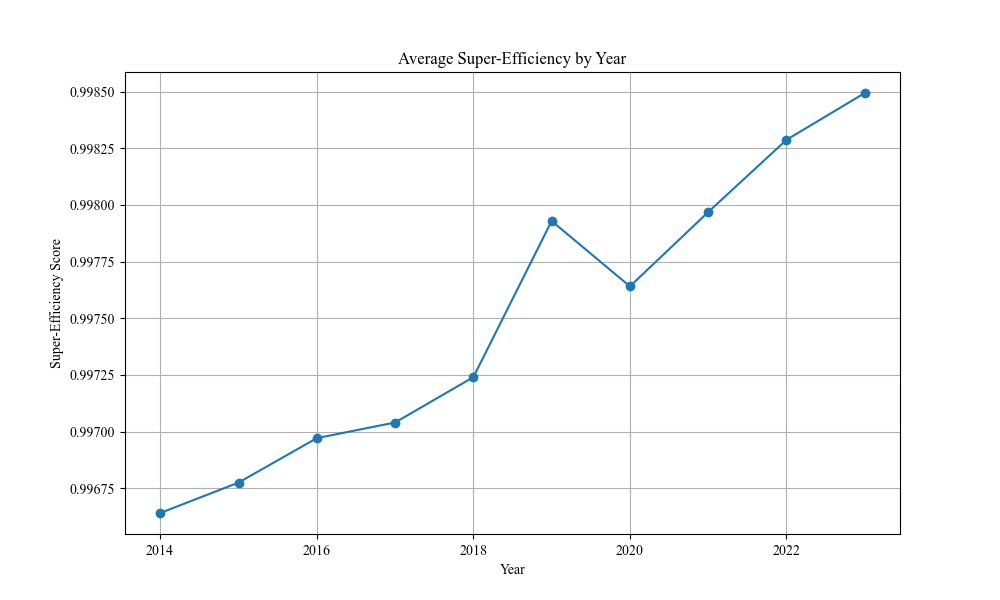
This article examines the heterogeneity of small and medium-sized enterprise (SME) financing in the context of digital finance, based on the state of SME financing in China at the moment. Using the Super-Efficiency Data Envelopment Analysis (DEA) model, 3,000 Chinese businesses' data was assessed between 2014 and 2020.This paper uses dual machine learning models to explore the causal effect of digital transformation on financing efficiency. Later, the method of fractional regression is used to analyze the heterogeneity of enterprise financing. The results showed. The impact of digital finance on corporate financing costs is more pronounced in eastern China and higher Environmental, Social and Governance (ESG) ratings. The paper concludes that whether the impact of digital transformation on enterprise financing efficiency is positive depends on the combined effect of internal and external factors of enterprises. When the internal factors of the enterprise can be recognized by the market and the external can give the enterprise a good financial environment, the role of digital transformation in the financing efficiency of the enterprise will be greatly exerted.
Show more
Read Article PDF
Cite
Research Article Open Access
Climate Risk in Asset Pricing: Reassessing Industry Equity Capital Costs via Improved CAPM
Climate change poses significant risks to financial markets, yet traditional asset pricing models like the Capital Asset Pricing Model (CAPM) fail to incorporate these factors. This study extends the CAPM by integrating physical and transition climate risks to evaluate their differential impacts on the cost of equity across high-carbon (energy and materials) and low-carbon (technology and consumer discretionary) industries. Using historical data from 2012 to 2024, we employ regression analysis to estimate climate-adjusted betas and assess cost of capital adjustments under varying policy scenarios. Results indicate that high-carbon sectors exhibit heightened sensitivity to both risk types, leading to elevated equity costs, particularly under stringent 2°C policy pathways. These findings offer implications for investors, companies, policymakers, and future research in climate-finance integration.
Show more
Read Article PDF
Cite
Research Article Open Access
ESG-Driven Urban Sustainable Development Indicators and Assessment Methods: A Systematic Review and Forward-Looking Framework
Rapid urbanisation has positioned cities at the forefront of global sustainability governance, while the rise of ESG (Environmental, Social, Governance) investing has introduced a new evaluative lens for urban performance. Yet a coherent, city-scale ESG indicator system is still missing. This paper synthesises 123 peer-reviewed articles and 18 policy documents (2010–2023) from CNKI, Web of Science and government portals to map the current landscape of urban ESG indicators and assessment practices. Through content analysis and bibliometric clustering, we find that (1) existing environmental metrics overweight carbon while neglecting biodiversity and urban heat islands; (2) social indicators rarely capture intra-urban inequality; (3) governance metrics focus on transparency but fail to measure genuine stakeholder participation. Additionally, we demonstrate the efficiency of urban big data in revealing environmental injustice. Three dominant assessment modes—expert-deliberative, composite-index and big-data analytics—are compared quantitatively for coverage, data granularity and policy relevance. We propose an integrative “City-ESG Cube” framework that couples SDG targets with materiality-weighted ESG themes and demonstrate its operability in Shenzhen. We conclude by calling for youth-inclusive indicators, open urban data commons and dynamic dashboards that turn measurement into action.
Show more
Read Article PDF
Cite
Research Article Open Access
The Influence of the Interaction Between Product Fit and Self-Construction on Consumers' Purchase Intention in Co-branding: The Intermediary Mechanism of Processing Fluency
Article thumbnail
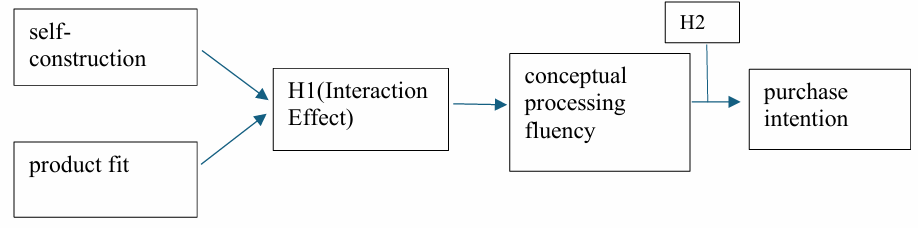
With the increasingly fierce market competition, co-branding between brands has become the norm. Through co-branding, brands can achieve the effect of integrating resources and audiences, thereby enhancing value and driving market breakthroughs. Still, there are not a few cases of co-branded product failures. Therefore, existing research has not been able to explain the operating mechanism of such business decisions fully. This paper focuses on the mechanism of product fit and consumer self-construction of co-branded brands, introducing conceptual processing fluency as an intermediary variable to explore its impact on consumers' purchase intentions. The research method of this paper involves collecting questionnaire data and then analyzing it. The study found that product fit significantly affected consumers' processing fluency and purchase intention, while self-construction only played a partial role in the path. The overall interaction effect was not significant; however, the group analysis revealed that high fit could significantly enhance purchase intention by improving processing fluency among dependent consumers. In independent consumers, the mediating effect is not established. This article holds specific guidance for brands to develop more effective co-branding strategies.
Show more
Read Article PDF
Cite
Research Article Open Access
The Application and Challenges of Monte Carlo Simulation in Financial Derivatives Pricing
Article thumbnail
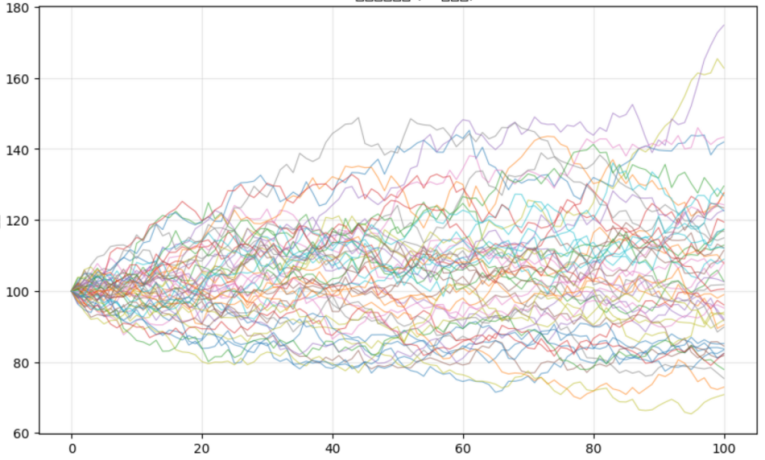
The Monte Carlo simulation is a powerful numerical method based on random sampling. Renowned for its flexibility in handling high-dimensional problems, it serves as a cornerstone of modern finance. However, it faces a fundamental challenge—slow convergence and high computational cost limit its application in pricing financial derivatives. This paper explores the application of Monte Carlo simulation in option pricing, focusing on its benchmark role for European options and how the LSM algorithm addresses “backward pricing” in American options. Numerical experiments were conducted under the geometric Brownian motion model. Monte Carlo priced European options, while LSM priced American options. Results show Monte Carlo effectively prices European options, with error convergence matching theory (1/N). For American options, LSM performs excellently, providing accurate estimates. However, its accuracy and stability depend heavily on the choice of basis functions and number of paths. Moreover, the computational complexity is higher than European pricing methods. It increases cost and amplifies pre-existing limitations. In summary, this study highlights the flexibility of Monte Carlo but also the persistence of its challenges in sophisticated applications like LSM. The findings offer insights regarding parameter selection and contribute to understanding trade-offs in accuracy, stability, efficiency and cost.
Show more
Read Article PDF
Cite