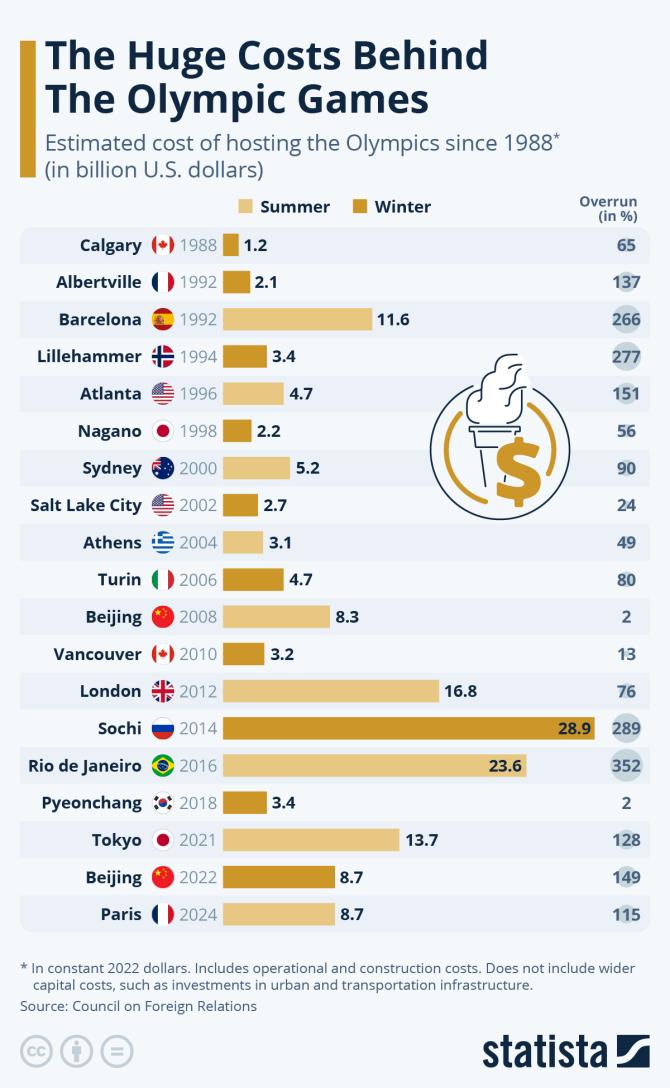
In the context of accelerating globalization, large-scale sporting events such as the Olympic Games have become crucial platforms for host nations to demonstrate economic power and strengthen their global influence. While these events bring immediate economic benefits via infrastructure investment, tourism, and international exposure, their long-term financial sustainability remains a matter of concern. Historical data reveals significant cost overruns and post-event infrastructure underutilization, with the 2004 Athens and 2016 Rio Olympics serving as typical examples. This paper employs a SWOT analysis framework to evaluate the multidimensional economic impacts of hosting the Olympics. The results show that while the Olympics enhance global visibility and promote cultural diplomacy, they also impose substantial fiscal risks and environmental burdens. In addition, it further examines strategies such as enhancing budget management, repurposing infrastructure after the event, and exploring multi-country hosting options to enhance the economic impact and long-term viability of the Games. In conclusion, host nations should prioritize cost-benefit analysis and long-term sustainability in their decision-making processes to minimize economic risks and promote lasting development.