Articles in this Volume

Research Article Open Access
Analysis and Feasible Solution for Legislative Gaps in Notification Procedures in External Equity Transfer
In 2005, the Company Law stipulated the transfer of equity for the first time. However, in the subsequent amendments, the notification procedure for external transfer has always been unclear. As a result, there have been disputes about the time and method of the shareholder notification of the transferor in practice. This paper analyzes the disputes in case judgments before and after the entry into force of 2017 judicial interpretation, as well as the characteristics of asset and person compatibility of Limited Liability Company, and tries to find a feasible solution to alleviate the impact of legislative gaps and strengthen notification obligations. Lastly, the paper gives suggestions for improvement in the company’s articles of association and for legislation, which is possible to strike a balance between the trust relationships within companies and the efficiency of business transactions.
Show more
Read Article PDF
Cite
Research Article Open Access
The Impact of Carbon Emission and Carbon Price on International Trade Volume
In recent years, environmental issues have become an international focus, under the influence of global climate change, greenhouse effect is becoming more severe with each passing day. Therefore, it is urgent to control greenhouse gas emissions and improve the quality of the ecological environment by reducing carbon emissions. However, in the context of the current low-carbon economy, the environmental costs of enterprises are bound to rise, which will inevitably have a more serious impact on enterprises and the national economy. This article will mainly focus on how low carbon economy policies affect a country's international trade over a given period of time based on a concrete example. Regarding the methodology, chose the object to be India's carbon related data which are carbon intensity, carbon emission and carbon price in the period 1990-2020. And mainly based on the regression model using excel. The results of the study show that the Carbon Intensity and Carbon emissions are positively correlated with International Trade while the Carbon Price is negatively correlated. The volume of India’s International Trade will grow steadily as it moves towards Low-Carbon Economy policy. In summary, moving towards low carbon economy can increase the sustainability of international trade and reduce trade risks, while also creating more trade opportunities for countries, especially in the areas of environmental protection.
Show more
Read Article PDF
Cite
Research Article Open Access
The Application of the Capital Asset Pricing Model (CAPM) in China's Financial Market: An Analysis of Regulatory Impact and International Comparison
As the world's second largest economy, China is also one of the world's biggest emerging economies. The Capital Asset Pricing Model (CAPM) is one of the most classic pricing models, and China's asset pricing model has gained a lot of experience from it. This research investigates the application of the CAPM in China's financial market, focusing on the influence of financial market regulation and conducting a comparative analysis with international markets. CAPM is a fundamental asset pricing model used to estimate asset expected returns and risks based on their covariance with the overall market portfolio. The study aims to analyze the practical implementation of CAPM in China's financial market, considering the impact of financial market regulation on the model's effectiveness. Key variables such as market data, risk-free rates, and stock returns are utilized, with specific adjustments made to accommodate China's unique regulatory environment. The research's significance lies in providing valuable insights into asset pricing and risk assessment in China's financial market, as well as implications for investors and policymakers. By comparing the results with international markets, this study contributes to a broader understanding of the CAPM model's applicability and effectiveness in diverse regulatory settings.
Show more
Read Article PDF
Cite
Research Article Open Access
Criticism of Multilateral Development Banks’ Operating Reflections During Covid-19 Pandemic - From the Perspective of the Sovereign Debt
The problem of sovereign debt crises has a long history at the international level, especially in the face of global crises such as the global financial crisis of '08 and the recent COVID-19 pandemic. In the face of the negative social impacts of these emergencies, the state apparatus of each country needs help with relying on domestic channels such as tax revenues and investment returns to maintain efficient operations. It would, therefore, finance other countries in non-domestic currencies, and such a solution would exacerbate countries' sovereign debt crises. Countries have done well in restructuring their sovereign debt in response to sovereign debt crises, especially in Europe and Africa. The International Development Association provided some debt relief to those countries with fragile economies, but the crisis is still present today. In order to expand sustainable financing and maintain economic stability, new multilateral development banks have been established in some regions. These MDBs have been restructuring since the Great Depression, and their lending policies have indeed eased countries' sovereign debt crises to some extent. However, their financing rules have also influenced other countries' policies, making them widely criticised internationally. In the context of COVID-19, both the strengths and weaknesses of MDBs are exposed, so they still have a long way to go before they can become international institutions that can pay attention to disadvantaged countries and help them develop.
Show more
Read Article PDF
Cite
Research Article Open Access
The Heckscher-Ohlin Model in Modern International Trade
The Heckscher-Ohlin model, initially developed by Elie Heckscher and Bertil Ohlin, remains a cornerstone of international economics. This paper evaluates the model's relevance in the context of contemporary global trade dynamics, with a specific focus on how changes in relative factor abundance among countries continue to influence long-term trade patterns. By combining historical perspectives with modern insights, this study seeks to provide a comprehensive understanding of the model's applicability in today's interconnected world. While empirical research continues to validate its core principles, the study also acknowledges the complexities of real-world trade, including technological advancements, trade policies, and non-homogeneous factors of production. In conclusion, the Heckscher-Ohlin model remains an invaluable tool for understanding international trade, but its effective application requires an integrated approach that considers the multifaceted nature of today's global economy, guiding policymakers and businesses in navigating the evolving landscape of international trade.
Show more
Read Article PDF
Cite
Research Article Open Access
Research on the New Business Trend under the Background of “Double Carbon”
With the rapid development of the social economy, more and more greenhouse gases are produced due to economic activities, which leads to huge changes in global climate, phenomena like global climate change, climate warming and so on happen frequently. In order to solve these global climate problems, plenty of solutions have been found by experts and government. In the aspect of technology, some clean energy such as electric energy, solar energy and so on are taking the place of the use of fossil fuels which will lead to a lot of greenhouse gas emissions. Besides that, some policies and regulations are also helpful in promoting enterprises' and individuals’ environmental awareness and taking part in emission reduction work. Take carbon emission as an example, as a policy-based emission reduction tool, it uses the market economy to raise the cost of greenhouse gas emissions, which will improve the bad trend of atmospheric environment resources. In order to achieve the goal of energy saving, emission reduction and environmental production, the adoption of the Kyoto Protocol is an important turning point for global control of greenhouse gas emissions. And the truth is, with the rapid development in developing countries, there are more and more greenhouse gases discharged by them.
Show more
Read Article PDF
Cite
Research Article Open Access
Analysis of U.S. and Hong Kong Cryptocurrency Regulation Approach
Article thumbnail
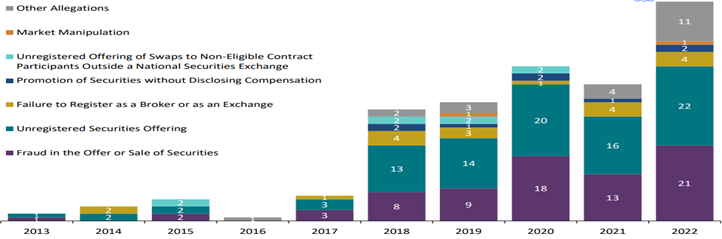
Cryptocurrencies have been defined and regulated differently in all corners of society. Much research has been made on countries' institutional measures to consummate regulations toward cryptocurrencies further. This paper explores the definition and nature of cryptocurrencies through a literature review method. The nature of cryptocurrencies has directly led to their benefits and misuse. This paper also explores the regulatory measures made by the U.S. and the flaws revealed in the Coinbase Case and Ripple Case. The ambiguous definition between regulatory departments and overlapping law enforcement power has made investors not knowing what course to take. New measures are taken in Hong Kong through a compulsory licensing system and laying major responsibility on platform service providers. This paper examines the new efforts and proposes some potential flaws under the new regulatory system. The Hong Kong regulatory approach is believed to provide insight and reference for other markets that would like to include cryptocurrencies into regulation.
Show more
Read Article PDF
Cite
Research Article Open Access
Research on NVIDIA's Success and Socioeconomic Perspective
As the world's leading semiconductor company, NVIDIA continues to expand its marketing power through technological innovation, while its products also provide directions and tools for global social and economic development. This article explores the reasons for NVIDIA's success as a leader in the semiconductor industry and its impact on the socio-economic system from a socio-economic perspective. This article analyzes NVIDIA's characteristics in technological innovation, market orientation, sustainable development, social responsibility, etc. from a socio-economic perspective, and demonstrates the reasons for NVIDIA's success. Discuss NVIDIA's positive impact on the social economy from the aspects of innovation, employment, and sustainable development. In addition, as a technology company, NVIDIA faces challenges related to technological innovation and market risks. In response to the expected risks and challenges, NVIDIA needs to continuously complete self-innovation and optimization. While flexibly responding to market changes, it needs to adjust its operating strategy and business model according to the current situation of the market.
Show more
Read Article PDF
Cite
Research Article Open Access
What is the Impact of Fiscal Technology Expenditure on Carbon Emission Reduction? Evidence from Guangdong Province in China
Article thumbnail
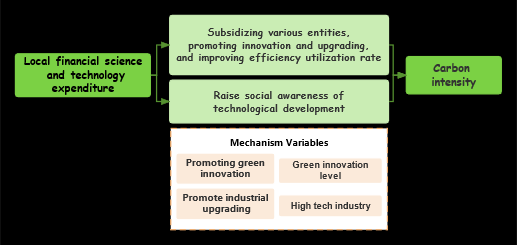
China has put forward the strategic goal of striving to achieve peak carbon by 2030 and carbon neutrality by 2060, and reducing carbon emission intensity is a top priority. This paper analyses the impact of local government fiscal science and technology expenditures on carbon emission intensity based on a fixed panel regression model using panel data of 21 cities in Guangdong Province from 2000 to 2019, and draws the following main conclusions: (1) Higher fiscal science and technology expenditures significantly promote the reduction of carbon emission intensity. Specifically, for every 1% increase in expenditures, the carbon emission intensity decreases by 0.221%; (2) The mechanism includes promoting the level of green innovation and promoting the level of new and high technology. Therefore, local governments should pay attention to the role of environment-friendly science and technology innovation on low-carbon development, help glow-carbon research and application transformation, strengthen the regulation of heavy polluting enterprises, and guide the capital to green industries, so as to embark a new road of high-quality economic development and carbon reduction.
Show more
Read Article PDF
Cite
Research Article Open Access
Does ESG Affect Bank Lending to Companies?
Article thumbnail
with the serious intensification of global warming in recent years, countries around the world are actively developing carbon neutrality, carbon peaking, and reducing carbon emissions to ensure a healthier operation of the earth. To cooperate with the low-carbon policies of various countries, companies have also begun to implement policies to reduce carbon emissions and save energy, so ESG has gradually become a hot topic. ESG indicators are also becoming increasingly important in the financial industry. This research is a review essay. The research direction is to explore whether ESG indicators will affect corporate credit in banks by studying the policies and various data on carbon emissions that have been released by countries and by reading published papers. Through research on government policies and current thesis research, it is shown that there are currently no clear policies or rules stipulating how ESG indicators will affect corporate credit in banks, but the current banking industry will indeed pay more attention to ESG performance of companies when leading to companies, good ESG indicators will lead to better bank credit and lower cost of banking credit.
Show more
Read Article PDF
Cite