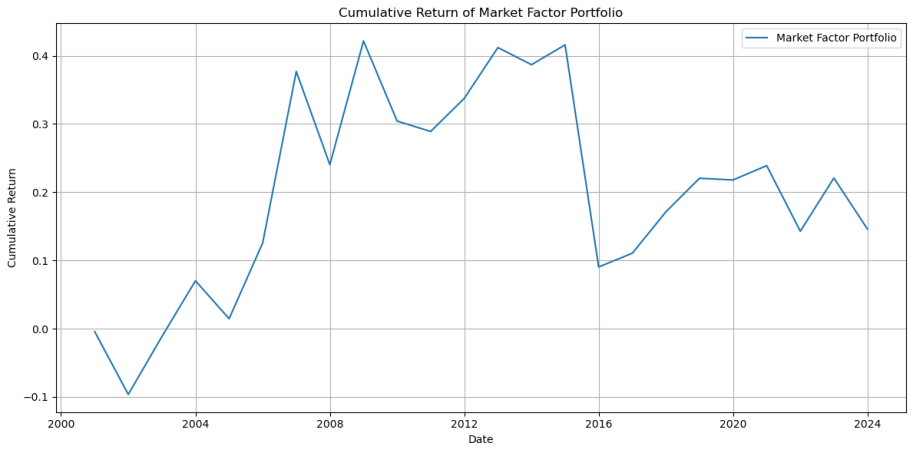
The China-specific three-factor model has dominated the explanation of cross-sectional stock returns in the Chinese A-share market since the work of Liu et al. However, their evidence is limited to the sample period of 1995–2014, while the Chinese equity market has undergone substantial changes. Whether the original size and value premiums persist and whether the three-factor model retains its explanatory power in the post-2014 remains an open empirical question. This study replicates and extends the Liu–Stambaugh–Yuan three-factor framework using updated A-share data spanning 25 years, from January 2000 to December 2024. Strictly following the original data-cleaning rules, portfolio sorting procedures, and factor construction methodologies, this paper constructs the market factor, size factor, and value factor. Based on full-sample time-series regressions, the replicated model achieves an average R² of 0.6365, which is notably higher than the 0.55 reported in the original study, indicating strengthened explanatory power. The sub-sample analysis further confirms that the size premium is largely driven by micro-cap stocks in the bottom 30% market capitalization segment, whereas the value premium remains robust across all firm sizes. This paper verifies the long-term validity and reliability of the Chinese three-factor model. The results reveal that size and value anomalies continue to persist in China's maturing stock market, providing new evidence for asset pricing research and quantitative investment applications in the Chinese market.