Articles in this Volume

Research Article Open Access
Research on the Current Situation and Transformation of Enterprise Marketing Strategies Against the Background of Customs Closure of Hainan Free Trade Port
As a landmark measure of China's institutional opening-up, the customs closure operation of Hainan Free Trade Port has formed a market ecology and competition pattern different from the Chinese mainland by building a special institutional system of "first-line liberalization and second-line control". The original marketing models of enterprises, built on the rules of the unified domestic market, have encountered adaptive difficulties. Promoting the systematic transformation of marketing strategies has become the key for enterprises to grasp policy dividends and cope with market competition. By reducing institutional transaction costs, expanding market openness and driving the upgrading of consumer demand, the customs closure policy not only brings enterprises development opportunities such as cost optimization, market expansion and international layout, but also exposes enterprises to practical challenges including internationalized competition, transformed consumer demand and insufficient policy adaptability. Enterprises need to adapt to changes in the institutional environment and carry out systematic transformation of marketing strategies in terms of product brand upgrading, refined pricing mechanisms, full-scenario channel integration, and digital and cross-cultural adaptation of promotion and communication. Such transformation is not an adjustment of a single element, but a systematic project involving strategic positioning, resource allocation and organizational capabilities. Enterprises should regard the customs closure policy as a long-term opportunity for marketing innovation, so as to gain sustainable competitive advantages in open competition.
Show more
Read Article PDF
Cite
Research Article Open Access
Carbon Information Disclosure and Corporate Financing Constraints
Global warming keeps worsening, pushing greenhouse gas emission control into a worldwide mainstream. As China's carbon emissions trading market has grown to cover the entire nation, statistical accounting and trading management of carbon emissions of enterprises are also increasing. Against this backdrop, carbon information disclosure and relief of financing constraints have become core issues for listed enterprises to address. Taking A-share listed companies in China as an example, this paper examines how corporate carbon information disclosure influences enterprise financing constraints by applying a Difference-in-Differences model under relevant policies. This paper further explores the moderating effect of corporate ownership nature. The results indicate improving the level of carbon information disclosure can reduce financing constraints for enterprises. Consistent conclusions can be obtained through a series of robustness checks. This paper provides more research perspectives for carbon information disclosure management and empirical evidence for enterprises to actively plan and implement carbon information disclosure to improve their competitiveness and reduce financing costs.
Show more
Read Article PDF
Cite
Research Article Open Access
ESG Information Disclosure and Capital Market Performance of AI Enterprises: A Case Study of Microsoft
Article thumbnail
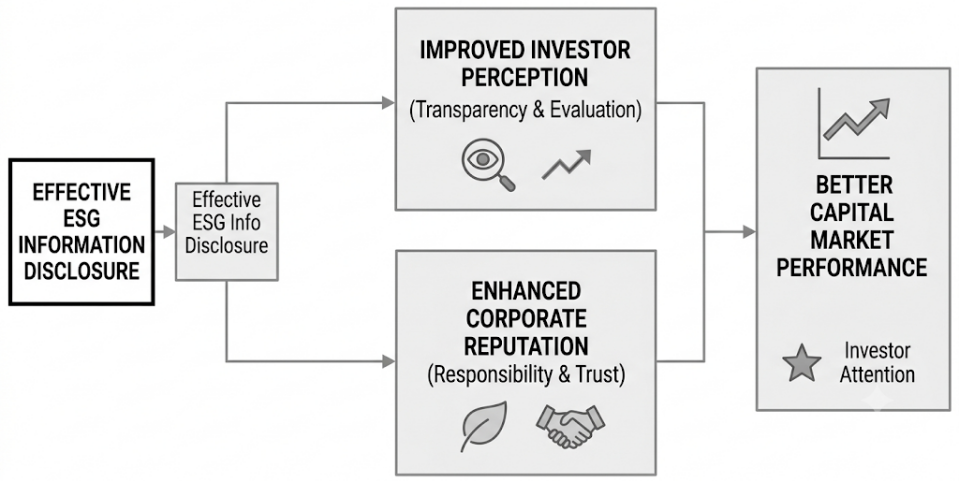
With the rapid development of artificial intelligence (AI), technology enterprises are now facing increasing expectations from all sectors of society for sustainable development, ethical governance and corporate transparency. Disclosures of Environmental, Social and Governance (ESG) information have reduced information asymmetry and boosted investor confidence in the company. Most studies to date have concentrated on traditional industries, and the application of ESG disclosure in AI enterprises has not been extensively studied. Research on the Impact of ESG Information Disclosure on Capital Market Performance in AI Enterprises: A Qualitative Case Study of Microsoft. Based on the above literature review and case studies, this paper will examine the ESG disclosure traits and sustainability efforts of Microsoft, and explore how such factors might affect the company's market performance. According to the above research, the completeness, openness and AI-specific governance of Microsoft's ESG disclosure are all relatively high. Responsible AI, cybersecurity measures, data privacy protection and technology risk management have all been added to the new list of ESG risks in the era of artificial intelligence. Based on the above analysis, high-quality ESG disclosures will enhance capital market performance by improving information symmetry, increasing investor confidence, promoting corporate reputation enhancement, and reducing uncertainty under the risk of AI. In light of the above contributions, this study is still limited by a single case and a qualitative approach. Future studies may employ a comparative and quantitative method to explore the reasons behind the differences in the effect of ESG disclosures on market prices of AI companies. This study provides some information on ESG governance in AI companies and shows that AI-focused ESG disclosure is gradually being applied to support long-term development of these companies.
Show more
Read Article PDF
Cite
Research Article Open Access
The Co-opted Cyborg: Self-Construction and the Reproduction of Power in Female Technological Bodies in Popular Visual Culture
As science-fiction imagery, video games, and cosmetic technologies permeate everyday culture, female boides are increasingly presented as cyborgs, mechanical bodies, virtual avatars, and beautified bodies. Against this background, this paper examines whether these technological bodies truly realize the emancipatory promise of cyborg feminism. Drawing on Donna Haraway's cyborg feminism, Laura Mulvey's theory of the male gaze, and Anne Balsamo's theory of gendered body technologies, this study adopts close reading, case analysis, and textual comparison to analyze popular cultural works including Frankenstein, Love, Death & Robots, The Substance, The Plastic Surgery Game, NieR: Automata , and Cyberpunk 2077 . The paper argues that female cyborg bodies do not automatically achieve post-gender liberation. Instead, they are often reabsorbed into patriarchal and capitalist structures through traumatic empowerment, aesthetic discipline, and the illusion of free choice. This oppressive reproduction of power takes different forms across literary texts, animated shorts, media representations of cosmetic enhancement, and open-world video games, yet these varied forms together constitute a unified cross-media logic of discipline directed at female technological bodies.
Show more
Read Article PDF
Cite
Research Article Open Access
The Impact of Opinion Leader Types in Virtual Communities on Consumer Behavior
Nowadays, with the development of the Internet economy, virtual communities have become important spaces for consumers to obtain information, communicating with others and making purchase decisions. Key opinion leaders (KOLs), as central actors in these communities, influence consumers not only through direct recommendations but also by shaping the community atmosphere. This study uses thematic synthesis and content analysis to review literature on virtual communities, KOL types, community atmosphere and consumer purchase intention. Based on the different roles of KOLs, this study divides them into three types: cognitive-expert, emotional-resonance and structural-hub KOLs. Cognitive-expert KOLs provide professional information and help form a supportive atmosphere. Emotional-resonance KOLs build emotional connections and strengthen members' sense of belonging. Structural-hub KOLs connect different groups and promote an open community environment. These findings indicate that community atmospheres affect perceived value, trust, emotional identification and purchase intention of consumer. Therefore, the influence of KOLs in virtual communities follows both a direct path and an indirect path through community atmosphere. This study develops a framework of KOL typology, community atmosphere, consumer behavior and suggests that brands should select KOLs according to marketing objectives while platform managers should maintain community trust and prevent excessive commercialization during their daily operations.
Show more
Read Article PDF
Cite
Research Article Open Access
Dual Subsidy Policies and Pricing Decisions of Cross-Border E-commerce Supply Chain
Article thumbnail
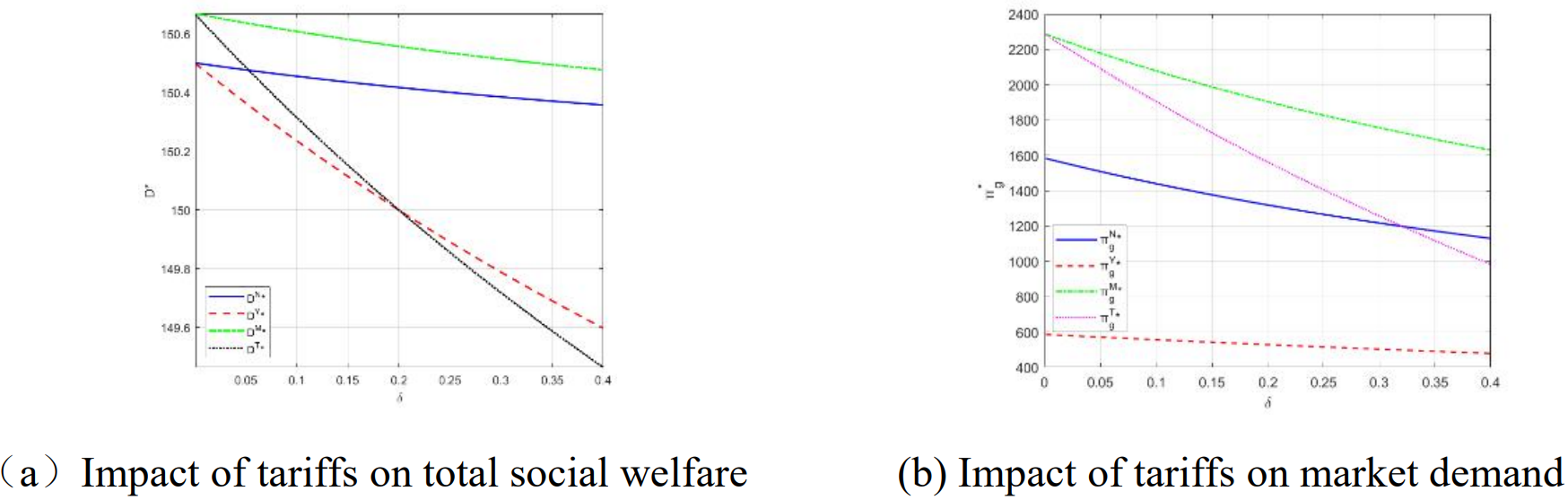
There is synergy space for dual subsidy policies, but precise threshold management is required to improve the comprehensive benefits of the entire supply chain. Both government promotion subsidies and platform tariff subsidies are regarded as key means to promote the development of cross-border e-commerce supply chains, yet the synergy mechanism of the two subsidies remains unclear. Against the background of intensifying tariff trade frictions, this paper constructs a game model with the participation of the government, cross-border e-commerce platforms, settled merchants and overseas consumers, and compares and analyzes supply chain pricing decisions under four scenarios: no subsidy, platform tariff subsidy only, government subsidy only, and coexistence of dual subsidies. The results show that a single subsidy policy cannot fully offset the negative impact of rising tariffs. Meanwhile, excessive platform subsidies will squeeze their promotion budgets and may induce merchants to raise prices. Although the linkage of dual subsidies can slow down the decline of demand under high tariff conditions, its effect is restricted by multiple factors such as subsidy intensity and tariff level.
Show more
Read Article PDF
Cite
Research Article Open Access
Naive Rolling Mean-Variance Optimization for Multi-Stock Allocation
Article thumbnail
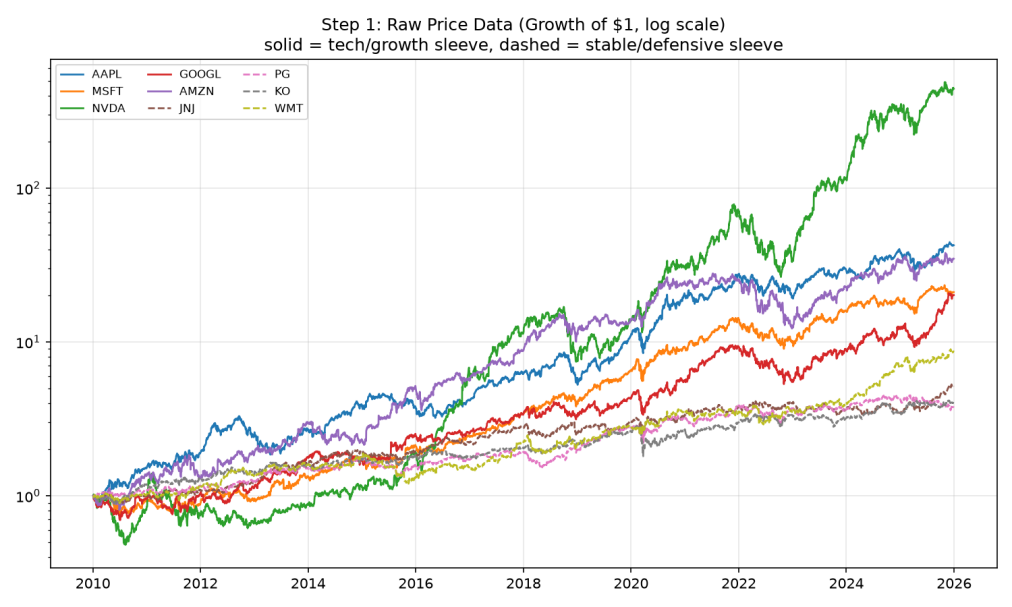
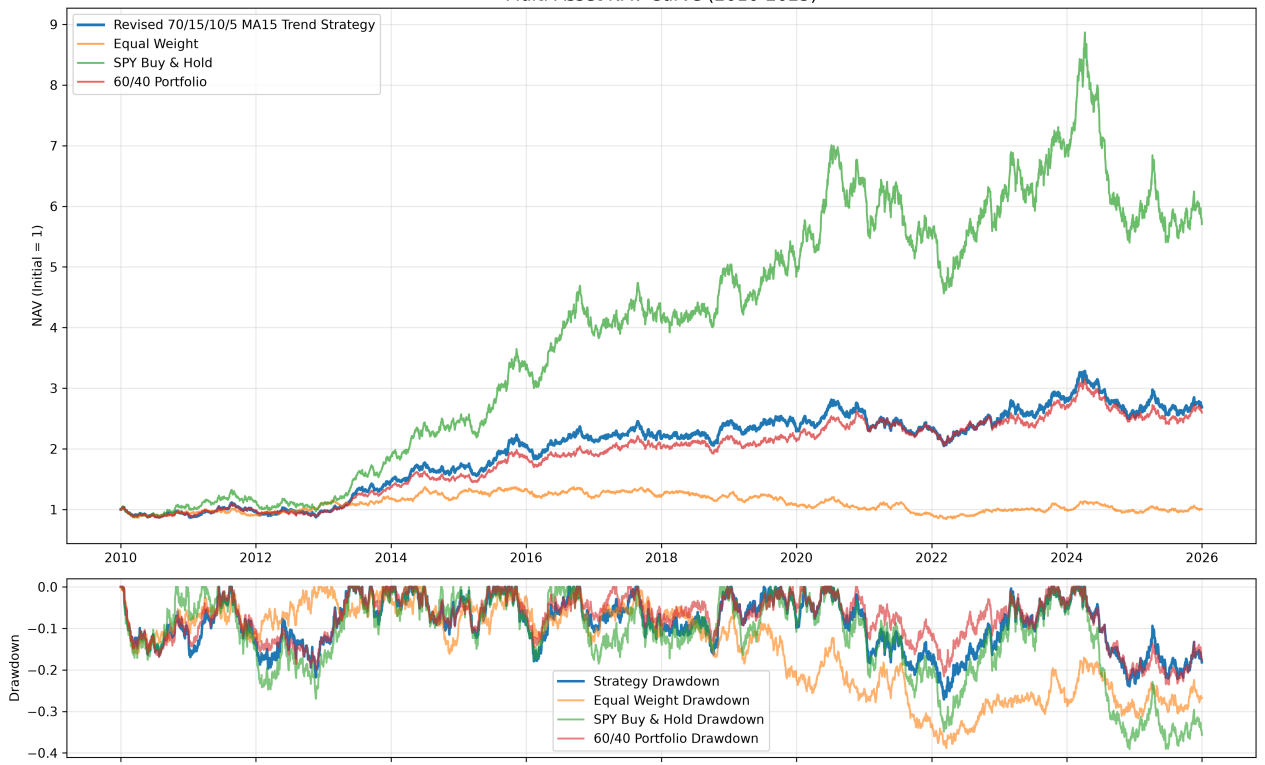
This research examines a naive rolling Mean-Variance Optimization (MVO) strategy for multi-stock allocation, in which expected returns and covariances are estimated solely from trailing historical data and re-estimated on a monthly basis. The central aim is to test empirically whether this deliberately simple approach can remain competitive despite the classical concern that MVO's sensitivity to estimation error makes it impractical relative to simpler heuristics such as trend following and momentum ranking. Expected returns and covariance are re-estimated monthly from a common trailing window, and a long-only, max-Sharpe portfolio is held until the next rebalance - deliberately simple, with no trend filter, momentum ranking, or volatility-targeting overlay. It is benchmarked against SPY buy-and-hold, a 60/40 portfolio, QQQ buy-and-hold, and the original design (a trend-filtered, risk-adjusted momentum strategy with volatility targeting and drawdown control). The strategy is evaluated over two independent, non-overlapping periods rather than a single blended sample: an in-sample window (2010-2019) used to fix the design, and a strict out-of-sample holdout (2020-2025) touched only once. On real market data for a nine-stock universe, the naive MVO strategy outperformed all four benchmarks on annual return and Sharpe ratio in both the in-sample (29.11% return, 1.19 Sharpe) and out-of-sample (36.53%, 1.16) periods - though not on maximum drawdown, where the momentum benchmark risk overlay produced a shallower worst-case decline in both periods, highlighting a trade-off between simplicity and downside protection that practitioners should weigh explicitly.
Show more
Read Article PDF
Cite