Articles in this Volume

Research Article Open Access
Research on Changes in Residents' Consumption Behavior under the Background of the Digital Economy
With the rapid development of internet technology, the digital economy has become a core driver of economic growth in China and even globally. This paper mainly studies the changes in residents' consumption behavior brought by the digital economy environment, such as the gradual shift from offline physical store shopping to online purchasing. The research aims to analyze how digital technologies and online platforms alter consumers' decision-making processes and consumption preferences, and to formulate relevant strategies and references for enterprises. This study adopts two research methods: literature analysis and case analysis. By observing data from e-commerce platforms and consumption trends on social media, it explores the role of technological development in driving consumption upgrading. The research finds that the digital economy has not only reduced the time and financial costs for consumers to search for product information but also given rise to new consumption patterns such as social shopping and personalized customization. However, it has also brought problems like information overload and personal data privacy risks. The conclusion indicates that digital consumption is characterized by online-offline integration, personalized recommendation, and community-based consumption. Future research can focus more on consumption equity issues arising from the digital industry.
Show more
Read Article PDF
Cite
Research Article Open Access
The Study on the Effect of Regional Education Cooperation Project of SEAMEO on Human Capital and Economic Development in Southeast Asia
In the process of regional economic integration in Southeast Asia, the uneven development of human capital is a bottleneck that affects the overall development of the region.Against this backdrop, the Southeast Asian Education Ministers' Organization (SEAMEO), as the most important educational cooperation institution in the region, plays a crucial role in promoting the improvement of human capital through a series of educational cooperation activities, thereby driving economic development. This article uses literature review and comparative analysis to summarize and extract these projects, exploring the mechanism of how SEAMEO educational cooperation activities promote economic development by improving human capital, and analyzing the changes in education levels in different countries. Research shows that the SEAMEO project can help increase the quantity and quality of human capital in Southeast Asia, thereby promoting economic growth in the region, and the effect is more pronounced for underdeveloped countries. At the same time, this paper points out the shortcomings of the project and proposes improvement measures in order to provide reference for future educational exchanges and economic development in Southeast Asia.
Show more
Read Article PDF
Cite
Research Article Open Access
Irrational Investor Behavior from a Prospect Theory Perspective: An Analysis of the Chinese Stock Market
Traditional finance generally takes rational decision-making and market efficiency as its starting point, assuming that investors process information rationally. In actual trading, however, investors are influenced by reference points, their response to losses, and subjective judgment. Focusing on the Chinese stock market, this paper reviews and compares existing studies to explain prospect theory through three elements: the value function, loss aversion, and decision weights. It then discusses the disposition effect, differences across investor groups, and heterogeneous beliefs. The literature shows that individual investors are especially susceptible to behavioral biases because of limits on attention and information processing. Institutional investors may also be influenced by agency problems, performance evaluation, and organizational decision-making. Prospect theory extends traditional financial models by offering a better account of actual choices, but whether individual biases develop into persistent market anomalies also depends on how information spreads, trading constraints, and the strength of arbitrage.
Show more
Read Article PDF
Cite
Research Article Open Access
The I mpact of the Federal Reserve ' s M onetary P olicy A djustments on E xchange R ate R isk and F inancing C osts for E merging M arket C ompanies
With the deepening of global economic integration and the strengthening financial ties, the Federal Reserve's monetary policy significantly affects the operating environment and financial structure of emerging market firms. These effects operate through changes in dollar liquidity, cross-border capital flows, and exchange rates. This is associated with a typical pattern of "gradual accumulation of risks during easing phases and concentrated risk release during tightening phases" across different stages of the business cycle. This paper examines the mechanisms and heterogeneous effects of the Federal Reserve's cyclical monetary policy adjustments on exchange rate risk and financing costs of emerging market firms, further revealing the underlying logic and transmission channels of its cross-border spillover effects. By reviewing relevant literature and macroeconomic background data on changes in the Federal Reserve's monetary policy cycles from 2010 to 2023, and integrating the structural characteristics of typical emerging market firms in Asia, Latin America, and Central and Eastern Europe, this paper analyzes exchange rate risk evolution, financing cost dynamics, and firm heterogeneity through theoretical and mechanism-based analysis. The results show that the Fed's easing cycle promotes the expansion of foreign currency debt and the accumulation of exchange rate risk among emerging market firms, whereas the tightening cycle triggers concentrated risk release via dollar appreciation and rising interest rates, increasing financing costs and tightening financing conditions. Export-oriented firms exhibit natural hedging capacity, while firms with high foreign currency debt and domestic demand are more strongly affected.
Show more
Read Article PDF
Cite
Research Article Open Access
Active Mutual Fund Performance, Benchmark Exposure, and Selection Skill in China's A-Share Market
Article thumbnail
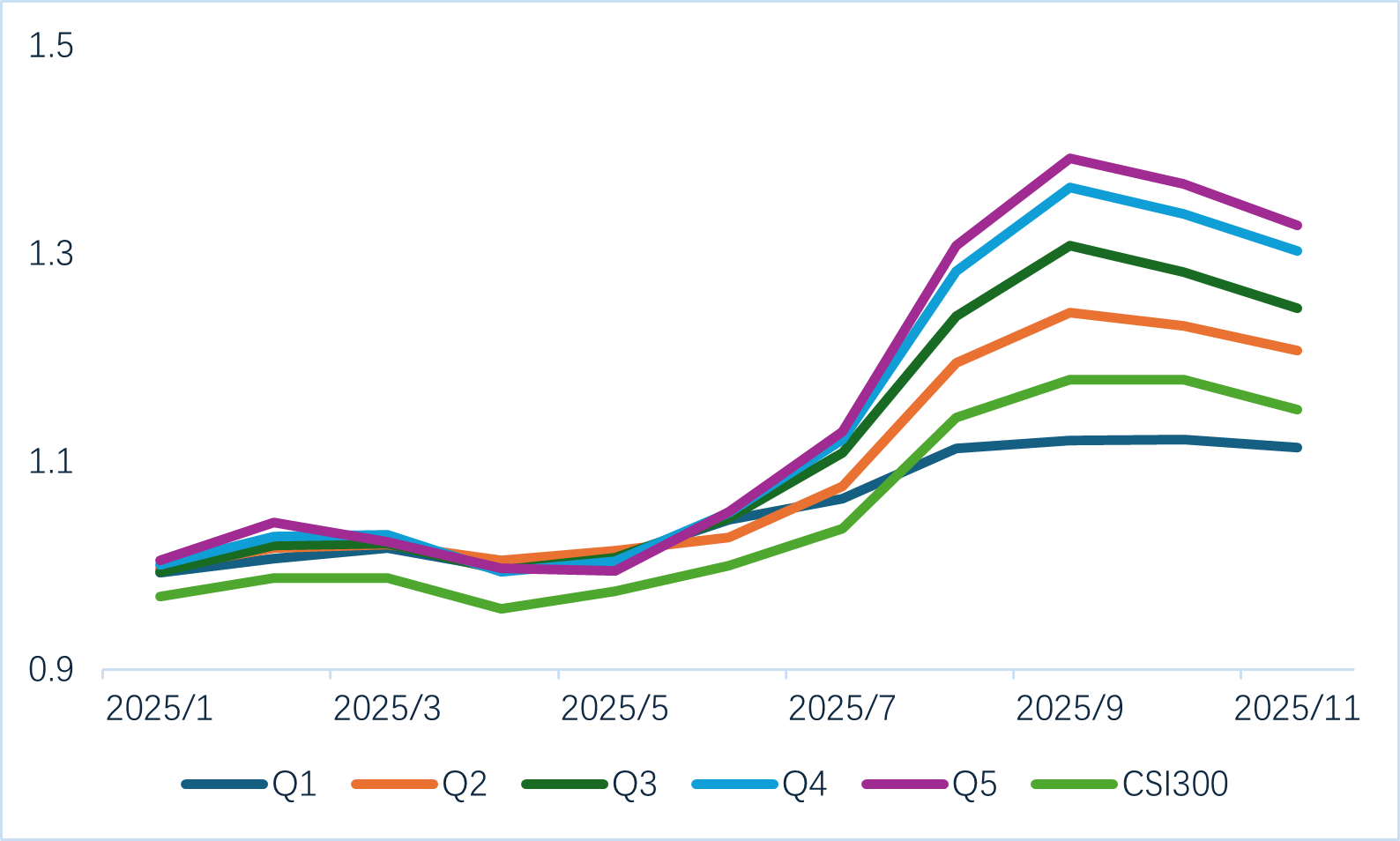
This paper tests whether active funds can generate extra value beyond passive benchmarks, and how such value should be understood. The paper uses monthly fund returns and A-share indices, including CSI300, CSI500 and CSI800, to examine fund performance from several perspectives, including aggregate fund returns, cross-sectional differences, benchmark regressions, quintile sorting, market-neutral adjustment, and a 2025 out-of-sample test. The results show that the performance of the equal-weighted (EW) active-fund portfolio is better than that of the main benchmarks, but this result masks large differences across individual funds. Many funds have positive alpha estimates, but far fewer funds have statistically significant alpha. A sorting strategy based on past 12-month returns is able to create a clear gap between high- and low-ranked funds, and this gap remains visible in 2025. Nevertheless, after market-neutral and dual-benchmark adjustments, part of the top-quintile return is absorbed by market and style exposure. Overall, active funds appear to add value, but the evidence points to a mixture of exposure, persistence, and smaller residual alpha rather than pure manager skill.
Show more
Read Article PDF
Cite