Articles in this Volume

Research Article Open Access
Information Cocoons in Social Commerce: A Study of Causes, Effects and Proposed Interventions
Article thumbnail
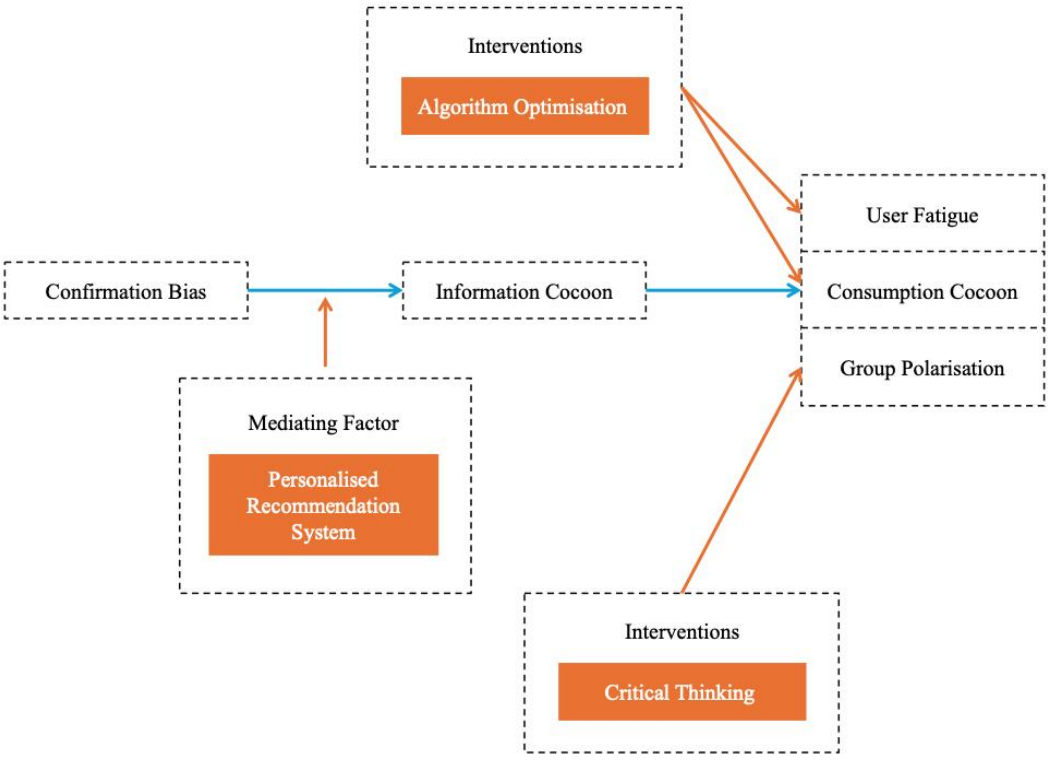
In social commerce, a platform that integrates social and transactional functions, the information cocoon has been identified as an impactful problem affected by personal and technical factors and has attracted the attention of many researchers. Therefore, this paper will conduct a systematic literature review to explore the causes of information cocoons, their various effects, and proposed measures, providing a comprehensive framework for scholars and business leaders to understand information cocoons. Specifically, the information cocoon comes from confirmation bias, in which people only pursue information consistent with their cognition, and personalised recommendation systems will positively mediate this causal relationship. Besides, the formation of information cocoons will have three effects, which are consumption cocoons, user fatigue, and group polarisation. To mitigate these negative effects, scholars believe that potential solutions are to improve individuals' information filtering ability and optimise personalised recommendation algorithms. All in all, this paper analyses the whole process of 'causes-consequences-interventions' of information cocoons in social commerce for the first time, providing comprehensive theoretical guidance for the economic development of social platforms.

Show more
Read Article PDF
Cite
Research Article Open Access
Generative AI in Accounting and Auditing: A Literature Review and Future Agenda
Generative artificial intelligence (AI) have a unique value on helping people as a tool, it already show its outstanding advantage on some area, like data dealing, form the document and check risk on some level, this kind of tool not only bring the new development opportunity, but also face many challenge. In recent year, this change attract many people to focus and explore. However, there is still a lack of comprehensive analysis and research, and there is not enough in-depth discussion on key issues. This article adopts the methods of keyword retrieval and citation traceability to identify the literature related to the application of generative AI in accounting and auditing, and systematically analyze and summarize it. It aims to reveal the development trajectory of generative AI, the current application status and its great potential, while exploring solutions to the current key challenges. Solving these problems is of great significance to promote the efficient and reliable implementation of generative AI in the field of accounting and auditing. This will help accounting and auditing professionals adapt to technological changes, deepen the industry's understanding of emerging technologies, support the improvement of relevant policies and regulations, and provide guidance for future research.
Show more
Read Article PDF
Cite
Research Article Open Access
Discuss the Product Adaption Approach for Intangible Cultural Heritage Fashion Products, and Understand the Needs of Chinese Consumers
Article thumbnail
This paper examines how intangible cultural heritage (ICH) fashion products adapt to the contemporary Chinese market and meet diverse consumer demands. It conducts a PEST analysis and three case studies—Guo Pei, ZHUCHONGYUN, and Loewe—to explore successful integration strategies. The findings reveal that growing national confidence and the national-tide phenomenon have significantly increased consumer interest, particularly among younger demographics who value cultural depth and innovative design. Consumers show strong preference for products that retain traditional craftsmanship while offering modern practicality. However, many products fail to resonate due to superficial use of ICH elements. The study concludes that effective product adaptation requires embedding ICH into everyday life, creating emotional connections, and avoiding mere formalistic borrowing. It also highlights the importance of brand authenticity and cultural storytelling. Future research should expand the scope to include service experiences, marketing innovations, and a wider range of brands to further validate these strategies.
Show more
Read Article PDF
Cite
Research Article Open Access
Evaluating a ResNet-50-Based Interactive Image Classifier for Recycling Materials
Article thumbnail
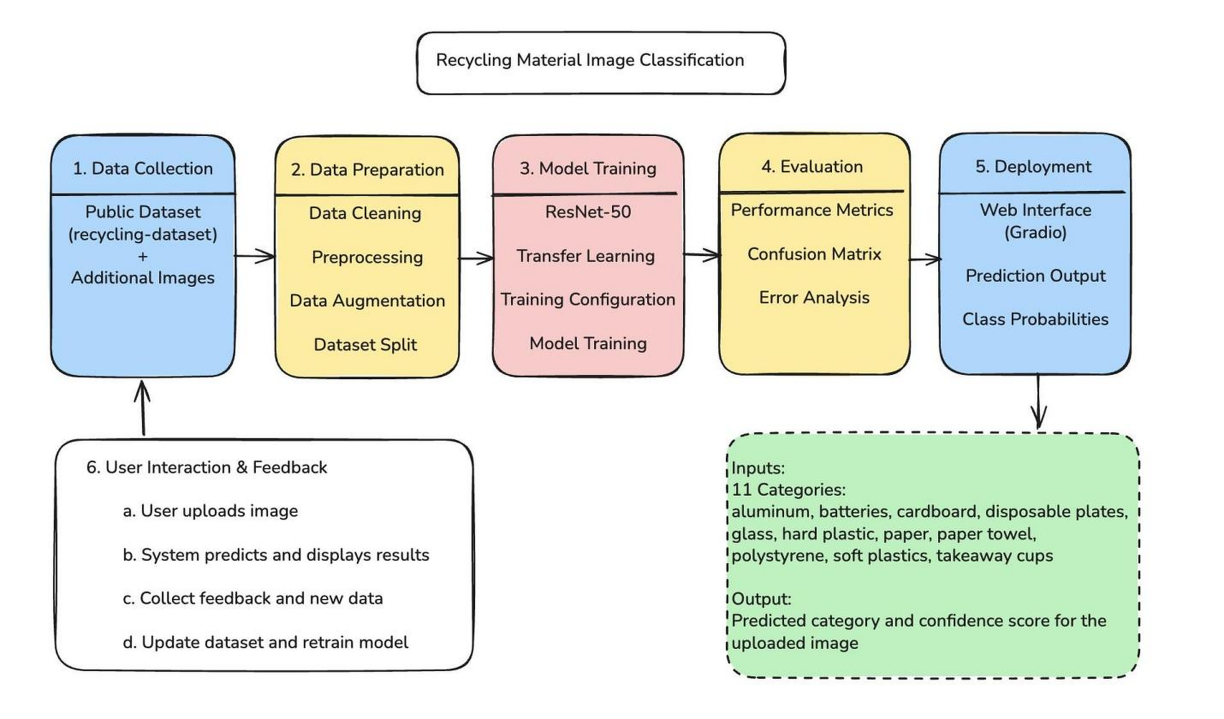
Accurate recycling relies on correctly identifying recyclables, but superficially identical things might make hand sorting ineffective. This work created and tested an image classifier based on an ImageNet-pretrained ResNet-50 for eleven types of recycling materials. A public dataset of 3,107 photos was split into 2,485 training and 622 test images. Transfer learning was utilized to tailor the pretrained network to the recycling categories. The classifier scored roughly 75% accuracy on the independent test set. The confusion matrix showed that the most common errors were between visually comparable categories, such as paper and cardboard and soft and hard plastics. The trained classifier was also used in a Gradio interface that takes an uploaded image and predicted category along with confidence values. The findings indicate that image classification may help with recycling education and preliminary sorting, but unclear predictions should be confirmed by a user and the system tested in real-world settings before widespread adoption.
Show more
Read Article PDF
Cite
Research Article Open Access
Beyond Donations: Building Sustainable Earned-Income Models for Nonprofit Organizations in China
Article thumbnail
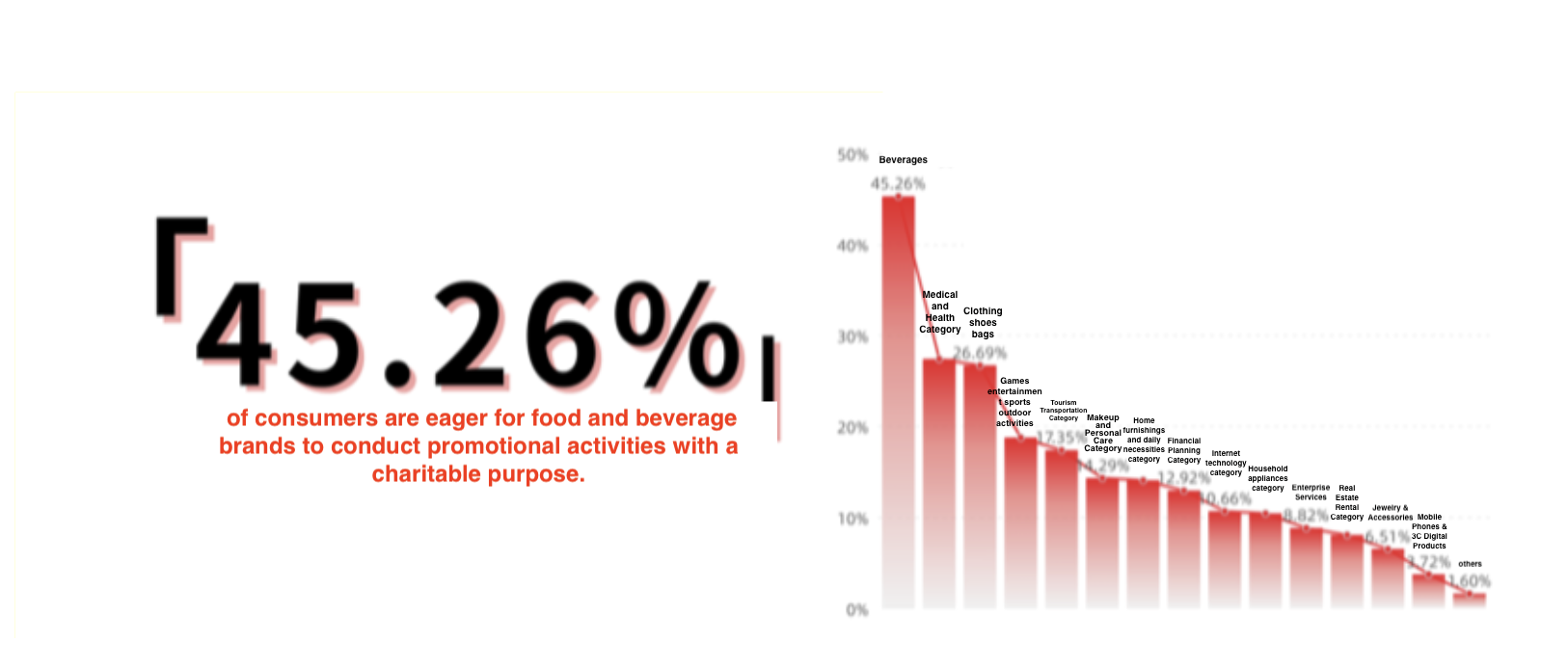
Traditional non-profit organizations in China rely heavily on various forms of donations. This strong reliance leads to unstable funding and hinders the long-term realization of these organizations' social missions. Against this backdrop, the public welfare consumption model and the social enterprise model offer potential ways to reduce reliance on one-time donations and generate income. This article first reviews three classic international social enterprise models, TOMS, Microfinance Bank, and Patient Capital, to identify the core mechanisms, advantages, and inherent risks of sustainable and autonomous revenue generation. Based on the theory of public welfare consumption, this study further conducts a comparative case analysis of two local public welfare projects: BCAF charity gift box and Chinese TikTok's "Turning Paints into Reality". The study finds that relying solely on public welfare promotion cannot sustain long-term income. For product-based public welfare models, product quality and genuine consumer demand are the basis for repeat purchases, rather than the public welfare significance of the products; social media mainly serves as a communication tool for spreading public welfare stories and building public trust, but short-term online popularity is difficult to translate into stable financial support. The direct sale of creative charity products faces issues such as production costs and market competition. Cooperation between enterprises and non-profit organizations can effectively alleviate the operational burden of non-profit organizations. This study believes that non-profit organizations should adopt a mixed model combining government funding, enterprise cooperation, product sales revenue, and public donations to obtain funds. To achieve long-term financial sustainability, non-profit organizations must strike a balance between fulfilling their charitable missions and conducting feasible business activities while maintaining stable market demand.
Show more
Read Article PDF
Cite
Research Article Open Access
Clone-Free Two-Model Order-Flow Weighting: A 30-Stock A-Share Case Study
This paper evaluates a two-model order-flow weighting diagnostic and its use in trend and reversal rules. The design removes a structural defect in an earlier three-candidate specification: splitting one signed coefficient into constrained half-axis models creates a candidate that can collapse to the persistence null. The proposed order-flow response weighting (OFRW) implementation instead compares exactly two predictive models—a persistence null and one signed-association model—using prequential Student-t log scores over a common rolling window. Conditional on the incremental-model weight, a normal-CDF transform of the signed coefficient and its Newey–West standard error divides exposure between trend and reversal sleeves. This transform is an allocation heuristic, not a posterior probability. The archived case sample contains 30 A-shares selected from December 2021 inputs; 2025 is a retrospectively designated evaluation year, not a prospective holdout. The first-stage small-order-flow forecast improves on a historical mean but not on a rolling AR(1), and the signed-association model has slightly lower mean log scores than the null in both stock groups. After 0.10% one-way costs, OFRW earns 1.68% with a 0.743 Sharpe ratio. The two reported HAC contrasts against response-equal and swapped mappings do not reject zero, but they are not exposure matched. The result is a transparent negative case study: clone-free weighting repairs model identity but does not establish incremental trading value.
Show more
Read Article PDF
Cite
Research Article Open Access
Measuring Crypto Tail Risk under Extreme Shocks: An EVT-GARCH and CAViaR Comparative Study
Article thumbnail
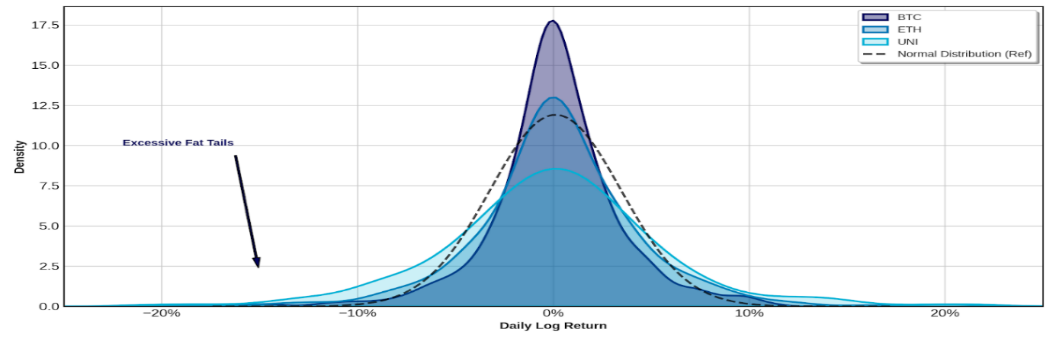
Cryptocurrency markets face frequent extreme price swings, flash crashes and liquidity shocks. The expansion of decentralized finance, stablecoins and interconnected trading venues further complicates tail-risk measurement. This study examines extreme downside risk in Bitcoin, Ethereum, Uniswap, and DAI, treating the 2022 FTX collapse as the primary exogenous shock event. Daily closing prices from the Kaggle dataset are aligned by calendar date and transformed into logarithmic returns. Descriptive statistics and Jarque-Bera tests are first conducted, followed by an EVT-GARCH model incorporating an FTX event dummy and an Asymmetric Slope CAViaR model for tail-risk estimation. The results reveal significant deviations from normality, heavy tails, and substantial differences across asset types. The FTX window is associated with additional volatility in all four assets, including de-pegging-related risk in DAI. Backtesting at the 99% and 95% VaR levels indicates that both models provide reliable risk forecasts. EVT-GARCH generates smoother risk estimates, while CAViaR responds more quickly to recent negative shocks and records smaller violation-count deviations for the benchmark assets. These findings support the joint use of complementary models in cryptocurrency stress testing and risk monitoring.
Show more
Read Article PDF
Cite
Research Article Open Access
Does Higher Ex-Ante Volatility Predict Higher Subsequent Monthly Excess Returns?
This study examines whether a higher ex-ante volatility of large‑capitalization United States stocks higher monthly excess returns. By using monthly stock data for Standard & Poor's 500 (S&P 500) companies from 2015 to 2024, the study measures ex-ante volatility as the annualized standard deviation of each stock's previous 12 months of returns. The dependent variable is the excess return of the next month, and the Fama-French market excess return is added as a control for general market fluctuations. Based on the above results, volatility has a weak but positive effect on future excess returns. Stocks with higher ex-ante volatility have generated higher average monthly excess returns, but this positive correlation is no longer statistically significant after controlling for systematic market risk. Period analysis shows that the above relationship is not always the case. Volatility has little independent predictive power before the public health event. During the public health event, the association between volatility and the future excess return is much stronger and still significantly positive after controlling for the Fama-French market excess return. The effect is still positive but has decreased. Therefore, based on the above data, volatility may offer a higher risk premium in times of financial instability.
Show more
Read Article PDF
Cite