Articles in this Volume

Research Article Open Access
Research on Wotobuy and Platform Capitalism
The Web 3.0 era has made the use of digital e-platforms extremely popular, and people can access various digital platforms for online communication through mobile phones, computers and other devices. Nowadays, when material life is booming, the emergence of digital e-platforms has also led to great changes in people's consumption patterns. The platform capitalism arising from digital e-platforms has gradually taken a dominant position in the global economic market, and e-commerce-based platforms combined with social media platforms have created a new type of s-commerce. This article will use the research method of qualitative analysis, taking Wotobuy as an example, to introduce Wotobuy's platform characteristics and operation modes, and to explore and explain how platform capitalism affects consumer spending patterns, sectors of the economy, the labor market, the value creation process and social dynamics. The research finds that platform capitalism has changed the way consumers shop, but it has also raised significant concerns about power, privacy and the treatment of employees. In order to address these concerns, a balance must be found between innovation and regulation, and the development and intervention of relevant laws is necessary due to the growing influence of platforms.
Show more
Read Article PDF
Cite
Research Article Open Access
The Market Efficiency in the Significant Events/Global Events: A Review of Empirical Research
The efficient market hypothesis is a significant theory widely applied in modern economic and financial research about the impact of sudden global emergencies on various markets. Investigating the influence of the Efficient Market Hypothesis on public contingencies can augment the understanding of market behavior and investors’ decision-making processes. This could enable anticipating market trends and risks, facilitating prudent investment activities. This study examines the empirical research through the methodology chosen, application, and comparison of conclusions to summarize the effects of the crisis on financial market efficiency within a theoretical analysis framework. This study explores the different methodologies and results of research that test market efficiency in response to events impacting economic performance. As market theory evolves, increasingly refined models are being used, leading to more precise measurements of event effects on markets and better forecasting of market impact for effective decision-making.
Show more
Read Article PDF
Cite
Research Article Open Access
Study on the Influencing Factors of China's Outward FDI in RCEP Member Countries
The Regional Comprehensive Economic Partnership (RCEP) is the world's most populous free trade area with the largest economic and trade scale and the most development potential, and it will officially come into force in 2022, providing an opportunity for RCEP member countries to attract investment from China. Based on the information of economic and demographic characteristics of RCEP member countries from 2012 to 2020 and the panel data from China's ODFI, this paper measures and examines the influencing factors of China's direct investment in RCEP member countries by constructing a bidirectional fixed effects panel model of China's direct investment in RCEP countries. It is found that: the host country's net per capita national income, per capita GDP growth rate, merchandise trade and service trade inhibit China's investment in RCEP member countries, while the host country's GDP growth rate, per capita GDP can promote China's investment in RCEP countries, the host country's industry, exchange rate, and legal indices are not the main factors affecting China's direct investment in RCEP, and should be used in the comprehensive investment decision-making when On the basis of considering the unbalanced economic development of each country, the optimal layout of China's direct investment in RCEP member countries should be co-ordinated to provide more opportunities for Chinese enterprises to enter the markets of RCEP member countries.
Show more
Read Article PDF
Cite
Research Article Open Access
The Impact of COVID-19 on the Chinese and American’s Economies and Its Comparison
Article thumbnail
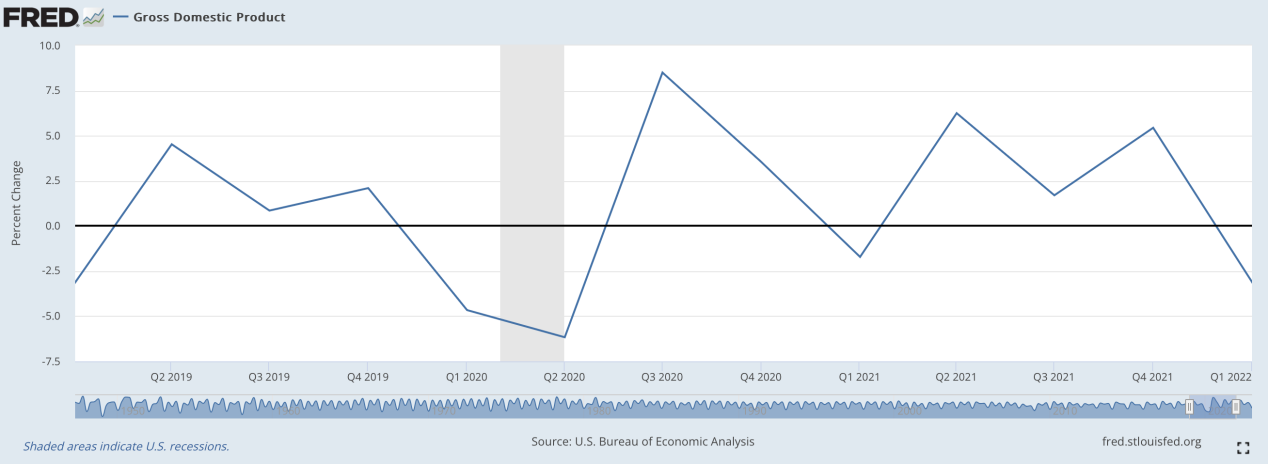
This paper presents a comprehensive analysis of how COVID-19 has impacted the economies of China and the United States. It explores their responses, policy measures, and sectoral dynamics during and in the aftermath of the pandemic. Both countries faced significant economic contractions as a result of the crisis. However, their paths to recovery diverged. China's centralized governance played a crucial role in enabling a swift rebound, as the government implemented strict containment measures and provided substantial fiscal and monetary support. In contrast, the United States, with its federal structure, encountered a more prolonged recession, as coordinated responses were more challenging to achieve. Nonetheless, both governments recognized the importance of adaptive policies, implementing significant fiscal and monetary measures to support their economies. The pandemic revealed vulnerabilities in global supply chains, leading to efforts to enhance resilience. Both China and the United States recognized the need to diversify supply chains and develop resilient industries to reduce reliance on international markets. Sectoral analysis highlighted divergent impacts, emphasizing the urgency of economic diversification and the promotion of resilient industries capable of withstanding future shocks. Employment challenges and labor market dynamics were critical concerns for both nations. Both China and the United States faced the daunting task of preserving jobs and ensuring stability in their labor markets. The study recognizes the importance of implementing measures to support workers during such challenging times and advocates for inclusive approaches to foster a sustainable recovery.
Show more
Read Article PDF
Cite
Research Article Open Access
Research on China's Fertility Decline and Economic Sustainable Development
China's social development has been influenced by a myriad of factors, including labor force dynamics, population aging, and economic growth. Notably, the gradual decrease in the birth rate has emerged as a critical concern, warranting in-depth analysis of its implications. This paper delves into the current state of China's birth rate, identifies the challenges associated with it, and explores its impact on the nation's comprehensive national strength. This paper conclude that the effect of the birth rate on the sustainability of China's economy. As the domestic consumer base dwindles, economic growth may face obstacles due to reduced domestic demand. Additionally, a higher dependency ratio, with fewer workers supporting a growing elderly population, could further strain public resources and social welfare systems. In light of these challenges, this abstract offers recommendations to address the declining birth rate and its impact on China's economic development.
Show more
Read Article PDF
Cite
Research Article Open Access
The Impact of China Economic Policy Uncertainty on CSI 300: An Analysis of the Mediating Effect of Investor Sentiment
Article thumbnail
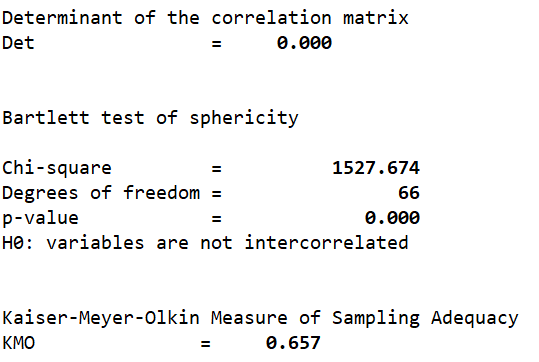
This paper explores the mediating effect of investor sentiment on the relationship between China's economic policy uncertainty and the CSI 300 stock market returns. The study employs Principal Component Analysis (PCA) to construct the investor sentiment index, integrating six proxy variables. Additionally, the bootstrap analysis method is utilized to examine whether investor sentiment acts as an intermediary in determining the impact of economic policy uncertainty on stock market performance. The findings reveal that a significant portion (87.0%) of the total effect of economic policy uncertainty on stock returns is mediated through investor sentiment. The study underscores the pivotal role of investor sentiment in financial market behavior and emphasizes the need for policymakers to consider its influence during economic adjustments. Furthermore, it provides crucial recommendations for individual investors, promoting informed and rational decision-making in the dynamic financial landscape.
Show more
Read Article PDF
Cite
Research Article Open Access
Study on the Dynamic Relationship Between Individual Mortgage Policy and Housing Price Fluctuation in Zhejiang Province -Empirical Analysis Based on SVAR
Article thumbnail
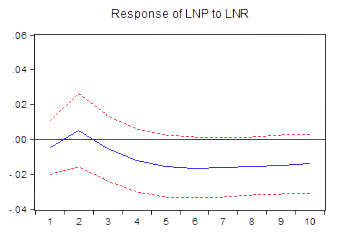
The eastern Chinese province of Zhejiang is highly developed and contributes to the real estate business. The paper uses quarterly data from 2011 to 2021 to create a Structural Vector Autoregressive (SVAR) model to explore the empirical dynamics between personal housing credit policies and house price changes in Zhejiang Province, China. Impulse response and variance decomposition research reveal that loan interest rates considerably affect housing values. Interest rates affect property values by 0.85% to 30.19% over time. The initial rise in loan interest rates boosts real estate values, but the successive increase will lower them until stability is reached. Large personal mortgage loans also affect housing prices. Throughout time, the share of factors affecting property prices with respect to mortgage loans ranges from 2.32% to 4.31%. The size of mortgage debt boosts home values. Thus, a corresponding easing of mortgage borrowing ceilings will boost home prices. The causal relationship between GDP and housing price swings is unclear, although its impact is stable with modest variations within a limited range. Zhejiang Province should be cautious when adjusting personal mortgage loans and interest rates while improving regulatory control. These techniques reduce market speculation and negative factors to ensure market stability and longevity.
Show more
Read Article PDF
Cite
Research Article Open Access
Research on Decentralized Finance Lending Protocols: A Case Study of Compound
Article thumbnail
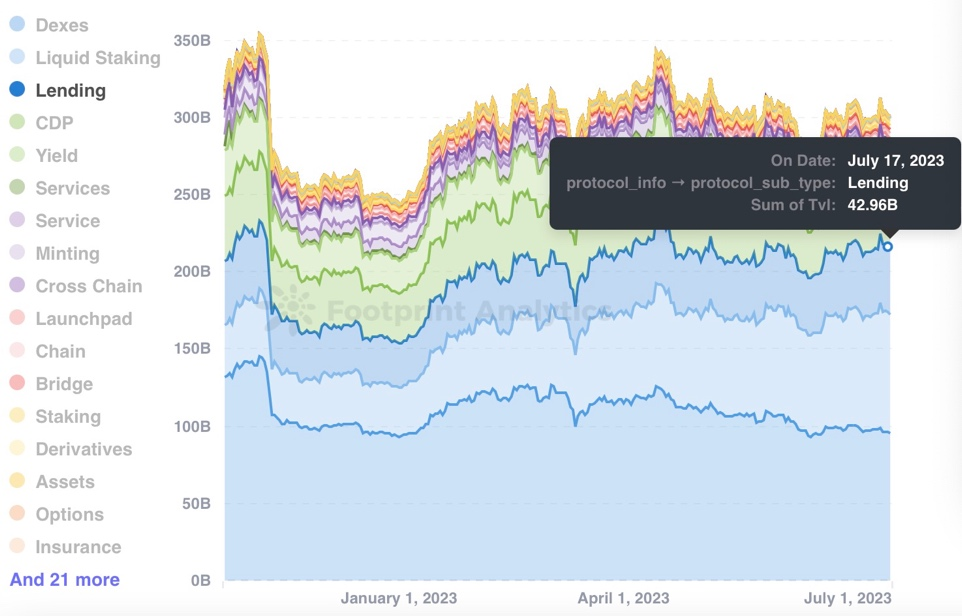
Decentralised finance (DeFi) is a decentralised peer-to-peer system based on blockchain technology that facilitates lending and borrowing through smart contract code and lending protocols replacing traditional financial activities that typically require trusted intermediaries such as brokers or banks. In this essay, the four factors of collateral presentation, borrowing rate, lending relationship, and subject of legal connection are compared between decentralized and centralized financial lending models. This paper illustrates the entire DeFi lending model using Compound as a real-world example. The borrowing interest rate is decided in real time by Compound's smart contract according to the supply and demand of funds in the market, so the borrower does not need to bargain with the lender. The smart contract will automatically match the money market. Additionally introduced are the DeFi innovation's concept and features. The paper concludes by discussing the advantages of DeFi lending and borrowing, the hazards associated with doing so, and providing an outlook on the future path of DeFi research.
Show more
Read Article PDF
Cite
Research Article Open Access
The Impact of Work-related Electronic Communication During Non-working Time on Work Performance
With the development of electronic information technology, the use of electronic communication equipment for work communication has become ubiquitous in people's work and life, and has brought a series of positive and negative effects. The purpose of this study is to review and analyze the academic literature on non-work time participation in work-related electronic communication. A significant finding is that most of the existing literature focuses on how non-working electronic communication affects employee initiative, work-family conflict, and time banditry behavior. At the same time, there is relatively little discussion on employee work performance. Therefore, this study aims to analyze the relationship between remote employees engaged in work-related electronic communication during non-working time and their work performance by applying affective events theory, job characteristics model theory, and job demands-resources model theory, to provide effective suggestions for enterprises and employees on how to balance work and life.
Show more
Read Article PDF
Cite
Research Article Open Access
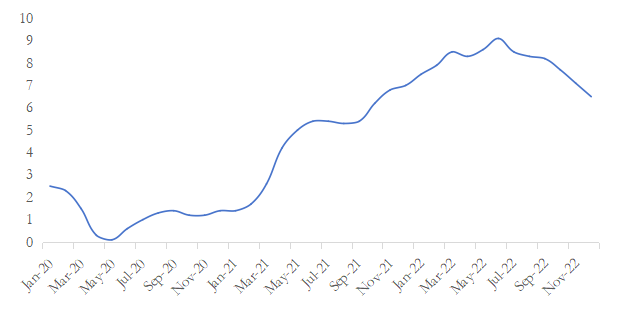
The Spillover Effect of the Federal Reserve’s Aggressive Interest Rate Hike on China’s Stock Market in the Post-pandemic Era
Article thumbnail
In March 2022, the sudden shift in monetary policy by the Federal Reserve, which has been followed by eleven consecutive interest rate hikes totaling 525 basis points, has had a profound impact on the global economy. This article utilizes an ARIMA model to forecast the Nasdaq and SSEC indices and empirically analyzes the spillover effects of the Fed's interest rate hikes and balance sheet reduction on the Chinese stock market. In the short term, the unconventional monetary policies of the Federal Reserve are expected to have significant negative effects on the Chinese stock market. However, in the long term, China's financial market will gradually absorb these impacts and adjust the stock market trajectory according to its own economic cycle. Based on this empirical research, the article offers recommendations for Chinese policymakers on how to safeguard against such international financial events. It emphasizes the need to strengthen regulation, closely monitor the monetary policy directions of both countries, and make flexible adjustments to policies, avoiding one-size-fits-all approaches. As China serves as a representative of emerging economies, the findings of this study have implications for policymakers in other emerging economies as well.
Show more
Read Article PDF
Cite