Articles in this Volume

Research Article Open Access
Analysis of the Impact of "Artificial Intelligence +" on the Digital and Intelligent Transformation of Sichuan Changhong - Taking Finance as an Example
Article thumbnail
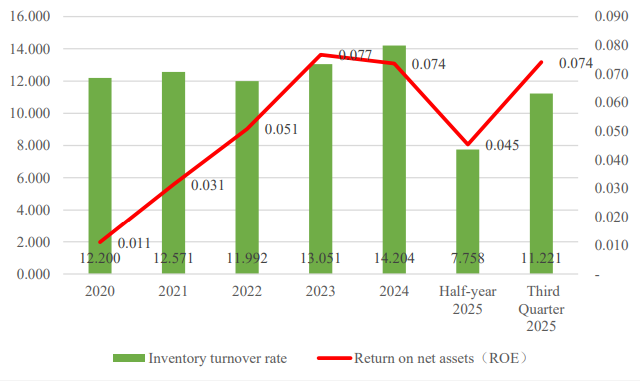
Under the background of the national strategy of the integration of artificial intelligence and real economy, financial digital-intelligent transformation has become imminent for traditional manufacturing enterprises. By conducting a case study of Sichuan Changhong, this paper investigates how the "Artificial Intelligence+" (AI+) strategy shapes the mechanisms and pathways underlying financial digital intelligence transformation in manufacturing companies. Empirical evidence from the case reveals that enterprise-wide digital and intelligent transformation is fundamentally propelled by financial digital intelligence. The evolution of "AI + finance" unfolds progressively, shifting from operational process automation to intelligent decision-making, which can only be achieved through integrated alignment among technology, organizational structure, and corporate strategy. Changhong has embedded AI into the core scenario of expense reimbursement, and achieved cost reduction and efficiency increase through intelligent order creation, approval and data analysis. The financial function has shifted from accounting to strategic, and the period expense ratio has decreased, and ROE and other profit indicators have steadily improved. This study explores the feasible path of "AI + finance" for traditional large enterprises, provides practical reference for the transformation of similar enterprises, and enriches the case studies in related fields.
Show more
Read Article PDF
Cite
Research Article Open Access
Shun Feng Enterprise Digital Intelligence Transformation Path and Enterprise Performance Analysis
Under the background of the development of digital intelligence economy and the country's promotion of digital intelligence upgrading of traditional industries, the logistics industry is facing the efficiency bottleneck of the traditional model, and it is urgent to respond to changes in market demand and industry competition through digital intelligence transformation. This article takes Shun Feng Express (SF) as a case, and uses the case study method to explore its digital intelligence transformation path and its impact on enterprise performance. The study found that SF Express has solved the pain points of the industry such as decision-making lag through the transformation of integration, digital intelligence, informatization and intelligent globalization, and achieved a double improvement in financial and customer-level performance: revenue and net profit grew steadily, new business expansion achieved remarkable results, customer satisfaction continued to lead, and the cooperation penetration rate of head enterprises was high. The core of its transformation lies in the upgrading of technical roles, in-depth coordination of software and hardware, and the development model of technology reinvigorating enterprises. This research enriches the theoretical cases of the digital and intelligent transformation of the logistics industry, provides practical reference for the transformation of logistics enterprises, and also provides reference ideas for the digital and intelligent upgrading of traditional industries.
Show more
Read Article PDF
Cite
Research Article Open Access
Stablecoins Will Become the Future Standard for Payments?
Article thumbnail
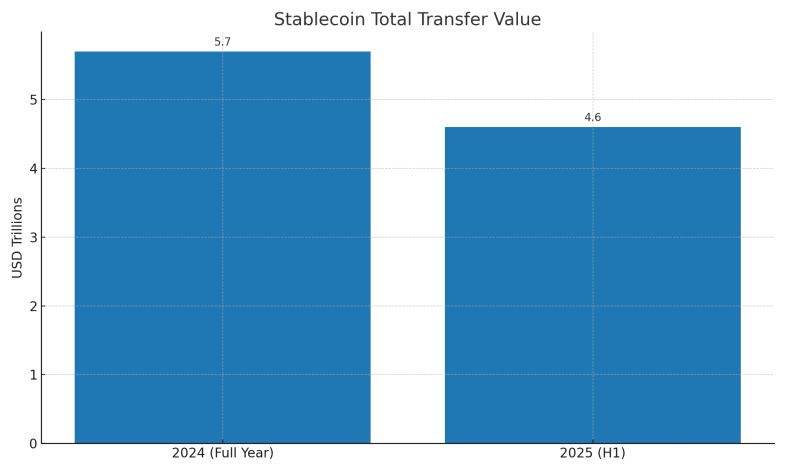
Stablecoins—crypto‑tokens are engineered to maintain a stable value, typically pegged to sovereign currencies—have evolved from niche trading instruments to candidates for mainstream payment rails. This paper will examine whether stablecoins can become a future payment standard. By examining recent market data, regulatory developments, and the historical economic criteria for assessing payment standards, this analysis demonstrates that stablecoins already facilitate trillions of dollars in annual transactions. It is also increasingly integrated into incumbent payment networks. However, they still fell short on three central pillars underlined by the central banks and the regulatory authorities: singleness of money, elasticity, and credible liquidity backstops for them, and last but not least, integrity. The most plausible pathway to achieving standard status lies in fully reserved, auditable, and regulated e-money-like tokens integrated into existing card and real-time payment networks, featuring seamless consumer experiences and guaranteed par redemption. In the absence of such guardrails, central bank digital currencies (CBDCs) and tokenized bank deposits are well-positioned to serve as the official standard while stablecoins remain complementary infrastructure.
Show more
Read Article PDF
Cite
Research Article Open Access
Corporate Information Disclosure and Asset Mispricing
Based on data from Chinese A-share listed companies from 2012 to 2023, this study empirically analyzes the impact of corporate information disclosure on asset mispricing. The findings are as follows: First, high-quality information disclosure helps reduce the level of corporate asset mispricing, and this conclusion remains valid after a series of robustness tests. Second, the level of marketization and new quality productive forces help further moderate the relationship between the two. Third, for enterprises without material weaknesses and non-ST or non-PT enterprises, the impact of corporate information disclosure on asset mispricing is significantly negative; however, for enterprises with material weaknesses and ST or PT enterprises, this effect does not exist.
Show more
Read Article PDF
Cite
Research Article Open Access
Green Finance and Commercial Bank Profitability in China: Evidence from Listed Banks
Against the backdrop of China's policy-driven low-carbon economic transition, green credit has evolved from a pilot initiative to a systemic strategic priority for commercial banks, with its scale expanding steadily—surpassing 30 trillion RMB by the end of 2023. However, academic debates persist regarding how green credit expansion affects bank profitability, with conflicting findings across existing studies. This study focuses on exploring the intrinsic link between green credit expansion and the profitability of Chinese commercial banks, identifying the core influencing mechanisms, and examining the moderating role of bank ownership heterogeneity. The findings reveal a temporal mismatch in the impact of green credit on profitability: while it exerts short-term pressure on earnings by increasing operating costs and narrowing net interest margins, it enhances long-term operational stability through risk mitigation and reputation building. Notably, ownership heterogeneity moderates this relationship significantly—state-owned banks bear heavier policy burdens and face greater short-term profitability constraints, whereas market-oriented joint-stock and city commercial banks can potentially gain green premiums. Addressing key challenges such as inconsistent disclosure standards and high operating costs, this study puts forward targeted policy suggestions to promote the high-quality development of green finance while maintaining the stability of the banking system.
Show more
Read Article PDF
Cite
Research Article Open Access
Investor Sentiment and Cryptocurrency Price Volatility: An Empirical Study Based on FinBERT Sentiment Recognition and VAR Model
Article thumbnail
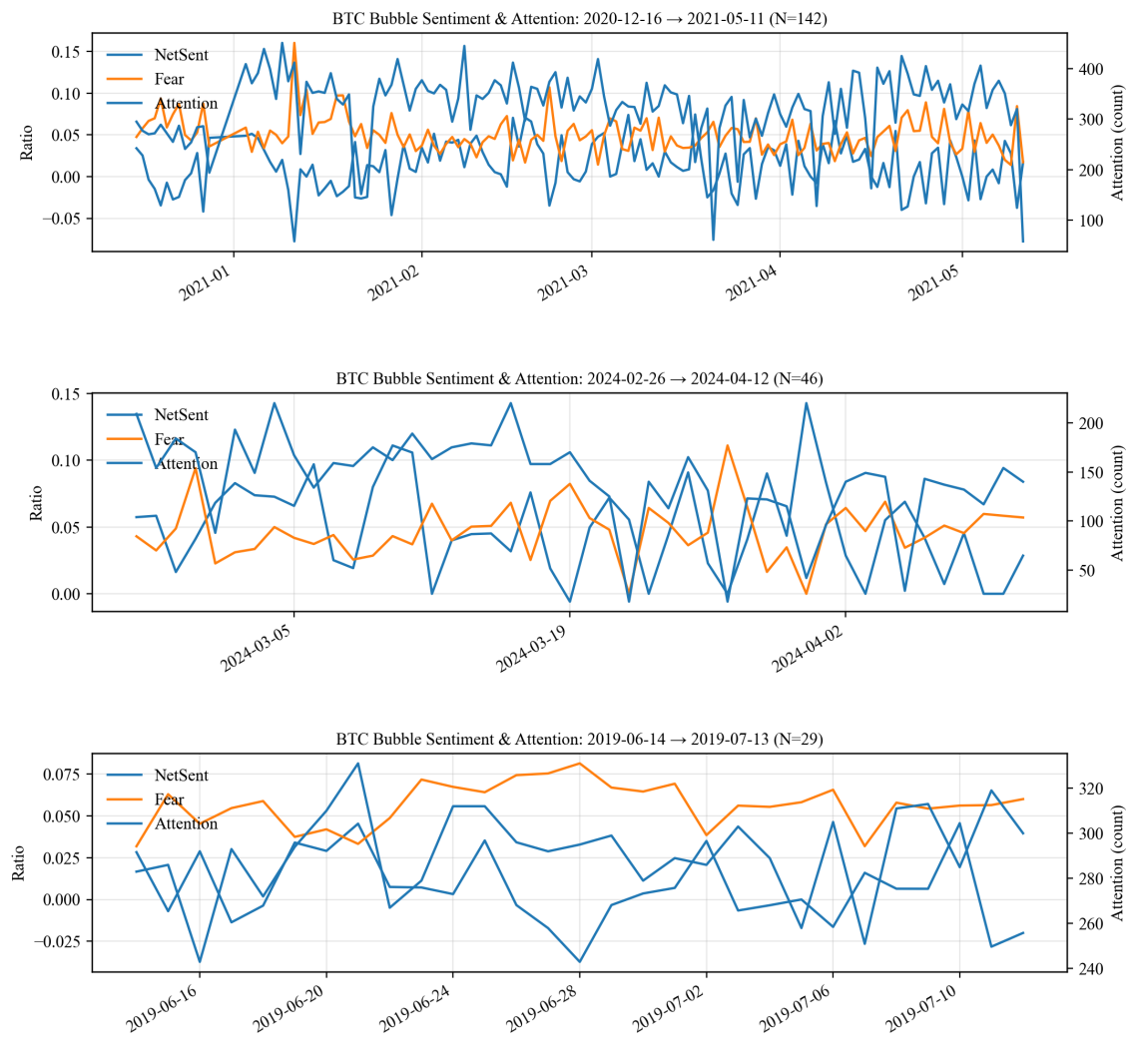
In recent years, cryptocurrency markets have experienced severe price fluctuations and exhibited obvious bubble characteristics, with investor sentiment playing an important role. This paper takes Bitcoin as the research object, uses the Generalized Supremum Augmented Dickey-Fuller (GSADF) method to identify price bubble intervals, and constructs investor sentiment indicators, including net sentiment, fear, and market attention through the Financial Bidirectional Encoder Representations from Transformers (FinBERT) model. Subsequently, combining Ordinary Least Squares (OLS) and Vector Autoregression(VAR) models, this paper analyze the relationship between sentiment variables and Bitcoin returns during bubble periods, and examine the dynamic impact of sentiment shocks through impulse response functions. The research results show that in the static framework, sentiment direction has certain explanatory power for returns, but the overall impact is limited; in the dynamic framework, market attention shows significant persistence and self-reinforcing characteristics, and has an important impact on price volatility through intertemporal feedback mechanisms, while fear is more reflected in risk amplification effects. Overall, the VAR model is significantly better than static regression models in depicting the dynamic interaction between sentiment and prices.
Show more
Read Article PDF
Cite
Research Article Open Access
The Impact of Pilot Applications of Electronic Accounting Archive Systems on the Information Disclosure Quality of Listed Companies
Article thumbnail
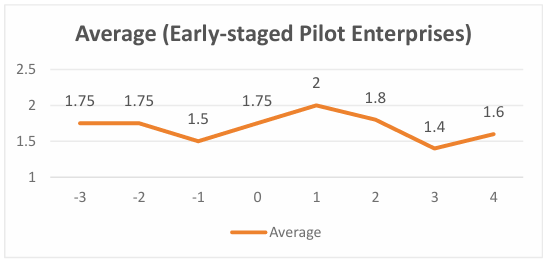
Under the background where the digital transformation of enterprises is deepening and the quality of information disclosure is becoming increasingly crucial for the development of the capital market; the policy pilot of the electronic accounting archive system provides an opportunity to study the economic consequences of technological application. This study focuses on this topic and explores its short-term impact on the quality of information disclosure by listed companies. As the sample, the study selected 39 A-share pilot-listed companies and analyzed the changes in the disclosure quality assessment scores of these companies before and after the pilot period, based on the pilot year and industry classification. The results show that, after the system was applied, the quality scores of most enterprises' information disclosure increased (indicating a decline in quality), with the decline rate of the early pilot enterprises in 2020 (33.3%), being much higher than that of the expanded pilot enterprises in 2022 (1.25%). Moreover, there was significant industry heterogeneity. The decline was the greatest in the scientific and technological service industry, the smallest in the financial industry, and only real estate industry had an improvement in quality. The research has broken through the traditional assumption that the immediate application of technology can enhance information transparency. It has revealed the short-term negative effects of digital transformation and provided important references for policy formulation and for enterprises to smoothly navigate through the transitional period.
Show more
Read Article PDF
Cite
Research Article Open Access
A Multidimensional Comparison of Artificial Intelligence Methods Across Different Financial Risk Control Scenarios
Article thumbnail
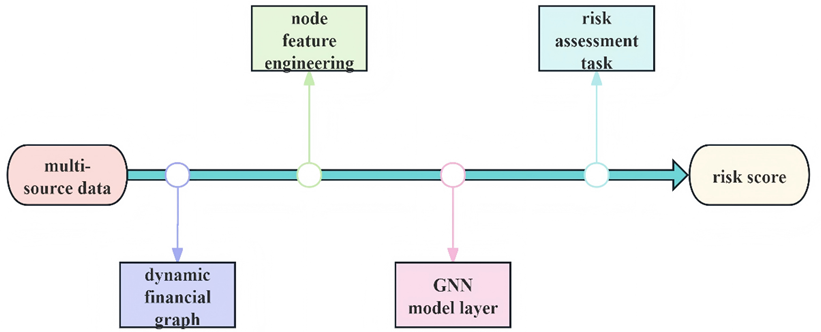
The four core categories of financial risk—credit risk, market risk, operational risk, and liquidity risk—differ significantly in data characteristics and modeling target. Thus, traditional statistical methods and conventional machine learning models often fail to meet practical demands. In recent years, deep learning, such as graph neural networks and Bayesian methods, has offered new approaches. However, most existing researches focus on a single type of risk or a specific model architecture, and systematic comparisons of model applicability across different scenarios remain limited. This paper starts from the four core types of financial risk, comparing and analyzing more than ten models from dimensions, including predictive performance, interpretability, data dependence, computational cost, regulatory compatibility and so on. The study demonstrates that different methods have their own advantages under different scenarios. Obvious discrepancies exist in interpretability, extreme-risk characterization, and regulatory compliance. Furthermore, the paper discusses the future development of intelligent risk control systems from the perspectives of model integration, dynamic adaptation, and regulatory technology.
Show more
Read Article PDF
Cite