Articles in this Volume

Research Article Open Access
Valuation Analysis of Semiconductor Industry of US Based on Portfolio Principle
Many of the world's semiconductor R&D, production and manufacturing technology companies are going public in the US, hoping to leverage the power of US stock market capitalization to promote their own companies and industries. Valuation of the semiconductor industry is therefore essential. This study evaluates US-listed semiconductor companies based on portfolio principles with an enterprise value greater than $50billion. In the benchmark portfolio, individual stock’s weights are assigned in accordance with the enterprise value weighting and a number of indicators are calculated based on fundamental data for comparison with the forecast portfolio. The paper uses absolute and relative valuation methods to value the forecast portfolio, and compares with benchmark portfolio on the derived results. Finally, conclusions and future investment outlook are drawn from the results of the comparative analysis. According to the analysis, investing in the semiconductor industry is a good choice. In fact, not only can investors share in the huge profits from the rapid development of the industry, the semiconductor industry itself can also benefit from the strong capital market, which is something that complements each other. These results shed light on guiding further exploration of valuation analysis of semiconductor industry.
Show more
Read Article PDF
Cite
Research Article Open Access
Research on OTA Platform Supervision and Management Based on Game Theory Background
Article thumbnail
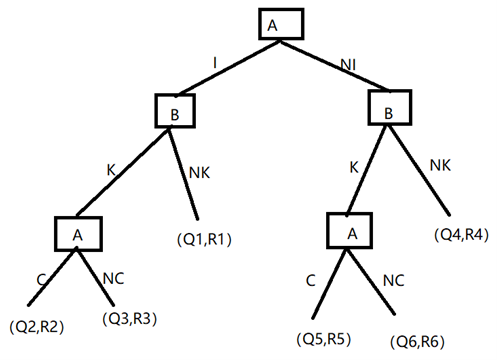
In the era of big data, the OTA platform uses information advantages to abuse data to seek more "big data price discrimination" behaviors of consumers' more benefits. The low information on the market has become a profitable tool for "price discrimination" on the OTA platform. Under the circumstances of this kind of information, it is difficult for consumers to not only be "price discrimination", but also it is difficult to protect their rights after being aware. At this time, the government's active intervention is required to regulate the "big data price discrimination" behavior of the OTA platform. In order to curb the further flooding of "price discrimination", this article has established a game tree model to analyze from the dynamic game perspective of the government and the OTA platform, and the impact of changes in the transparency of information on the stability of the evolution game system. In addition, the relevant suggestions on the OTA platform of government supervision and governance are explained from different levels of information transparency.
Show more
Read Article PDF
Cite
Research Article Open Access
Study on the Applicability of LSTM for Predicting Stock Price when Facing Extreme Events
Article thumbnail
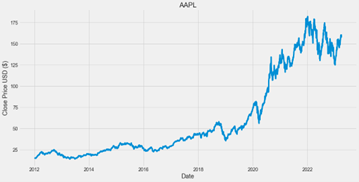
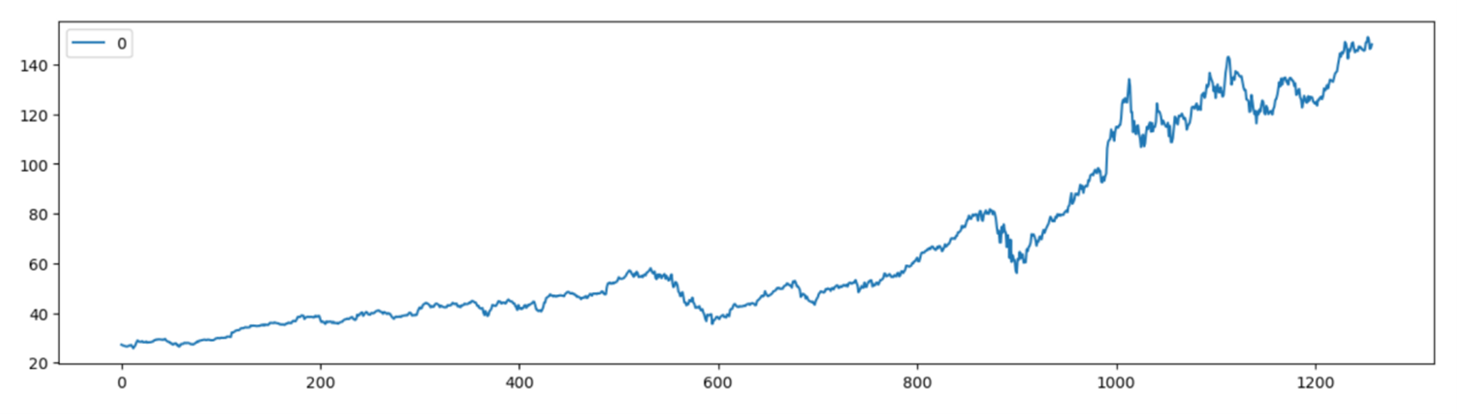
The analysis of stock price fluctuations holds considerable significance in the field of economics, particularly given the present environment characterized by unpredictability and rapid changes. Previously, the long short-term memory (LSTM) model has been employed effectively in addressing time series problems, including stock market forecasting. However, in the current dynamic landscape, the ability of LSTM to adapt to volatile conditions and provide accurate predictions is an area that merits further investigation. This study gathers stock data from prominent and representative companies, namely Apple, Google, Amazon, and Microsoft, spanning from January 2012 to March 2023. Specifically, two significant events are examined: the impact of the Covid-19 outbreak on the US stock market on February 26, 2020, and the Russia-Ukraine conflict occurring on February 26, 2022. By dividing the stock data surrounding these events into training and test sets, this research aims to evaluate the differential performance of LSTM in scenarios where it possesses no prior knowledge of these events versus situations where it has already assimilated the influence exerted by them.
Show more
Read Article PDF
Cite
Research Article Open Access
Credit Card Fraud Prediction Based on Machine Learning Algorithms
Article thumbnail
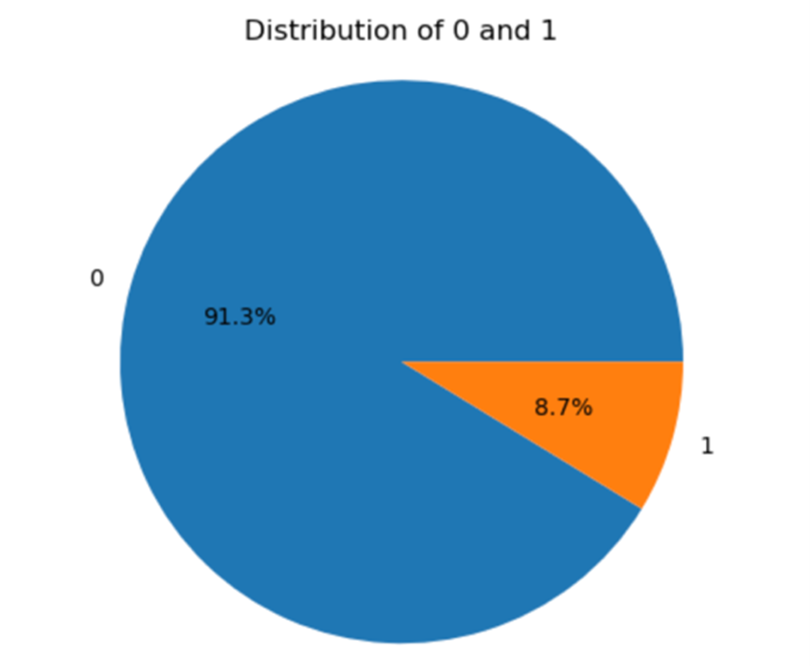
The escalating use of the Internet has led to a surge in online shopping and e-commerce, resulting in a corresponding increase in credit card fraud incidents. Therefore, this research focuses on employing machine learning techniques, which offer enhanced precision and efficiency compared to manual detection, to identify fraudulent activities. To establish the association between credit card transaction attributes and the presence of fraudsters, this study initially gathers data from Kaggle, subsequently normalizing the collected data. Furthermore, the data exhibits severe imbalance, leading to overfitting concerns. To ascertain feature correlations, a correlation heatmap is constructed. Moreover, this investigation selects three models for analysis. Finally, the performance of each model is evaluated using a confusion matrix and derived metrics. The findings reveal that both the decision tree and random forest models exhibit optimal performance, achieving 100% across all indicators. The most influential factors in determining credit card fraud involve the ratio to median purchase price and the geographical proximity of the transaction location to the cardholder's residence.
Show more
Read Article PDF
Cite
Research Article Open Access
Stock Price Prediction Based on CNN-BiLSTM Utilizing Sentiment Analysis and a Two-layer Attention Mechanism
Article thumbnail
The recent robust growth of the economy has instigated a heightened interest among financial experts in the domain of stock forecasting. Stock price forecasting frequently involves a non-linear time series projection due to the volatility nature of the stock market. This research proposes and develops an effective method with sentiment analysis neural network model for forecasting the closing price of the following day based on the time-series properties of stock price data. Several factors affect stock prices at the same time. Simple models can only predict with difficulty. As a result, sentiment analysis will be included in this study to increase the model's precision. The model architecture encompasses the utilization of a Convolutional Neural Network (CNN) for extracting salient features from input data, Bidirectional Long Short-Term Memory (BiLSTM) for acquiring knowledge and forecasting the extracted features, and an Attention Mechanism (AM) for capturing alterations in feature states within the time series data during the prediction process. The NASDAQ Composite Index's closing price the next day for 1281 trading days was predicted using this method in conjunction with three other methods to show the method's efficacy. The experimental results demonstrate that among the four techniques with sentiment analysis, CNN-BiLSTM-AM with sentiment analysis achieve the highest prediction accuracy and performance, and the errors of this model are the smallest. The CNN-BiLSTM-AM approach with sentiment analysis outperforms the other methods in terms of suitability for stock price prediction and is better able to guide investors towards more profitable stock investing choices.
Show more
Read Article PDF
Cite
Research Article Open Access
Impact of Models and Eigenvalues on Gold Price Forecasting
The burgeoning synergy between computer science and finance has fostered an increasing integration of these domains. Machine learning has become a prevalent tool in aiding financial analysis and forecasting. Compared to traditional forecasting techniques, machine learning-based models exhibit enhanced accuracy and broader applicability. This study introduces three models, namely linear regression, random forest, and support vector machine, to analyze and predict gold prices. The influence of Eigenvalues on model performance is also examined. In the end, the support vector machine model constructed by using two kinds of US dollar exchange rates, US Treasury bond interest rates, and the 10-day moving average of gold prices and passed cross-validation obtained the best model performance evaluation index, and its R2 index reached nearly 0.99. It can be concluded from this study that the performance of the model is poor when only one eigenvalue is used to build the model, while for the case of building a model with multiple eigenvalues, the contribution of the U.S. Treasury bond rate to the improvement of the performance of the prediction model is the smallest. Therefore, appropriately increasing the number of eigenvalues is conducive to improving the performance of the model, and selecting the types of eigenvalues reasonably is also conducive to improving the accuracy of the model.
Show more
Read Article PDF
Cite
Research Article Open Access
Investigation of LSTM Model in Stock Prices Prediction During the COVID-19 Based on Smartphone Brands
Article thumbnail
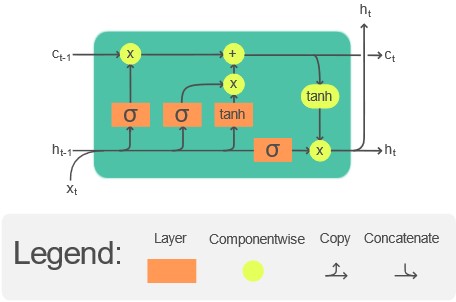
The unforeseen outbreak of the COVID-19 pandemic in early 2020 had a profound impact on the real economy and business sectors, leading to a period of heightened volatility. The stock price of smartphone brands had shown an abnormal trend of fluctuation and hard to be predicted by using the inchoate regression and machine learning models. In this paper, Long Short-Term Memory (LSTM) is adapted to predict the stock price of five top smartphone brands. Spanning the period from 2016 to 2021, the dataset for each brand contains 1258 data points, which are split into two groups, training set including 850 observations and test set including 408 observations after the pandemic in 2020. The model employed two prices as x and the next price as y to be predicted. The structure of the model in this work is composed of 3 layers, with 64 and 5 neurons in the first two LSTM layers respectively and a dense layer for dense equal to 1. The model is based on TensorFlow system with Adaptive Moment Estimation optimizer and Mean Absolute Error as the loss function. For the model checking, Root Mean Standard Error, Mean Absolute Error and R-square score are calculated to evaluate the precision of the prediction. Experimental results indicate that under an unexpected external condition, LSTM is effective in stock price prediction to a certain extent. Further investigations are still needed to improve LSTM applied in the stock market.
Show more
Read Article PDF
Cite
Research Article Open Access
Analysis of Pixar Movie Marketing Strategy Based on 5T Theory: Take Turning Red as an Example
This study introduces the brand background of Pixar Animation Film Company and analyzes its marketing strategy using the 5T theory. This study chooses Turning Red as a case study, and through the analysis of its marketing strategy, some shortcomings are found. First, through the analysis of Tools, "Turning Red" failed to meet the audience in cinemas, which led to the disappointment of some fans. Although Pixar and Disney used multi-platform and multi-channel promotional tools, their marketing effect was reduced due to some limitations. Second, for Tracking, although Pixar registered separate social media accounts for each movie, there was relatively little in-depth analysis and response to user feedback. This makes it difficult for the company to fully understand the audience's needs and expectations. Based on these findings, this study makes some recommendations to improve Pixar's marketing strategy. This study makes recommendations to strengthen the multi-platform and multi-channel marketing approach and enhance user feedback analysis. These recommendations are expected to help Pixar further improve the marketing effectiveness of its films, increase audience engagement and satisfaction, and contribute to the company's continued growth.
Show more
Read Article PDF
Cite
Research Article Open Access
The Impact of the Lifting of Pandemic Control on the Shanghai and Shenzhen Stock Indexes
Article thumbnail
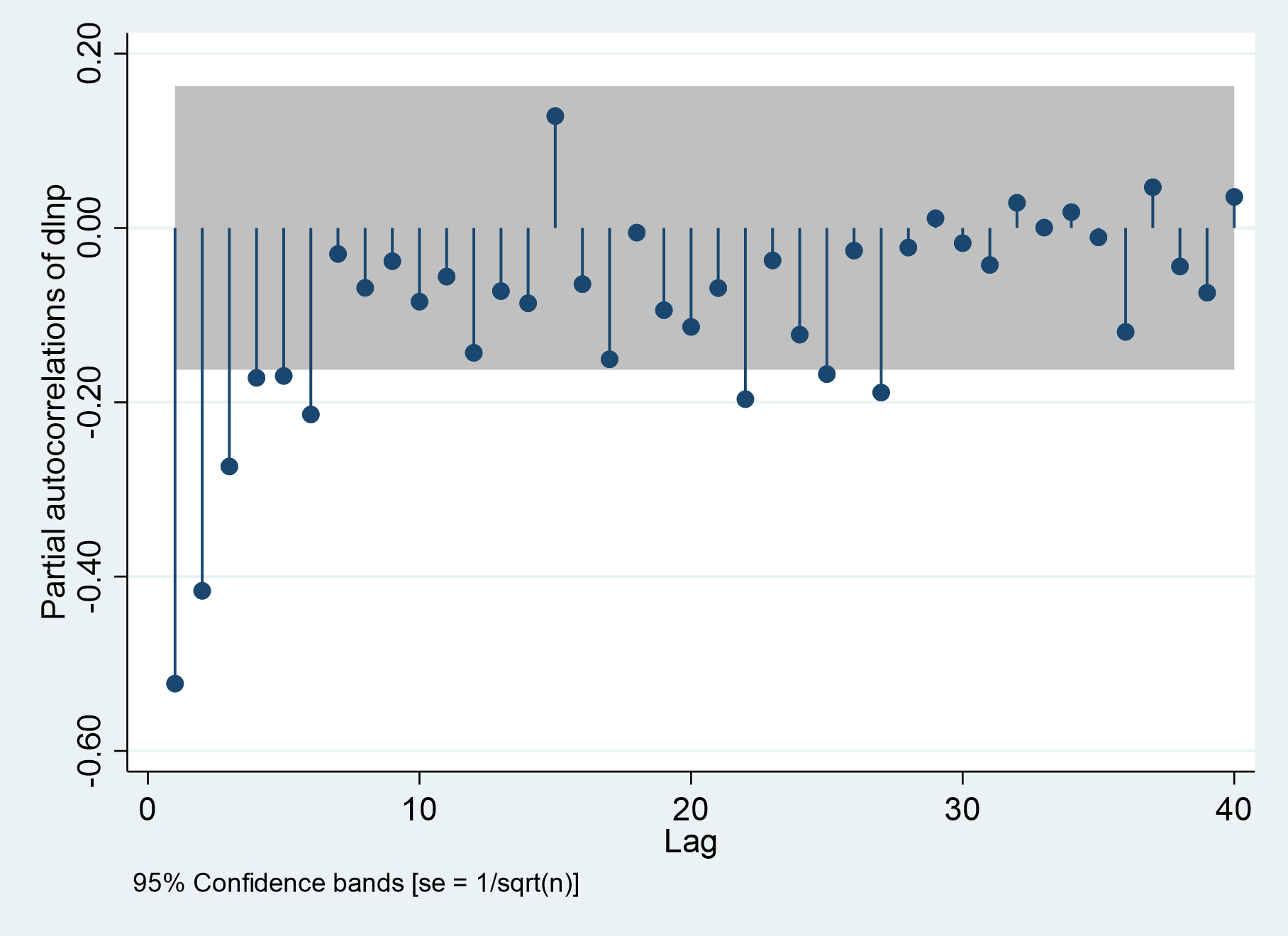
Many previous studies have analyzed the pandemic effect to the different fields of economic. This essay analyzes the effect of lifting of global pandemic control to SZSE and SSEC stock market by mainly using ARIMA model and Stata. The essay finds that the lifting the global pandemic has indeed affect both SZSE and SSEC market by accelerating the return rate trend of stocks. The wired point is the sharp decreasing trend initially after the lifting of control. This phenomenon has related to financial theory to find out the reasons. The first reason is because the news is within the market expectation and thus did not stimulate stock price. The second reason is because the overall worse economic situation and market expectation outweigh the effect of this good news effect. The last reason is because many people got sick after the lifting of pandemic control and thus affect economic activity. Finding these reasons, the policymaker can have better way to stimulate the stock market in the next time. Policymaker can be also aware of the significance of building a more efficient market. Investors can have more understanding toward SZSE and SSEC market and be cautious to good news in the next time. Better strategy can be adopted to catch stock return in the similar strategy.
Show more
Read Article PDF
Cite
Research Article Open Access
Virtual Human Influencer and Its Impact on Consumer Purchase Intention
Article thumbnail
Due to the extensive usage of online influencers by marketers, "influencer marketing", a form of which a business recruits and financially compensates social media influencers to spread stories about its product among their thousands of followers, is rising in popularity [1]. Among all kinds of influencer, virtual influencers are digital creatures who naturally love digital products like NFTs and video game skins, making them better spokespeople for metaverse themes. In response to customer demand, the number of effective and active virtual influencers is growing. There are 58 percent of US customers surveyed in March 2022 were already following a virtual influencer. The question in this study is whether customers bought products after virtual influencer recommended. In another word, virtual influencer contact may affect consumers' buying intentions. This study tends to present that in offline and online purchasing contests, virtual influencers improve customer buying intention. According to the finding of this study, the presence of a virtual influencer increases the consumer's propensity to make a purchase once this consumer has been exposed to the presence of the influencer.
Show more
Read Article PDF
Cite