Articles in this Volume

Research Article Open Access
Research on Differences Between Chinese and American Healthcare Systems and Recommendations for Future Development
This study compares China and the United States from a patient-centered lens: what a typical resident pay, how predictable those costs are, and how quickly care can be accessed. Using accessible official reports and policy briefs, the analysis focuses on three parts that shape everyday experience-coverage architecture, drug pricing and reimbursement, and provider payment. China combines broad social insurance with provincial risk pooling, centralized drug procurement, and DRG/DIP payment reforms that compress prices and start shifting demand toward primary care. The U.S. keeps a plural structure that supports choice and innovation, but complex benefits and plan churn can raise out-of-pocket risk; recent steps-Medicare drug price negotiation, marketplace subsidies, and moves toward site-neutral payment-aim to reduce volatility. Based on this comparison, the paper proposes three practical actions that ordinary patients can feel: (1) real-time out-of-pocket estimates at prescribing and check-in; (2) clear monthly caps for common chronic medicines; and (3) stronger team-based primary care as a stable “front door.” These options are incremental, fiscally realistic, and measurable through simple indicators such as waiting time, essential-medicine availability, and the share of households facing large medical bills.
Show more
Read Article PDF
Cite
Research Article Open Access
Population Aging and Insurance Demand: An Empirical Analysis of Chinese Cities
As China enters an advanced stage of population aging, changes in demographic structure present new challenges and opportunities for the insurance industry. Building on a systematic review of literature concerning insurers’ participation in the eldercare industry, this paper uses city-level panel data to empirically test the effect of the degree of aging on insurance expenditures. The results indicate that population aging significantly drives growth in insurance demand, with a particularly pronounced effect on personal insurance products, while property insurance is relatively less affected. This finding suggests that insurers need to place greater emphasis on the development and innovation of eldercare-related products when responding to population aging. At the same time, diversified investment and service models—such as eldercare real estate and community- and home-based care—offer new avenues for insurer development. This study not only enriches the empirical evidence in the field of eldercare finance but also provides a reference for insurers’ strategic planning and policy formulation in the context of population aging.
Show more
Read Article PDF
Cite
Research Article Open Access
Speculation in Tech Stocks: Investigating Whether Incorporating User Sentiment and Lagged Effects Enhances Short-Term Tech Stock Trends
Article thumbnail
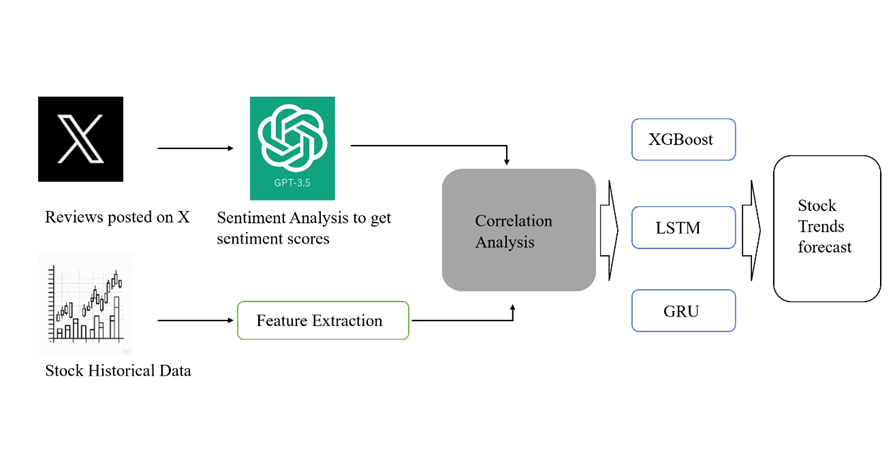
Economic factors have become increasingly pivotal globally, driving significant changes in stock market trends. However, inaccurate analysis can lead to missed opportunities and poor decisions. This research explores whether user sentiment and lagged effects, such as past stock price movements and delayed sentiment impact, enhance short-term tech stock trends prediction. The objective is to develop classification models that predict stock price increases and decreases, improving model’s performance through sentiment analysis and key stock market features, while identifying the most effective model for this task. This study analyzes four major U.S. tech companies (Apple, Amazon, Microsoft and Tesla) using GPT-3.5 Turbo for sentiment analysis and XGBoost, LSTM, and GRU for prediction. Results demonstrate that integrating sentiment and lagged features enhances predictive performance for some models. LSTM achieves the highest overall improvement, as it is particularly effective at capturing temporal dependencies in sequential data. While XGBoost and GRU show improvements for certain companies, their results remain relatively unstable. These findings highlight the effectiveness of sentiment and lagged features emerges in certain conditions, with LSTM regarding as the most robust model for short-term stock trend forecasting.
Show more
Read Article PDF
Cite
Research Article Open Access
Health Science Popularization Strategies in Senior Sports Events: A Case Study of “Leaping Cup Badminton”
As the ageing of the population has been experienced globally, prevention of chronic diseases and health promotion have become core issues regarding health. The purpose of this study is to examine how amateur senior sports events can serve as platforms for popularizing health science, using the “Leaping Cup Badminton” tournament as a case. Based on public resources, reports from five editions of the media (2018-2024), and semi-structured interviews, we conducted a qualitative content analysis to understand how medical knowledge can be integrated into events without compromising the sporting experience. Results suggest short discussions with experts, on-site demonstrations, champion demonstrations, and visual handouts as the strategies, supported by emcee recaps and short-video media. These strategies enhanced recollection of knowledge, promoted health-protective behaviors, and created trust in partnering health brands. The findings indicate that the presence of a physician and the first-service brand improve credibility, whereas repeated exposure and modular content have a stronger effect on retention. The paper proposes an event-based dissemination model by which on-site learning, services to participants, data collection, and follow-up are interconnected. This model is an effective and repeatable channel to increase senior health communication. Community sports events may be used as a means of promoting health beyond merely being a competition, but also as an excellent way of national health promotion in relation to the Healthy China 2030 and even an extensive national health agenda.
Show more
Read Article PDF
Cite
Research Article Open Access
The Impact of Financial Derivatives on Liquidity, Volatility, and Regulatory Challenges in China’s Stock Market
The growing use of derivatives, including stock index futures and ETF options, has heightened focus on their effects in China’s stock market. Thus, this study investigates the impacts of derivatives on China’s stock market across five dimensions: market liquidity, pricing efficiency, volatility, investor structure, as well as regulatory challenges. Based on existing literature, relevant cases, and market data on China’s derivatives and quantitative trading, the study focuses on the application and impact of stock index futures, ETF options, and quantitative strategies, while employing tools such as statistical arbitrage and implied volatility to evaluate price discovery efficiency, and using high-frequency trading data and institutional investor holdings to analyze market volatility and changes in investor structure. The results show that derivatives enhance market liquidity via risk hedging and speculative opportunities and boost price discovery through statistical arbitrage and implied volatility, aligning stock prices with fundamentals. Under some conditions, they can amplify volatility, cause herding in similar quantitative strategies, and raise systemic risk with leverage and HFT. Besides, broad participation by derivatives and institutional investors drives market institutionalization, enhancing stability and efficiency, while posing regulatory challenges such as manipulation, data fairness, and leverage risks. As such, China has addressed these via intelligent surveillance, classified data management, and leverage stress testing, thereny maintaining market stability while supporting innovation.
Show more
Read Article PDF
Cite
Research Article Open Access
Study on the Fertility Rate of Estonian Women
Article thumbnail
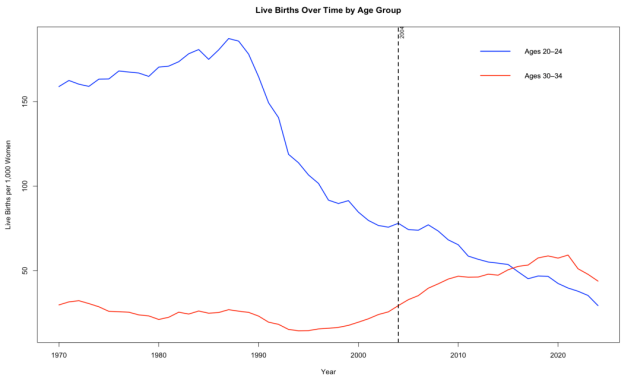
To address Estonia’s rapidly declining population, the government introduced the “mother’s salaries” policy in 2004, offering generous financial compensation to new mothers. This study investigates the policy’s association with fertility rates among Estonian women aged 20–24 and 30–34 using time series analysis, including AutoRegressive Integrated Moving Average (ARIMA) modeling and Interrupted Time Series (ITS) regression. The results indicate that fertility rates among women aged 30–34 rose significantly after 2004, as evidenced by a notable trend reversal and positive level change (p < 0.001). However, for women aged 20–24, the decline in fertility continued, and no statistically significant change was observed. These findings highlight that while the “mother’s salaries” policy coincided with increased fertility among older women, the relationship is correlational. Broader economic and cultural changes may also explain the age-specific divergence. Forecasting suggests continued decline among younger women, underscoring the need for structural policies that support early family formation without compromising education and careers.
Show more
Read Article PDF
Cite
Research Article Open Access
The Relationship Between Shareholding of Common Institutions and Stock Price Stability
In recent years, the global capital market has undergone earth-shaking changes. In the stock market, the dominant force influencing stock price fluctuations has shifted from individual investors to the current situation, where institutional holdings account for the majority. In China, although the development history of the capital market is relatively short compared with that of the West, the shareholding ratio of common institutions continues to rise in the Chinese stock market and holds a place. The phenomenon of joint institutional shareholding is becoming increasingly common, and the shareholding ratio is also growing day by day. China's capital market is also becoming more and more mature. Against this backdrop, the relationship between common institutional shareholding and stock price fluctuations has gradually become a focus of attention in both the academic community and the market. In view of this, this paper summarizes the research results of scholars at home and abroad. By summarizing their research achievements, it is found that they mainly focus on two conclusions: "Joint institutional shareholding can promote stock price fluctuations" and "joint institutional shareholding can alleviate stock price fluctuations". This article aims to review the conclusions of domestic and foreign scholars on the relationship between common institutional shareholding and stock price stability, summarize its core ideas, and provide references for future scholars' research as well as for market practice and regulatory decision-making.
Show more
Read Article PDF
Cite
Research Article Open Access
Study in Cost Estimation and Pricing Strategy: A Case of Pop Mart
Article thumbnail
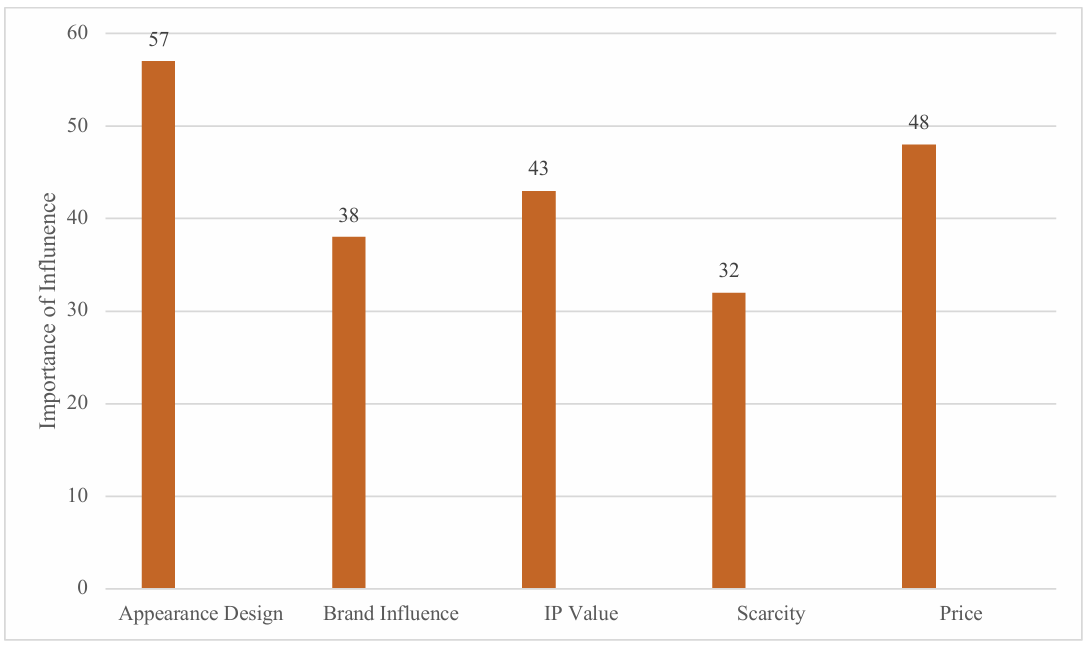
Blind boxes are highly sought after among young people in today's consumer market, as they combine the satisfaction of collecting, the surprise of lucky draws, and the sense of social belonging. However, its reliance on probability and limited release mechanism has also sparked controversy over overconsumption and secondary market speculation. Therefore, this study collected a large amount of relevant information online and analyzed the data to evaluate the value of Pop Mart blind boxes. And explore the pricing strategy of Pop Mart. Research has found that Pop Mart blind boxes adopt a tiered pricing strategy, attracting widespread consumption with basic models priced between 59-99 yuan. At the same time, by creating scarcity through extremely low probability hidden products, it stimulates repeat purchases and secondary market speculation, ultimately achieving dual satisfaction of brand profits and user emotional needs. The significance of this study is to help consumers understand the business logic behind the "emotional premium" and "probability game" mechanisms, and to avoid blindly chasing hidden items and falling into irrational consumption. This can also promote transparent and compliant operations for enterprises.
Show more
Read Article PDF
Cite
Research Article Open Access
Global Supply Chain Risk Management: Strategies and Mitigation Approaches in the Age of Uncertainty
Global supply chains today face more challenges than ever before. Issues like inter-country political conflicts, natural disasters such as earthquakes and floods, and health crises like the COVID-19 pandemic have exposed vulnerabilities in corporate supply chain management practices. This paper examines diverse types of supply chain risks and explores how enterprises mitigate these risks. By examining five large international companies and reviewing existing studies and expert opinions, supply chain risks are categorized into three types: operational, network, and systemic risks. The result shows that many companies still use old-fashioned reactive methods instead of planning ahead. A new approach called the “Resilience-Agility Framework” is suggested, which combines preventive steps like working with more suppliers and responsive actions like finding new shipping methods when problems occur. Data shows that companies using such combined strategies managed to reduce the impact of disruptions by 40–65%. This highlights the importance of having a comprehensive risk management plan, especially in today’s unpredictable world.
Show more
Read Article PDF
Cite
Research Article Open Access
Strategic Application of Hybrid Intelligence in Digital Marketing: A Comparative ROI Analysis Across AI Automation, Human Creativity, and Collaborative Modes
Article thumbnail
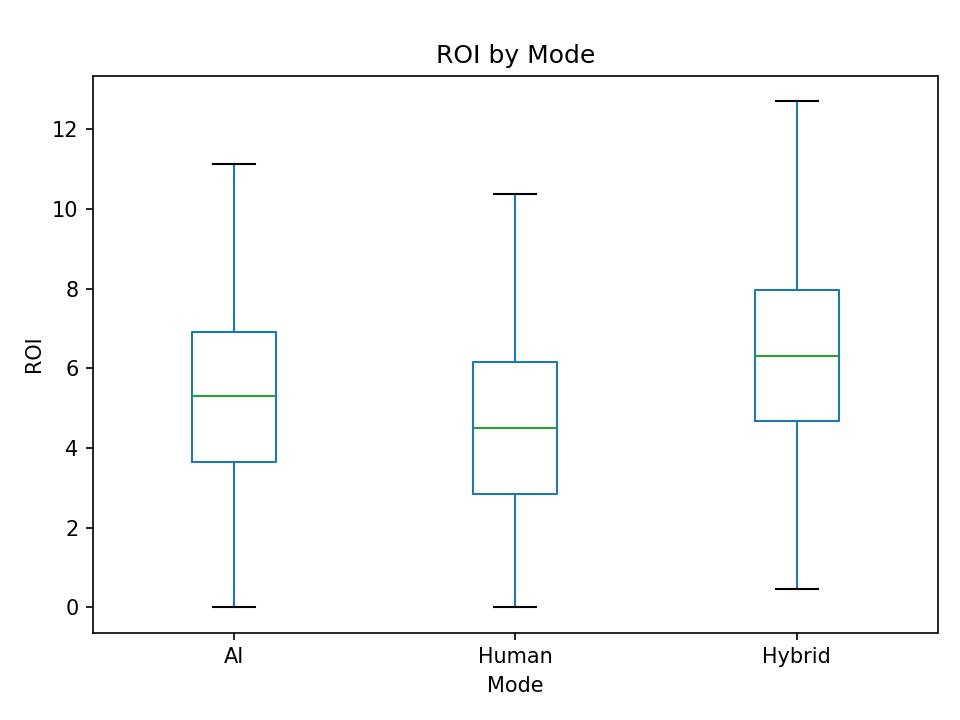
As digital marketing continues to evolve, the fusion of artificial intelligence (AI) automation with human creativity is emerging as a key approach for optimizing marketing performance. This study compares the return on investment (ROI) offered by three operational modes (AI automation, human creativity, hybrid intelligence) for both large and small brands. Based on the Resource-Based View, Ambidexterity Theory, and the Law of Diminishing Returns, this research provides a comprehensive framework that connects each of the operational modes to the key performance indicators of ROI, the conversion rate, and the engagement score, to assess the influence of firm size as a moderating factor. The study utilizes a large dataset (200,000 records) of performance from large-scale marketing campaigns, which utilizes descriptive statistics, ANOVA, interaction effects, correlation analyses, and multiple regression analyses to explore the potential for direct, moderating, and mediating relationships. This research will ultimately demonstrate that the hybrid intelligence model has a superior ROI compared to all others, particularly in the case of large brands, and that user engagement positively aligns with conversion rate, which positively aligns with financial returns. This study merges both theory and practice in that it combines all the portfolios’ technical efficiency and the emotional connection into one analytical model, and recommends practical uses for immediate applications for marketers trying to meld the automation with creativity - for the optimal sustained customer engagement and long-term profitability.
Show more
Read Article PDF
Cite