Articles in this Volume

Research Article Open Access
Impact of Development of the Digital Economy on Consumer Habits: Evidence from China
China’s digital economy is booming. It is changing consumers’ behavior and retailing. This paper studies how digitalization affects consumption in four scenarios: reducing information and search costs, algorithmic influence and social influence in consumers’ decision-making, payment innovations, and integrating online and offline consumption scenarios. Using official statistics, international reports, and peer-reviewed studies, this paper finds that mobile payments and e-CNY pilots have turned frictionless payments the norm; personalized recommendations and live-streaming commerce have speeded impulse buying and shortened the purchase journey; and omnichannel retail and O2O services have blurred the line between digital and offline shopping and fostered a “always-on” consumption habit. While digitalization brings convenience and inclusiveness, it also triggers concerns such as privacy concerns, algorithmic addiction, and consumer welfare risks. Governance such as the Personal Information Protection Law and new standards on algorithmic transparency are vital for digitalization to be consumer centric. At the end of the paper, we summarize policy and research directions for digital economy governance to balance growth and accountability.
Show more
Read Article PDF
Cite
Research Article Open Access
Is the Sharing Economy Really Sharing?-An Analysis of Resource Efficiency, Market Structure, and Growth Sustainability
Digital platforms such as Airbnb, Didi, Uber, and Xianyu are often promoted as ways to put unused resources into circulation, promising economic growth alongside environmental benefits. This paper examines those claims by raising three core questions. First, does “sharing” actually improve resource efficiency once rebound effects, displacement, and wider externalities are considered? Second, how do two-sided platforms deliver increasing returns while at the same time disrupting established sectors like hotels, taxis, and retail? And third, what new sustainability issues emerge when platforms scale up, and what institutions are needed to manage them? Drawing on growth theory, the analysis suggests that platform-driven reallocation can create short-term gains in productivity, while network effects and data-based learning have the potential to sustain longer-term improvements if externalities are properly governed. Evidence from Chinese studies and policy reports illustrates this mixed picture: short-term rentals reduce some hotel demand but may also stimulate additional travel and strain housing; ride-hailing often replaces public transport and raises overall vehicle use unless pooling and electrification are designed in; and secondhand marketplaces reduce new production only when durability and repair standards extend product lifetimes. Since 2016, Chinese regulation has shifted toward “growth with compliance,” from ride-hailing rules to the 2024 trade-in plan that supports resale and repair ecosystems. The conclusion is conditional: the sharing economy is not inherently sustainable. It becomes sustainable only when platform growth is guided by rules and design choices—such as data-sharing, carbon-aware mobility planning, right-to-repair standards, circular economy measures, and competition policies that keep markets contestable.
Show more
Read Article PDF
Cite
Research Article Open Access
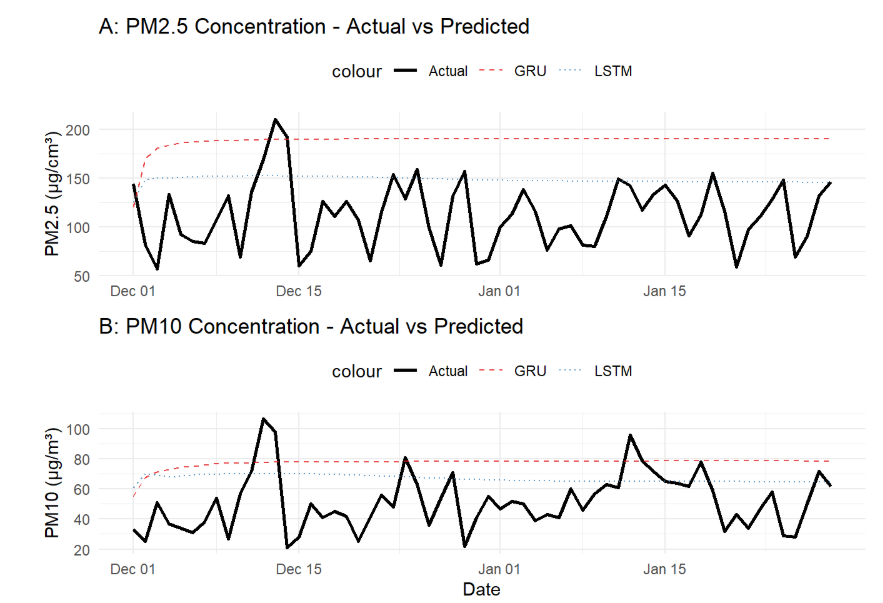
Comparative Analysis of LSTM and GRU Models for Air Pollution Prediction in Shanghai
Article thumbnail
This paper presents a comparative analysis of two recurrent neural network (RNN) models, respectively with Long Short-Term Memory (LSTM) and Gated Recurrent Unit (GRU), specifically focusing on predicting PM2.5/PM10 concentrations in Shanghai. Running PM2.5/PM10 prediction accurately and efficiently is important for public health and environmental management, while few research programs have constructed efficient forecasting models when facing a large amount of daily variation in air pollution. In this study, historical air quality data, meteorological factors, and other relevant environmental variables were concentrated to train and evaluate the models. After the construction of two different models, the performance of LSTM and GRU is compared based on various metrics, including Root Mean Squared Error (RMSE), Mean Absolute Error (MAE), and R-squared. The results indicate the strengths and limitations of each model in capturing the temporal dependencies in air quality data. Moreover, the study explores the impact of different input features and network configurations on prediction accuracy based on the real situation. The findings promote developing effective air quality forecasting tools and help local governments inform policy decisions aimed at mitigating air pollution in urban environments.
Show more
Read Article PDF
Cite
Research Article Open Access
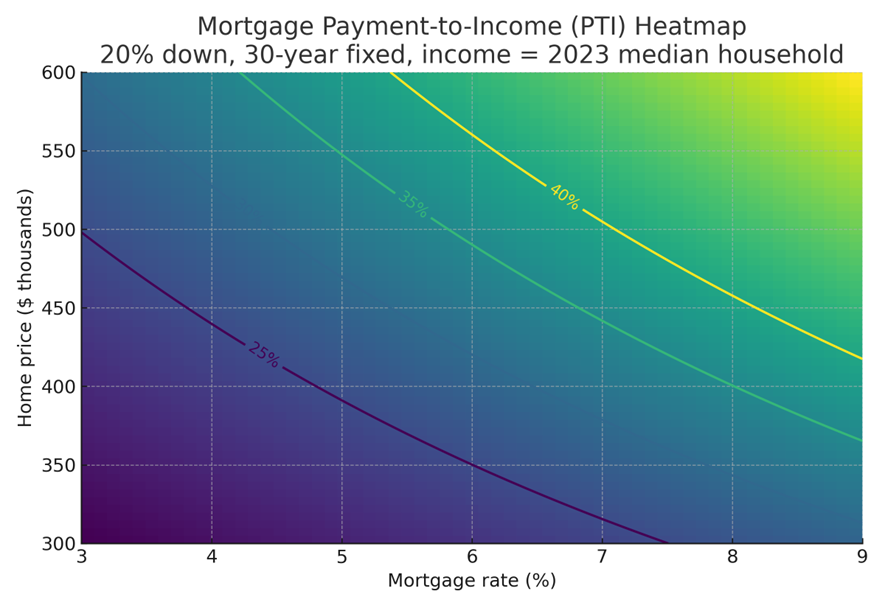
PTI Contours for Mortgage Affordability Risk
Article thumbnail
Mortgage affordability risk has increased as mortgage rates normalized while U.S. home prices remained elevated. This paper proposes a transparent, reproducible dashboard centered on payment-to-income (PTI), which appears as a contour map over the interest-rate and home-price space with decision thresholds at 25%, 30%, 35%, and 40%. Using official public data from FRED (30-year fixed mortgage rate, median house price) and a widely cited compilation of U.S. median household income consistent with Census reporting. This paper constructs a PTI surface, and quantify local sensitivities via a tornado chart, and compare a low-rate 2021 anchor with a representative 2024 anchor. With a 20% down payment and a 30-year fixed mortgage, the representative 2024 setting (price $419300; income $80610; rate 6.8%) implies a PTI of about 33%, i.e., above the commonly used 30% affordability threshold. Sensitivities show rate and price shocks dominate PTI changes at today’s levels, while income shifts mitigate but more gradually. The approach is data-light and fully replicable, providing meaningful insights for integration into underwriting and macro-monitoring dashboards.
Show more
Read Article PDF
Cite
Research Article Open Access
Study on the Transmission Paths and Driving Factors of Intergenerational Trauma in Educational Families: A Case Study of Beijing
The Intergenerational Trauma Cycle in Educational Families—where parents' education-related traumatic experiences are transmitted to children through genetic and behavioral imitation mechanisms, leading to similar psychological and behavioral issues during their educational process—undermines academic performance, triggers anxiety and low self-esteem, and exacerbates educational inequality. While existing studies predominantly focus on the negative impacts of trauma, they lack a systematic exploration of its transmission mechanisms and intervention pathways, particularly within Beijing’s unique context. Using Beijing as a research sample, this study integrates Bourdieu’s Cultural Capital Theory, Social Learning Theory, and the HITT model to map out pathways of trauma transmission and identify core driving factors. Three key transmission pathways are analyzed: psychological-behavioral, social-structural, and cultural-cognitive. Four core drivers are identified: pressure from the educational system, family cultural traditions, socio-economic stratification, and psychological cognition. Targeted interventions are proposed at the family, school, and policy/social levels. This study offers theoretical and practical insights for interrupting the intergenerational transmission of trauma, promoting educational equity, and fostering healthy family development.
Show more
Read Article PDF
Cite
Research Article Open Access
An Analytical Study on the Impact of the Sino-US Trade War on International Trade Flows and Industrial Supply Chain Dynamics
This study conducts research on the effects of Sino-US trade friction, especially 2018 and 2025 Sino-US trade friction, on China’s global trade flow and global industrial chain reorganization. Results indicate that the tariff war between China and the US country has greatly diminished China-US trade while expedited offshoring of manufacturing to developing countries like southeast Asia. Further, in response to trade war, the fundamental shift between global and regional supply chain integration mode occurs in globalization with more cost-consciousness for global supply chain efficiency, under the stronger pressure from security issues in supply chain governance, and multinational companies pursue risk diversification policy, such as 'China Plus One’ policy or off-shoring policy .This paper contends that the Sino-US trade war is a turning point of structure of the globalization process and that governments and companies in the world should upgrade their attention to supply chain security and supply chain flexibility as critical strategic aspects in a context of uncertainty.
Show more
Read Article PDF
Cite
Research Article Open Access
The Emperor's Shadow: A Jungian Analysis of the Ming Dynasty's Rise and Fall
Through employing Carl Jung’s psychological ideologies, this paper would reinterpret the historical trajectories of the Ming Dynasty through the lens of psychological dynamics. This paper argues that the rise and collapse of the Ming can be interpreted through archetypal patterns (the persona, the shadow, the ruler-sage, etc.) that characterize the dynasty’s culture, politics, and society. Framing the Ming as a collective identity, this paper explores how the dynasty established a Confucian persona through its legal codes and ritual system, at the same time repressing shadow elements such as eunuch power, bureaucratic factionalism, and rebellion. This paper presents the fall of the Ming Dynasty as a failed individuation process. I.e., a failure in integrating conscious ideologies with unconscious realities. Through close analysis of historical events, this study demonstrates how psychological dynamics underlie political decisions and institutional behaviors.
Show more
Read Article PDF
Cite
Research Article Open Access
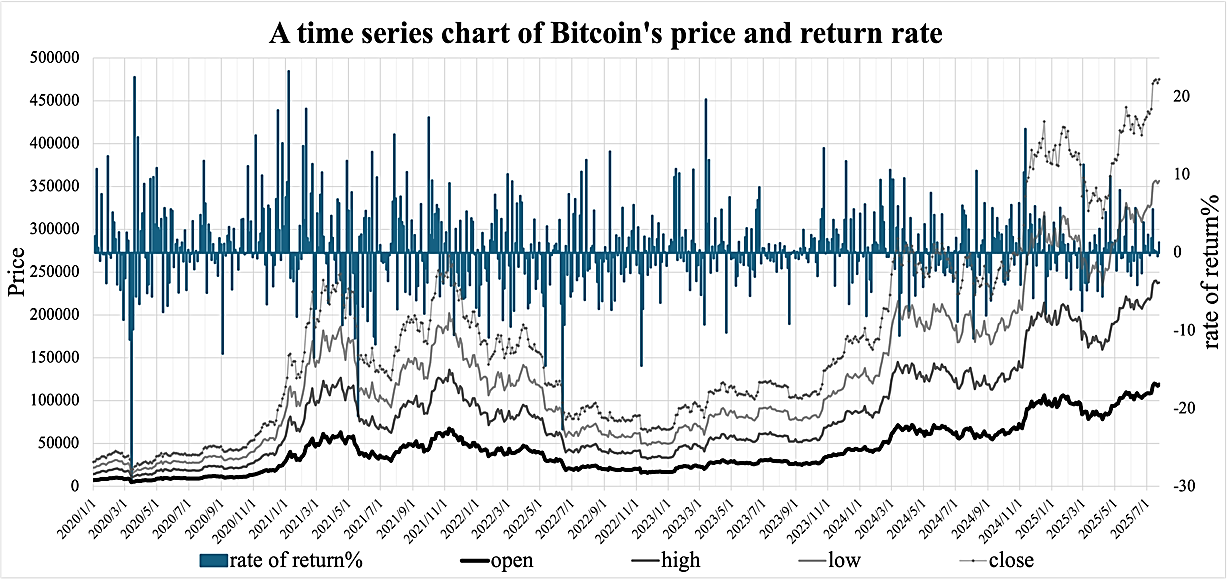
Bitcoin Price Volatility Analysis and Risk Prediction Based on GARCH Model
Article thumbnail
As a highly volatile cryptocurrency, Bitcoin's accurate price volatility analysis and risk prediction are crucial for market risk management. This study aims to evaluate the GARCH model's ability to characterize Bitcoin's price fluctuation dynamics and its effectiveness in predicting value at risk. Using the 2020–2025 Bitcoin daily yield data, the conditional volatility is estimated based on the Student-t distribution and the dynamic VaR is calculated by establishing the GARCH model. The results of this paper show that Bitcoin fluctuations show high persistence and thick tail characteristics, and the dynamic VaR out-of-sample breakout rate is 4.7%, which is close to the theoretical value. This research result can provide effective warnings before most major risk events, but underestimates extreme tail risks. In summary, the empirical results of this study provides practical risk monitoring tools for the cryptocurrency market and points the way for improved models such as fusion extreme value theory.
Show more
Read Article PDF
Cite
Research Article Open Access
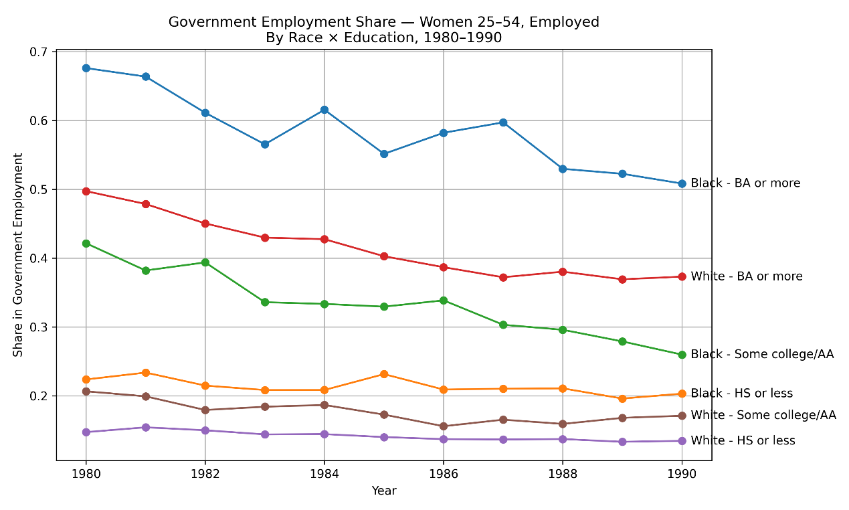
An Analysis of Public Sector Employment, Race, Education, and Women’s Wages in the 1980s
Article thumbnail
This essay examines the role that U.S. public-sector employment played in shaping access to jobs and wage levels among Black and White non-Hispanic women between 1980 and 1990. Comparing Current Population Survey Annual Social and Economic Supplement (CPS-ASEC) microdata, government shares in jobs and deflated, calendar-year wages (in 2000 dollars) are compared between education categories (High School or less, some college/associate’s degree, Bachelor or more). Three empirical patterns organize the findings. First, public jobs provided a stable wage floor: low-tail percentiles (p10–p25) were higher and dispersion typically lower in the public sector, especially among non-BA Black women. First, as Black women remained disproportionately focused on government jobs, public-sector attachment declined across the decade, with steeper drops among Black women and lower convergence with White women. Third, sectoral wage trends diverged: among other White women, private medians increased as compared to the public sector by 1990, while among college/AA-attending Black women, the public median rose while the private median leveled off, supporting the sheltering from low-tail risk that underpins the public sector. The decade-to-decade comparison between median growth—the public up while the private median earnings were generally flat—a testament to the stabilizing impact that the public sector has on earnings in the presence of wider changes. A very brief mechanism discussion connects these results to pay systems in the civil service, transparency, unionization, and changing fiscal/enforcement environments.
Show more
Read Article PDF
Cite
Research Article Open Access
The Real Cost of Cheap Healthcare in China: Research Based on the Current Situation and Problems of Medical Care in China
This study explores the actual costs and long-term sustainability of China’s low-cost healthcare model, a system that has achieved notable outcome, including a life expectancy of 78.2 years and an 81-point basic health service coverage rate, while maintaining a relatively low per capita healthcare expenditure of $1,033 international dollars in 2021. By using a secondary data analysis approach, the research draws on comprehensive datasets from multiple authoritative sources: global indicators from the World Health Organization (WHO) and the World Bank, as well as micro-level data such as public hospital revenue-expenditure statistics from Chinese local governments, such as Guangdong Provincial Health Commission and doctor salary surveys from state-owned media like CCTV News. The findings reveal three core challenges undermining the model’s sustainability. First, the government controls healthcare costs primarily through limited fiscal subsidies and centralized procurement policies, which leaves public hospitals with significant funding gaps. Second, these gaps force hospitals to shift financial burdens to doctors, resulting in low salaries and reduced talent attraction, and to patients via increased reliance on non-diagnostic service revenues. Third, there exists a severe imbalance in medical resource allocation, with over 70% of resources concentrated in urban areas, widening urban-rural and regional disparities. To address these issues, the study concludes that sustainable reform must involve optimizing government investment in public hospitals, strengthening major-disease insurance to lower patients’ out-of-pocket expenses, and integrating medical resources to narrow allocation gaps, ultimately balancing affordability with service quality.
Show more
Read Article PDF
Cite