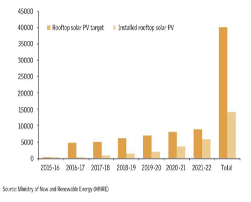
This paper examines the challenges hindering rooftop solar (RTS) deployment in India and explores how a U.S.-India partnership can unlock its full potential. RTS, a decentralized and scalable renewable energy solution, is critical to India’s renewable energy goals, including its target of 40 GW of RTS capacity under the National Solar Mission by 2022 which remains unmet with only 10.9 GW installed as of 2023. Key barriers include high upfront costs, limited financing options, policy fragmentation, and resistance from distribution companies (DISCOMs). The paper identifies actionable solutions, leveraging U.S. expertise in innovative financing models, net metering policies, and grid modernization. Collaborative initiatives, such as USAID-backed loan guarantees and green bonds, could alleviate financing gaps, while technical assistance from the U.S. can support DISCOMs in integrating distributed solar. The paper also emphasizes the need for performance-based incentives, consumer awareness programs, and community solar models to accelerate adoption. A successful U.S.-India collaboration can address systemic challenges, enhance RTS scalability, and contribute to global climate goals. By leveraging shared expertise and resources, this partnership offers a pathway to strengthen India’s renewable energy transition while fostering bilateral cooperation in clean energy development.