Articles in this Volume

Research Article Open Access
Research on Credit Risk Models of Commercial Banks in the Context of Digital Finance
Article thumbnail
Digital finance is a crucial part of the “Five Major Articles” in the digital finance era, representing not merely a technology-driven innovative endeavor but also serves as a cornerstone for advancing high-quality economic development and constructing a modern financial architecture. Its evolution integrates cutting-edge technological applications with systemic financial reforms, thereby fostering inclusive growth, optimizing resource allocation efficiency. Credit risk management models for commercial banks are a common focus nowadays for both the academic and practical fields. This paper categorizes the fundamental risk control models and analyzes real-world cases. The findings indicate that although commercial banks actively adopt new models and have proposed new evaluation criteria for the technology sector, these models still face issues such as high training costs, poor interpretability, and inadequate early warning capabilities. Simultaneously, data quality also constitutes a persistent concern. In conclusion, credit risk models still have significant room for optimization in the context of the digital finance era.
Show more
Read Article PDF
Cite
Research Article Open Access
Empowering Enterprises’ New Quality Productive Forces Through Digital Supply Chains: Mechanisms and Policy Implications
As a core component of digital transformation, the digital supply chain serves as a critical driving force behind the qualitative leap in enterprise productivity. Based on panel data from China’s A-share main board listed companies in Shanghai and Shenzhen from 2015 to 2022, this study builds on existing research to conduct an in-depth analysis of the impact and mechanisms through which digital supply chains influence enterprises’ new quality productive forces. The results reveal that: (1) Digital supply chains significantly and positively enhance enterprises’ new quality productive forces, a finding that holds robust across various tests; (2) Digital supply chains foster the development of new quality productive forces by reducing supplier concentration; (3) The power structure of corporate management plays an important moderating role, with board size exerting negative moderating effect, while equity dispersion has a positive moderating effect; (4) These effects exhibit notable heterogeneity across ownership types, firm sizes, and regions. The findings of this study not only enrich the theoretical understanding of digital supply chains and new quality productive forces, but also offer practical pathways for policymakers and enterprise managers in China to seize the opportunities of digital transformation.
Show more
Read Article PDF
Cite
Research Article Open Access
Analyzing the Reasons for the Sustained Growth of the Market Through the Continuous Growth of the Gold Market
The Gold Market plays an dominant role in the world economic and has significant impact on financial stability worldwide. Therefore, this paper focuses on investigating the underlying reasons for the sustained growth in gold prices and continuous expansion of the gold market using a literature analysis approach. The trends of the Gold Market are affected by the overall market, inflation, economic cycle as well as the inherent properties of gold. Market growth is influenced by internal factors, including profit growth, dividend reinvestment, asset reallocation, and the international environment. Besides, it is also influenced by external factors, such as inflation, technological advancements and shifts in productivity.
Show more
Read Article PDF
Cite
Research Article Open Access
Study on the Mechanism, Innovative Pathways, and Countermeasures for Driving Green Upgrading of Energy Industry by Digital Economy in Liaoning Province
This paper studies the empowerment mechanisms, innovative pathways, and countermeasures of digital economy in driving the green upgrading of the energy industry in Liaoning Province. First, the paper analyzes the innovative mechanisms, talent mechanisms, and structural mechanisms of digital economy in driving the green upgrading of the energy industry in Liaoning Province. Then, based on the theory of digital empowerment, the paper explores the development model of energy industry intelligent green upgrading in Dalian, and takes IBM's digital transformation as an example to provide insights into how digital economy drives industrial transformation and upgrading. The paper also constructs a measurement model to empirically verify the impact and pathways of digital economy on the green upgrading of the energy industry. Finally, it proposes countermeasures such as relying on digital economy to drive the intelligent upgrading of industries, promoting the construction of intelligent industrial management systems, and building a complete digital empowerment capital support system to promote the digitalization, intelligentization, and high-end development of the energy industry in Liaoning Province.
Show more
Read Article PDF
Cite
Research Article Open Access
Digital Finance and Household Financial Asset Allocation: An Empirical Study Based on CHFS Data
In the current developmental context, the world is entering an era of digitization and informatization, and digital finance is rapidly developing in China. This paper uses data from the 2019 China Household Finance Survey (CHFS) to empirically examine the impact of digital finance on household financial asset allocation. The findings reveal that the development of digital finance significantly increases the likelihood of household participation in financial markets. Further analysis of the mechanisms indicates that digital finance enhances household financial literacy, thereby raising the probability of their engagement in financial markets. This effect is particularly pronounced among rural households and low-income families.
Show more
Read Article PDF
Cite
Research Article Open Access
Impulsive Buying Behavior of China's Generation Z in Online and Offline Shopping: A Comparative Analysis of Motivation, Contexts, and Decision-making Process
Generation Z in China is increasingly becoming a prominent consumer segment, characterized by unique shopping behaviors. Marketers aiming to properly target this group must have a thorough awareness of the psychological and environmental factors driving their impulsive buying habits. This study investigates the impulsive purchasing behavior of Chinese Generation Z in online and offline shopping contexts, focusing on the roles of shopping motivation, shopping situations, and decision-making processes. Statistical methods including regression and variance analysis were used to investigate the correlations between 406 survey participants' responses and impulsive purchase behavior. The results reveal that shopping motivation, shopping situations, and decision-making processes all significantly and positively influence impulsive buying behavior. Additionally, differences in impulsive buying behavior were observed across various demographic groups, including age, gender, city type, and income level. These findings provide valuable insights for marketers aiming to tailor strategies to effectively engage Generation Z consumers in both online and offline shopping environments.
Show more
Read Article PDF
Cite
Research Article Open Access
Bed Bath & Beyond: The Capital Structure Decision
Article thumbnail
The retail industry has undergone profound changes in recent years, particularly with the rapid rise of e-commerce and shifts in consumer shopping habits. Many traditional retailers have had to adjust their business models and capital structures to cope with market competition and financial pressures. Bed Bath & Beyond, as an iconic home goods retailer in the United States, was once a market leader in the home furnishings sector. This study focuses on BBBY's capital structure and its implications for the retail industry. By analyzing BBBY's debt levels, equity structure, and financing strategies, this paper found that the low return on cash holdings drags down the ROE and there is inefficient use of capital since BBBY has a lot of cash but no debt. This research aims to reveal the impact of capital structure on a company's financial health and long-term development. The findings not only provide an in-depth explanation for BBB's financial situation but also offer valuable insights for other retailers in optimizing capital structures and managing financial risks. The opinion of this paper to use trade off theory that appropriate level of debt can improve the profitability of Bed Bath & Beyond.
Show more
Read Article PDF
Cite
Research Article Open Access
Digital Experience Integration in UK Fashion Retail: Engaging Generation Z Consumers
In the rapidly evolving fashion retail sector, digital technology is rapidly influencing consumer shopping behaviour and the marketing strategies of fashion physical shops. Generation Z, in particular, are considered the natives of the digital age and have higher expectations of the digital experience in physical shops. Gen Z, as a major consumer group of fashion products, have specific needs for the shopping experience, so it is essential to be aware of how digital experiences can be integrated to meet their needs. The objective of this study is to provide insights into how fashion brands can better accommodate digital experiences in British offline stores to facilitate purchases by Gen Z consumers, and to provide recommendations for relevant practices. This study uses secondary research to collect and analyse data extensively. This study has important implications for fashion management practices and market competition, as digital experience has become a key area of innovation in fashion retail.
Show more
Read Article PDF
Cite
Research Article Open Access
Analysis of E-commerce Platform Supply Chain Finance Model - Taking JD Group as an Example
Article thumbnail
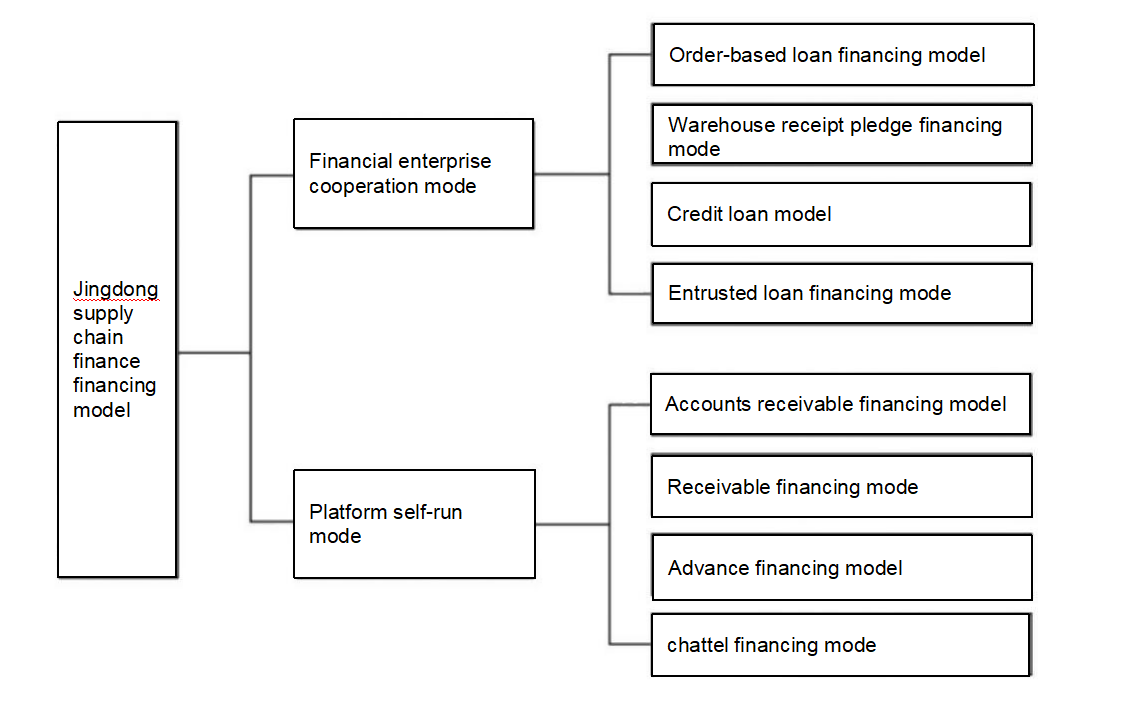
This paper makes an in-depth analysis of the supply chain finance model of e-commerce platform, taking Jingdong Group as a case study, and discusses its development process, main financing mode and advantages and disadvantages. By defining the concept of supply chain finance and electricity supply chain finance, combined with the theory of transaction cost and long tail, this paper explores the jingdong gold enterprise cooperation financing mode (including order loan, warehouse receipt pledge, accounts receivable and entrusted loans) and platform of proprietary financing mode (such as Beijing bao bei, Beijing small loan, enterprise gold and chattel financing). Through the comparison with the supply chain finance model of Ping An Bank and Alibaba Group, it reveals JD’s unique characteristics in its strategic positioning, participants and financing services. The article points out that fintech has promoted the innovation of supply chain finance, and JD's supply chain finance model has significant promotion value, and provides suggestions on improving the payment system, increasing policy support, expanding the source of funds and improving the regulatory mechanism, so as to further optimize the supply chain finance services of the e-commerce platform.
Show more
Read Article PDF
Cite
Research Article Open Access
The Impact of FinTech on Corporate Earnings Management in the Era of Big Data — Evidence from China’s ChiNext Companies
Based on data from companies listed on the ChiNext board between 2012 and 2022, this study constructs a panel dataset incorporating the Peking University Digital Inclusive Finance Index and other relevant indicators to empirically examine the impact and mechanisms of FinTech on corporate earnings management. The findings reveal that both the overall FinTech index and its breadth of coverage and depth of usage significantly curb earnings management. Robustness checks using lagged variables and instrumental variable methods confirm that the governance effect of FinTech exhibits both persistence and accumulation characteristics. Heterogeneity analysis indicates that the effect is more pronounced in eastern and central regions due to well-developed digital infrastructure and mature technological ecosystems, whereas the western region shows no significant effect due to lagging technological adaptation. These findings provide a theoretical foundation and practical guidance for financial regulatory innovation in the digital era. The study recommends building a three-dimensional governance framework of “technology–system–region”: on the regulatory side, promoting blockchain-based record-keeping and AI early-warning systems; on the corporate side, internalizing technology governance as a core competitive advantage; and at the regional level, implementing gradient strategies to address the digital divide.
Show more
Read Article PDF
Cite