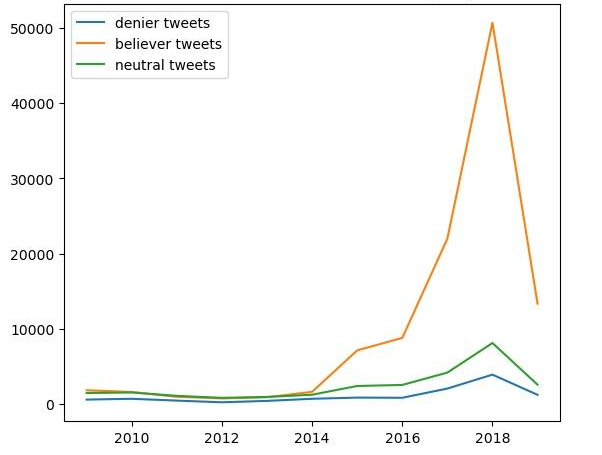
This study explores the factors that may influence public perceptions of climate change by linking various datasets from the United States. It aims to identify patterns among climate change deniers within social media data. The outcome variable in this project is the percentage of climate change denial (people denying that climate change is man-made) in each state on Twitter. Explanatory variables include GDP per capita, gender, and local temperature. The study utilises Python and R programming languages for descriptive analyses and statistical modelling based on large-scale digital trace data. Additionally, the analysis involves constructing both an ordinary least squares regression model and one-way and two-way fixed-effects models. Secondary datasets are collected to measure the variables, and these datasets are merged at the state level. The findings suggest that states with higher GDP per capita tend to have more people acknowledging on social media that climate change is influenced by human activity. However, the effect of GDP per capita on climate change denial is extremely small, and it does not correlate with the unmeasured fixed effects that influence the proportion of denial-related tweets. Moreover, gender shows no statistically significant correlation with climate change perceptions based on our data-driven research. On the other hand, higher local median temperatures in a state are associated with a greater likelihood of citizens forming personal beliefs that humans contribute significantly to climate change. This research can facilitate social media platform moderation and assist the government in identifying the geographic distribution of climate change denial, thereby fostering a more united community to combat climate change.