Articles in this Volume

Research Article Open Access
Research on the Role of Education in Poverty Reduction in India
India has a long history of social and economic problems that combine to produce poverty due to several overlapping variables. Education, an essential tool for countries, has been known for reducing poverty. Poverty is a situation in a country that lacks an economy and critical resources to support a living. When a country cannot meet basic requirements for people, such as food, water, clothing, etc., nobody ought to be impoverished. The purpose of this study report is to determine how education lowers poverty rates and supports Indian families. Education plays a pivotal role in fostering economic growth. For individuals of specific socioeconomic or ethnic groups, access to healthcare, education, and career opportunities is sometimes more challenging than for others. Even while the general level of education has improved, many Indian communities—especially those in rural areas—remain without access to high-quality education. By altering its policies, India can become a better country. This will help the impoverished and lessen social inequality by increasing productivity, raising wages, and creating jobs. This study is significant since it provides an analysis of India's poverty rate. This can aid in people's understanding of what this nation is doing at the moment and what they are doing to better themselves. One of the paper's shortcomings is the dearth of primary sources; instead, the majority of the sources consulted were secondary ones. Surveys and interviews can produce primary sources for upcoming research.
Show more
Read Article PDF
Cite
Research Article Open Access
Policy Support and Free Markets: Innovation Paths and Future Strategies in Bangalore and Silicon Valley
This paper compares the different urban development models of Bangalore and Silicon Valley, two global centers of technology and innovation. Bangalore, known as the "Silicon Valley of India," has grown primarily through government policies that attract outsourcing and R&D centers, while Silicon Valley thrives on a market-driven innovation ecosystem supported by venture capital. The study analyzes their entrepreneurial cultures, labor sources, and risk tolerance, highlighting the strengths and limitations of each model. Bangalore’s government-led approach has bolstered its outsourcing industry but limited its capacity for indigenous innovation. In contrast, Silicon Valley’s risk-tolerant, market-based model has fostered groundbreaking technological innovation. The research concludes that Bangalore should focus on enhancing local innovation capabilities to achieve sustained growth, while Silicon Valley must address rising living costs and income inequality to maintain its global leadership. By comparing these distinct urban development paths, the study offers valuable insights for emerging technology hubs around the world.
Show more
Read Article PDF
Cite
Research Article Open Access
Implications of Technological Advancements on Income Inequality in China
This paper investigates the implications of technological advancements on income inequality in China, particularly in the realms of automation and artificial intelligence (AI), and reveals how these technologies have reshaped China’s labor market, contributing to a widening income gap. Specifically, the research demonstrates that while automation has propelled economic growth and enhanced productivity, it has also disproportionately benefited skilled workers, worsening existing inequalities as a result. The paper assesses existing policies that aim to solve these effects including “Made in China 2025” and proposes new targeted interventions such as expanding reskilling programs that provide opportunities to all workers. There are also strengthened social safety nets and unemployment benefits to prepare for the potential job loss that technological advancements may cause. The findings in this paper emphasize the need for a policy approach that promotes growth equally for everyone facing rapid technological change. Hopefully, these policies will lead to a more balanced distribution of the benefits of technological progress.
Show more
Read Article PDF
Cite
Research Article Open Access
Analysis of the Influence of Personal Lifestyle on Well-Being
Article thumbnail
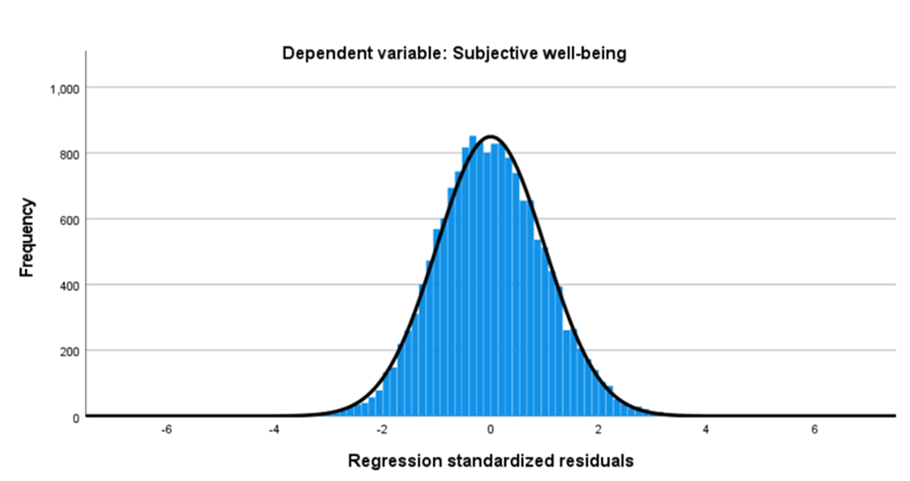
Although current research has concluded that a person's happiness is related to many factors, such as the amount of sleep, exercise and so on; But there are many factors that have not been taken into account. In this study, a total of 15,977 subjects were included in the multiple linear regression equation, and the step-up regression method was used to reduce the correlation between variables. The results show that people should try more to enter "flow" in daily life, which is particularly closely related to the improvement of subjective well-being; In addition, life expectancy, travel times, inner circle of friends and alone time have significant effects on individual subjective well-being. In previous studies, many variables related to social attributes have not been considered in detail and properly divided. In this study, the social environment around an individual was clearly defined to provide a more accurate correlation, which provides clearer criteria for identifying mental health in the past and points the way for follow-up research.
Show more
Read Article PDF
Cite
Research Article Open Access
The Impact of Delayed Retirement on Economic Growth in the Context of Population Ageing: The Case of China
A phenomenon that is leading to an overall growth in proportion of people over 60 years old in total population of a society is population ageing. It has now become a common challenge to China's and the world's economic growth, and one of the major constraints to economic growth. As life expectancy increases, the traditional retirement policy is gradually failed to meet the needs of social process. This study mainly explores the merits and demerits of raise retirement age policy for China's society and economy against the backdrop of an increasingly aging population. The study analysed that pushing back retirement age policy can have helpful effects on the community's overall economy, such as the replenishment of the labour supply, building human capital, enhancing the spending power of older persons, the optimization of the overall consumption structure, and the reduction of the pressure on and financial burden of pension payments. Apart from the above, although raise retirement age has had a beneficial effect on the economy through a number of coping methods, it also faces challenges such as the difficulty of finding employment for the elderly and the lack of flexibility in the labor market. Therefore, when formulating and implementing the delayed retirement policy, these factors should be fully considered, and targeted measures should be taken to solve them. At the same time, the policy publicity should be strengthened to improve the awareness and acceptance of the delayed retirement policy in society.
Show more
Read Article PDF
Cite
Research Article Open Access
The Effect of Inflation on Economic Growth
The research theme of this paper is to analyze the impact of inflation on the economy, encompassing both its positive and negative effects. By retrieving relevant literature and analyzing specific instances, it elaborates on the various ways in which inflation affects the economy. The paper delves into the economic landscape shaped by inflation, examining the strategies employed by governments to address its impacts. Inflation not only impacts the daily lives of consumers but also influences the investment decisions of producers. Concurrently, other financial products such as real estate and stock markets are also affected by inflation, posing threats to the stability of the entire financial market and potentially leading to economic imbalances. This paper further expands on these points, discussing how inflation can both stimulate economic growth through modest increases that spur consumption and investment, while also detailing its more severe consequences, including reduced consumer purchasing power, rising living costs, producers' struggles with cost escalation in decision-making, and the exacerbation of volatility in financial markets like real estate and stocks, which can shake market confidence, compromise financial stability, and ultimately contribute to economic imbalances. Additionally, the paper explores the range of monetary and fiscal policies governments can adopt to effectively manage inflation challenges and safeguard economic stability and sustainable development.
Show more
Read Article PDF
Cite
Research Article Open Access
Research on the Economic Effects of Childcare Costs on Women’s Employment Decisions
Article thumbnail
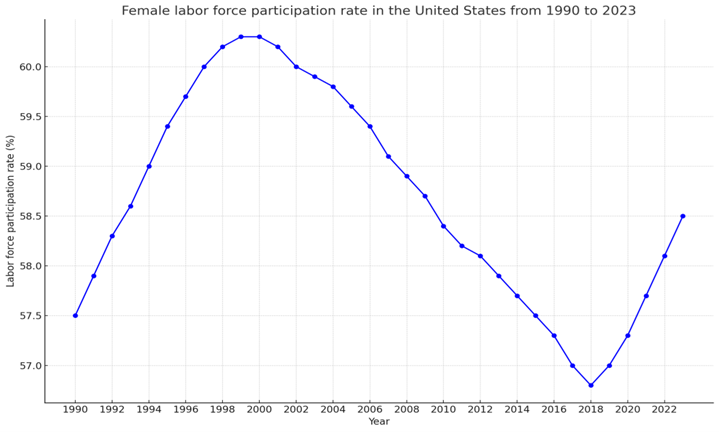
The dynamics of female labor force participation is a critical factor in promoting economic sustainability. This study examines the impact of childcare costs on women’s employment decisions, utilizing a comprehensive dataset encompassing 753 observations from the U.S. Women’s Labor Force Participation Database. By employing a Multiple Linear Regression (MLR) model with interaction terms, this paper investigates various factors, including age, income, education level, number of children, and their influence on employment outcomes. The results indicate significant negative impacts of childcare costs on employment probabilities, particularly among mothers with young children, highlighting a critical barrier to labor market entry. The findings support the need for targeted policy interventions that reduce childcare costs and promote greater economic stability and gender equality in the labor force. By offering empirical evidence on the quantifiable impact of childcare expenses, this research contributes valuable suggestions to enhance women’s labor market participation through supportive childcare initiatives and flexible work policies.
Show more
Read Article PDF
Cite
Research Article Open Access
Domestic and Global Impacts of China’s Real Estate Crisis
A real estate crisis has occurred in China since around 2020. China’s economy has been seriously impacted since the real estate sector is a significant part of China’s GDP. This crisis would lead to impacts on both the domestic economy and the global economy. The domestic impacts include a fall in consumer confidence, rising unemployment, increased financial instability, and decreased government revenue; the global impacts include negatively influenced trading markets, a rise in risk for foreign investors, and stress on the international monetary system. To address the problem of the real estate crisis, the Chinese government has implemented some policies, including re-lending to commercial banks, lowering down payment thresholds, reducing mortgage interest rates, and loosening criteria for qualification of first-time buyers. To resolve the crisis, the government should aim to reduce the significance of real estate to the overall economy. This process should be gradual while progressive policies should be implemented. Policies that aim to directly contract or expand the market could be dangerous for the economy due to the significance of the real estate sector.
Show more
Read Article PDF
Cite
Research Article Open Access
Exploring the Role and Function of Government in the Development of Green Economy in the Region Based on the Planning of Ecological Industrial Zones — A Case Study of Jurong Island in Singapore and Rio de Janeiro in Brazil
Green Economy has been gradually realized through various methods including the establishment of Ecological Industrial Parks(EIPs). Current research on EIPs mainly focuses on engineering aspect with analysis of facilities layout, balancing industrial production and environmental preservation through energy cycling system. Though EIPs’ economic value is mentioned in the articles, few of them delved deeply into the practical development process of EIPs and they just remain in design analysis. Actually, government plays an indispensable role in real life in terms of EIPs’ success and upgrading. This article chooses two cases, namely Jurong EIP in Singapore and Rio de Janeiro in Brazil to excavate government’s function as ‘predominance’. Cases reflect problems occurring in EIP development and offer objective suggestions based on successful examples. Our study claims that the successful EIP is always quipped with valid and scientific macro-control that can be implemented fully. Despite complete engineering cycle is presented, EIP still faces potential hazard without corresponding government oversight. In the other word, ‘engineering optimization’ and ‘economic trade-off’ achieving in an EIP rely on predominant macro-control to a very large extent.
Show more
Read Article PDF
Cite
Research Article Open Access
Research on the Marketing Strategy and Future Development of Commercial Companies Based on 4Ps Theory: A Case Study of Apple
In 2022, Apple was the largest technology company by revenue, with US $394.3 billion. As of 2023, Apple was the fourth-largest personal computer vendor by unit sales, the largest manufacturing company by revenue, and the largest vendor of mobile phones in the world. Based on 4Ps marketing theories to analyze the management and the marketing method of Apple Inc and discover how and why it can become a such successful company. Furthermore, through 4p research, this paper may find out what the company's strengths are, and more importantly, find out the existing and potential issues in the area of price, product, place, and promotion strategies. Then gives out reasonable suggestions to improve the weaknesses. Meanwhile, evaluate the potential opportunities and the threats to Apple Inc. Overall, this paper provides a valuable insights in apple’s current marketing strategies in order to make apple company to become a sustainable success company and an role model for other companies seeking for a success.
Show more
Read Article PDF
Cite