Articles in this Volume

Research Article Open Access
Analysis of New Balance's Brand Positioning and Competitive Advantages
New Balance, founded in 1906, has grown into a global leader in the sportswear market by emphasizing comfort, performance, and domestic manufacturing. This paper evaluates New Balance’s brand positioning strategies and how they contribute to its competitive advantage. The analysis highlights the brand's ability to differentiate itself through localized production, commitment to sustainability, and avoidance of celebrity endorsements. By focusing on quality and authenticity, New Balance has built a loyal customer base while appealing to environmentally conscious consumers. Despite these strengths, the brand faces challenges in adapting its strategy to different global markets, particularly in regions where celebrity endorsements and trend-driven products dominate. New Balance’s growing focus on digital marketing, sustainability, and emotional connections with consumers presents significant opportunities for further market expansion. The research demonstrates how mid-sized brands like New Balance can compete successfully in saturated markets by maintaining strong differentiation and consumer loyalty. These insights are valuable for brands seeking to strengthen their market presence through effective positioning strategies.
Show more
Read Article PDF
Cite
Research Article Open Access
The Impact of Chanel Brand Heritage on Trust and Loyalty Among Chinese Female Luxury Consumers
With the rapid development of the global luxury market, brand heritage is becoming increasingly important in shaping consumer perceptions of luxury value and loyalty. This study explores the impact of Chanel's brand heritage on the trust and loyalty of Chinese luxury women consumers. As a leading brand in the global luxury industry, Chanel has a long history of heritage, classic product design, and unique brand culture. This study examines how brand heritage affects different dimensions of luxury value perception, including emotional, economic, functional, and social value. The relationship between brand heritage and luxury value perception is explored in depth by analyzing the history of brand heritage of the luxury brand Chanel and the female consumers in the Chinese market. The findings of this study contribute to an understanding of how brand heritage shapes consumer loyalty in the luxury market and provide managerial insights for both traditional heritage brands and emerging luxury brands seeking to establish a heritage-based value proposition.
Show more
Read Article PDF
Cite
Research Article Open Access
Research on the Development of Intelligent Logistics Technology--Taking Community End-of-Life Delivery as an Example
The development of the Internet has brought new opportunities for the development of the logistics industry, allowing China's logistics enterprises to grow rapidly. With the establishment of more logistics companies, the domestic logistics industry has formed a huge logistics network that leads the world. Affected by the epidemic, contact-free intelligent distribution has become a new direction for the development of community distribution. With the rapid development and growth of the e-commerce field, the demand for logistics and distribution has increased dramatically, and shortening the distribution time of each transportation link and reducing labor costs have become the focus of the logistics field. This paper focuses on intelligent express cabinets, unmanned delivery vehicles, and drone distribution. It analyzes the development history and current state of these technologies. The paper highlights how intelligent technology improves supply chain efficiency. It also identifies the existing shortcomings and risks in the application of intelligent technology in logistics and distribution. Finally, it offers optimization suggestions.
Show more
Read Article PDF
Cite
Research Article Open Access
The Influence of User-Generated Beauty Content on Xiaohongshu on the Purchase Decisions of Generation Z Chinese Women
User-generated content (UGC) has become a major factor in shaping consumer buying behavior. In China, Xiaohongshu is a prominent platform, particularly for Generation Z women, with a strong emphasis on beauty content. This study examines the influence of user-generated content on Xiaohongshu on the purchasing decisions and brand loyalty of Generation Z Chinese women within the beauty sector. Through a survey of 98 active Xiaohongshu users aged 15-30, the research highlights the significant impact of visual content (short videos and images) and textual reviews on consumers' purchase decisions. Visuals provide immediacy and engagement, while text adds detailed product feedback, contributing to informed decision-making. Additionally, the quality of UGC interactions, including original poster responses and high engagement, enhances trust, credibility, and community belonging. The study finds that content types like tutorials, product reviews, and regular updates play a critical role in fostering brand loyalty. The results offer strategic insights for beauty brands to leverage UGC by fostering active engagement, promoting authentic content, and cultivating a sense of community. This approach can drive purchase conversions and long-term brand loyalty among Generation Z women, providing a sustainable marketing strategy in China's competitive digital landscape.
Show more
Read Article PDF
Cite
Research Article Open Access
The Consumption Concept of Chinese High School Students Towards the American Mobile Brand Apple
This study explores how the American mobile brand Apple is positioned within the consumption patterns of Chinese high school students. Using a qualitative approach that includes interviews, focus groups, filmmaking talks, and training sponsorship negotiations, this research delves into more profound and unforeseen factors affecting the perception and popularity of Apple among China's younger generation, who are heavily influenced by global trends. The study examines how various elements, such as brand prestige, social influence, emotional appeal, and product attributes, contribute to shaping their views of consumer electronics. It investigates how cultural values intersect with these factors, revealing that marketing strategies often outweigh rational arguments in purchasing decisions. The findings provide deeper insights into why Apple's appeal persists despite competition. This research adds to the existing literature and equips marketers with valuable strategies to engage this target audience more effectively, ultimately fostering long-term consumer loyalty and brand advocacy.
Show more
Read Article PDF
Cite
Research Article Open Access
South Korea: Becoming a Developed Nation Through Reforms and Macroeconomic Policies
Article thumbnail
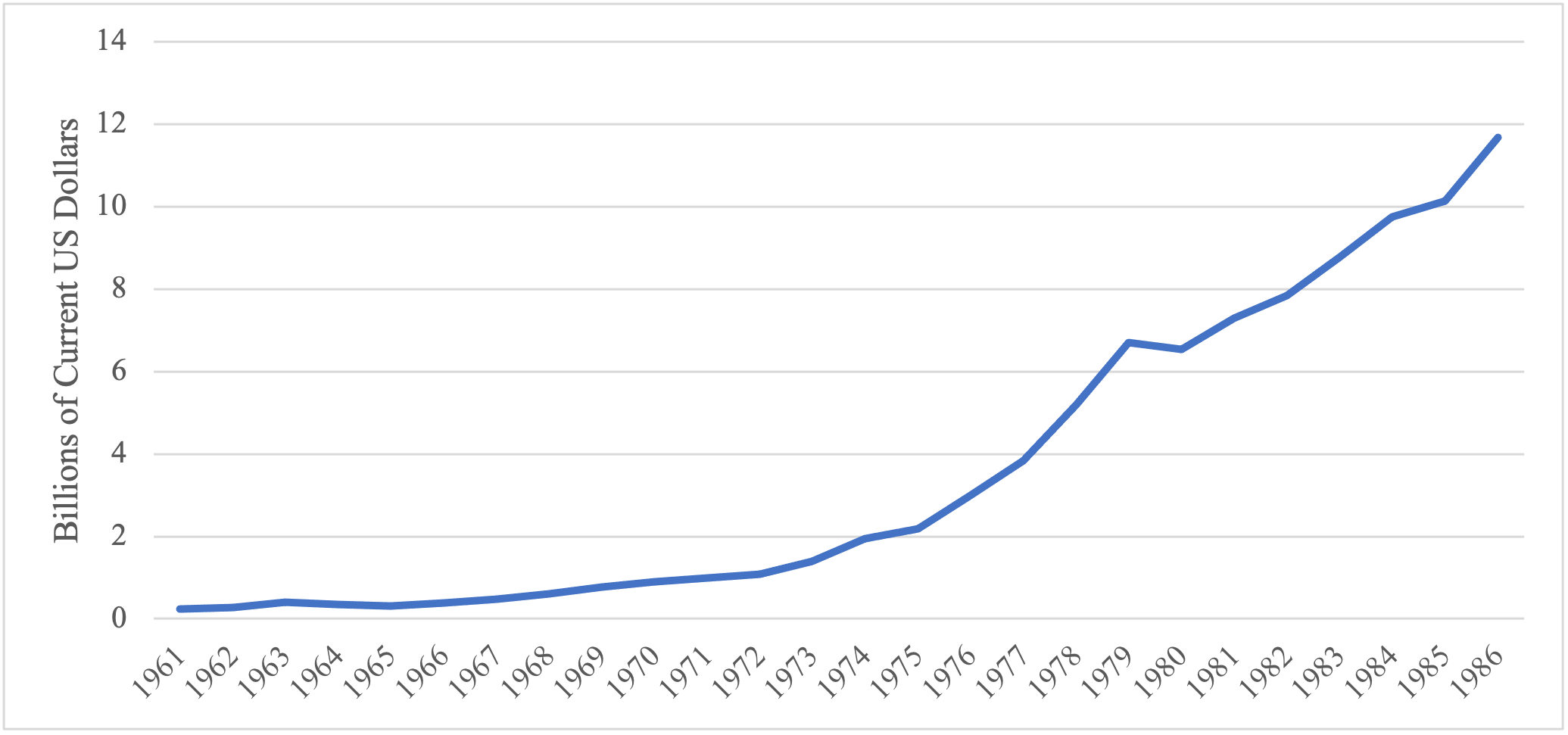
In the 1960s, the Republic of Korea was one of the poorest countries in the world, yet in the 2000s, the country became classified as a developed country. This paper explores South Korea’s transformation from a developing nation to a developed economy, emphasizing the role of strategic government policies, financial reforms, and the impact of the 1997 Asian Financial Crisis. The $58 billion bailout by the International Monetary Fund and subsequent reforms—corporate restructuring, banking sector overhaul, and labor market adjustments through South Korea’s Five-Year Plans—were crucial in stabilizing the economy and restoring investor confidence. This paper also analyses these interventions from both classical and Keynesian economic perspectives, highlighting how they improved market efficiency, financial discipline, and aggregate demand. The policies and plans that were included in South Korea’s dramatic change from a poor country into a developed one offer valuable insights for developing countries on financial stability and strategic policy implementation in achieving sustainable economic growth.
Show more
Read Article PDF
Cite
Research Article Open Access
A Study on the Consumption Psychology of Young Chinese Parents Towards Children’s Educational Apps
With the development of network technology, children’s educational apps have gradually become an indispensable auxiliary tool in family education, especially in alleviating the pressure on young parents and promoting children’s cognitive development. This study delves into the consumption psychology of young Chinese parents towards children’s educational apps, providing a basis for app developers to optimize their products and promote the development of children’s education. The study was conducted through a questionnaire survey targeting young parents aged 26-35, and 40 valid questionnaires were collected through social media platforms. The survey covered aspects such as the parents’ considerations for choosing apps, functional preferences, information access channels, concerns, and willingness to pay. The results show that content quality is the most important factor for young parents when selecting children’s educational apps. When purchasing apps, privacy protection is the most concerning issue for parents. In addition, user experience, changes in children’s interests, content update frequency, and app performance are the main factors affecting parents' continued use of the apps.
Show more
Read Article PDF
Cite
Research Article Open Access
Transportation Integration in the Greater Bay Area: A Strategic Analysis of Guangzhou's Economic Prospects
After 2020, the development of the Guangdong-Hong Kong-Macao Greater Bay Area has garnered significant attention and sparked extensive research and discussions. The Outline of the Development Plan for the Greater Bay Area was officially released on February 18, 2019, marking a new phase in its development. Guangzhou, as the political, economic, and cultural center of Guangdong Province, plays a crucial role in enhancing its transportation advantages within this new development framework. Improved transportation construction can boost Guangzhou's competitiveness in various ways. This paper aims to discuss the opportunities and challenges presented by transportation integration in Guangzhou by comprehensively analyzing the economic structure of the Greater Bay Area, examining the implemented or planned transportation projects since the concept was introduced, and integrating transportation integration theories with Guangzhou's actual circumstances. The study will explore aspects such as policy direction, geographical location, and future planning, concluding with recommendations for Guangzhou's economic development based on its current situation and objectives.
Show more
Read Article PDF
Cite
Research Article Open Access
The Relationship Between National Income and Mental Health: Analyzing GNI and Depressive Disorders Across Nations
Article thumbnail
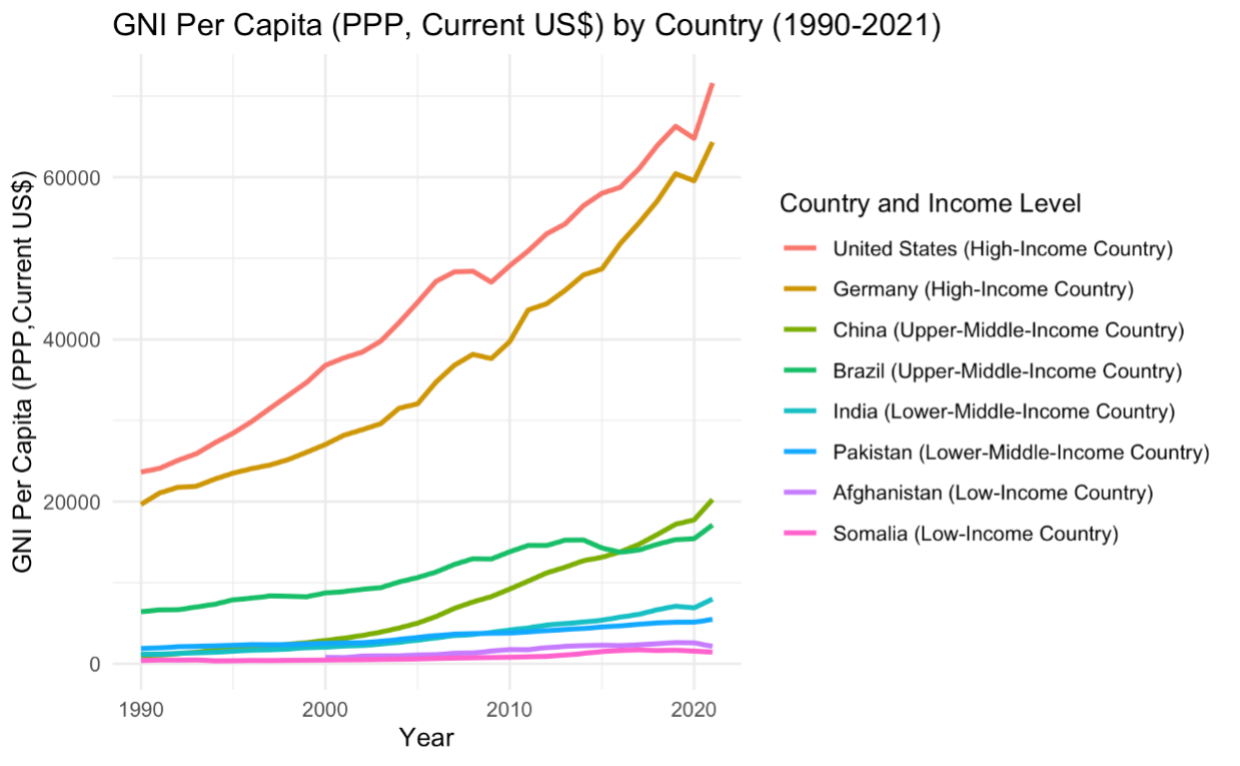
This study explores the intricate relationship between economic inequality and the prevalence of depressive disorders across countries from 1990 to 2021. Gross National Income (GNI) per capita is used as an economic measure, and its association with mental health outcomes, particularly depressive disorders, is analyzed. By employing advanced predictive models, including Random Forest, ARIMA, and ETS, we estimate future mental health trends, providing a comprehensive picture of how economic factors shape mental health disparities globally. The datasets are sourced from the World Bank and WHO, ensuring robustness in the study’s conclusions. According to the forecasts generated by the ARIMA model, depressive disorder rates might escalate to exceed 6,000 cases per 100,000 people by 2030 in the absence of specific interventions. This underscores the pressing necessity for policymakers in high-income nations to tackle both income disparities and enhance mental health facilities. Both the ARIMA and ETS models delivered forecasts that closely aligned with actual rates, where the ARIMA model exhibited an RMSE of 927.97, while the ETS model demonstrated a slightly better performance with an RMSE of 573.65. These findings underscore the significance of economic factors in forecasting depressive disorder rates.
Show more
Read Article PDF
Cite
Research Article Open Access
Employment Issues and Countermeasures for University Graduates in the Context of the Digital Economy
As a new key production factor, data plays an important role in economic development. With the continuous progress of information technology, the development of digital economy has gradually become the universal consensus of all countries in the world, promoting the profound change of the global economic structure. While the digital economy injects new momentum into the job market, it also triggers structural unemployment, shortcomings in digital platform mechanisms, and changes in the employment perceptions of university graduates. The employment situation for university graduates is becoming increasingly severe. To guide graduates in correctly recognizing and seizing the employment opportunities and challenges presented by the digital economy, various stakeholders must act, including the government, higher education institutions, and the graduates themselves. This can be achieved by further strengthening the integration of education and industry, fully utilizing digital technology to establish service platforms, deepening digital talent training and education system reforms, promoting the enhancement of graduates’ digital skills, and fostering correct employment perceptions to achieve high-quality employment.
Show more
Read Article PDF
Cite