Articles in this Volume

Research Article Open Access
The Impact of New Energy Vehicle Industrial Development on Residents' Consumption Upgrading and the Moderating Effect of the Digital Economy
Under the background of the carbon peaking and carbon neutrality strategy policy, the digital economy has become an enormous force driving residents' consumption concepts in the new energy vehicle industry. Current existing research mostly focuses on the development of the new energy vehicle industry itself, the factors related to residents' consumption habits, and the functions arising from digital economy applications, but there is a shortage of research that places the above three perspectives within the same analytical framework. This article starts from existing relevant literature, analyzes theoretically how the path of new energy vehicles affects residents' consumption, and how new energy vehicles influence the transformation of the digital economy. With the specific cases of BYD and NIO, it further explores how the digital economy can empower industry development and drive resident consumption. Specifically, the study first reviews the policy background of carbon peaking and carbon neutrality and its implications for the new energy vehicle sector. It then examines how digital technologies such as big data, cloud computing, and intelligent connected systems reshape consumer awareness, purchasing behavior, and usage patterns. Finally, it proposes an integrated analytical framework linking policy, industry, and consumption, offering theoretical and practical insights for promoting sustainable development in the new energy vehicle industry under the dual-carbon strategy.
Show more
Read Article PDF
Cite
Research Article Open Access
Construction and Evaluation of a Simplified Barra Multi-factor Risk Model for the Chinese A-Share Market
Article thumbnail
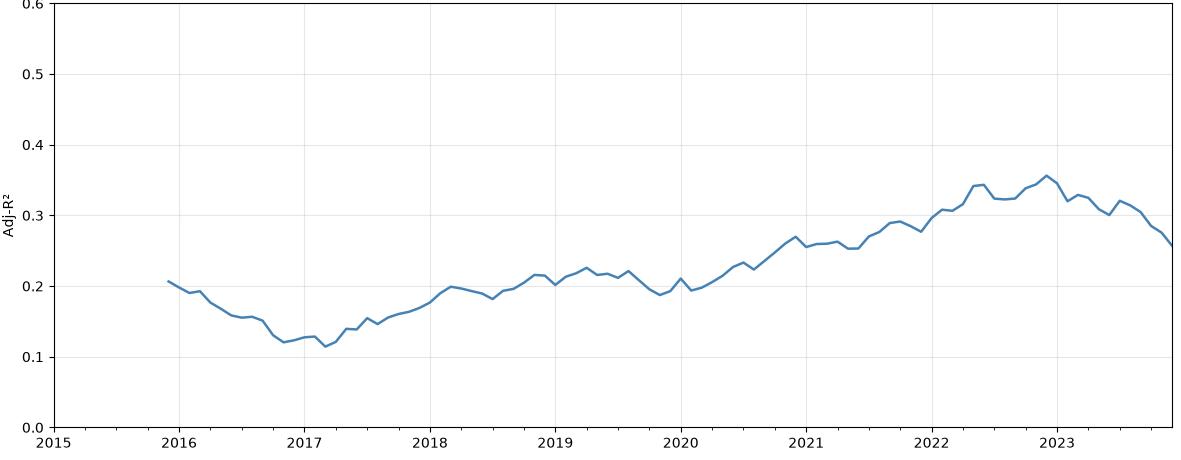
The Barra multi-factor risk model is a core tool in quantitative investing. First proposed by Barr Rosenberg, it has been widely applied to risk analysis, portfolio management, and performance attribution. The model decomposes stock returns into common risk factors and idiosyncratic components via style and industry factors, enabling investors to systematically identify the sources and structure of portfolio returns. Although MSCI has developed dedicated Barra models for the Chinese stock market, such as the CNE5, CNE6, and CNE7 series, these commercial frameworks generally operate as black-box tools with limited public disclosure of their specific construction details. Grounded in the principles of feasibility and transparency, this paper constructs a simplified Barra multi-factor risk model for the Chinese A-share market. Book equity is derived from raw financial data and strictly aligned with financial report announcement dates, and factor returns are estimated through monthly cross-sectional regressions. Finally, the model is evaluated across three dimensions: explanatory power measured by 12-month rolling adjusted R-squared, factor return volatility, and the performance of major style factors. The assessment verifies whether the model can capture core style and industry risk exposures in the Chinese A-share market and provide a reliable foundation for follow-up research.
Show more
Read Article PDF
Cite
Research Article Open Access
The Time-Varying Effects of Monetary Policy Surprises on Quantitative Factor Premiums in the Chinese A-Share Market
Since 2014, the monetary policy operations of the People's Bank of China have increasingly become an important macro variable affecting the pricing of the A-share market. How the unexpected components of policy announcements are transmitted to market factor premiums is a key issue in understanding the interaction between monetary policy and capital markets. This paper takes 62 monetary policy announcements issued by China's central bank between 2014 and 2024 as its sample and constructs two surprise measures—one from five-year Treasury bond futures (TF) prices and one from movements in the FR007 rate—to examine how policy surprises affect the premiums on four key quantitative factors in the A-share market: market, size, momentum, and short-term reversal. The evidence points to significant and heterogeneous effects. The short-term reversal factor responds negatively and significantly under the TF measure, while the market and size factors come under significant pressure under the FR007 measure. The marginal impact of easing surprises exceeds that of tightening surprises. Sensitivity of the momentum factor rises significantly when liquidity is abundant, a pattern that is both time-varying and state-dependent. In information-type events, the market factor is systematically more sensitive, indicating that policy surprises reach factor pricing chiefly through the information channel.
Show more
Read Article PDF
Cite
Research Article Open Access
Out-of-Sample Volatility Forecasting for the SPDR S&P Retail ETF: A Comparison of GARCH and GJR-GARCH Models
Article thumbnail
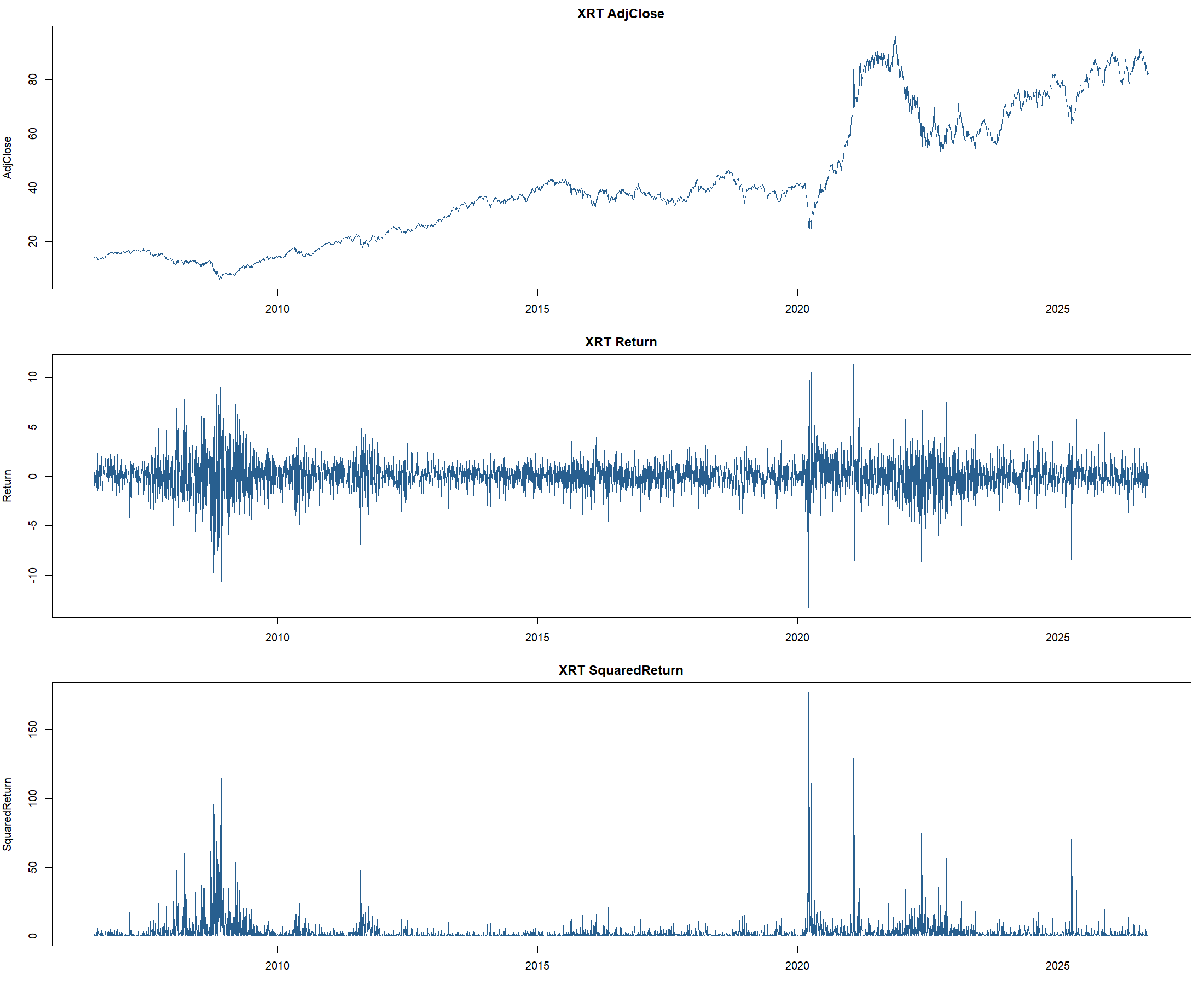
This paper compares the out-of-sample volatility forecasting performance of several GARCH-family specifications for the SPDR S&P Retail ETF (XRT). The analysis uses daily adjusted closing prices from June 2006 to September 2026 to construct percentage log returns. Observations through December 2022 form the training sample, leaving 939 trading days for out-of-sample evaluation. The comparison covers GARCH(1,1) and GJR-GARCH(1,1) models under both normal and standardized Student-t innovations. One-step-ahead variance forecasts are produced with an expanding estimation window, with parameters re-estimated every 20 trading days. A 22-day historical-volatility measure serves as the benchmark. Forecast performance is evaluated mainly by QLIKE, RMSE and MAE, with QLIKE-based Diebold–Mariano tests used as supplementary evidence. GJR-GARCH with Student-t innovations records the lowest forecast loss across QLIKE, RMSE and MAE. The positive asymmetric coefficient also indicates a stronger conditional-variance response to negative innovations than to positive innovations of the same magnitude. These gains are small, however, and none of the pairwise QLIKE differences remains significant after Holm adjustment. Replacing the ARMA(0,1) mean specification with ARMA(0,0) does not change the model ranking. Overall, the evidence points to some benefit from allowing for asymmetry and heavy tails, but the differences in predictive performance remain limited.
Show more
Read Article PDF
Cite
Research Article Open Access
Comparing Calibration Windows for Conformal Prediction of Monthly US Electricity Retail Sales
Article thumbnail
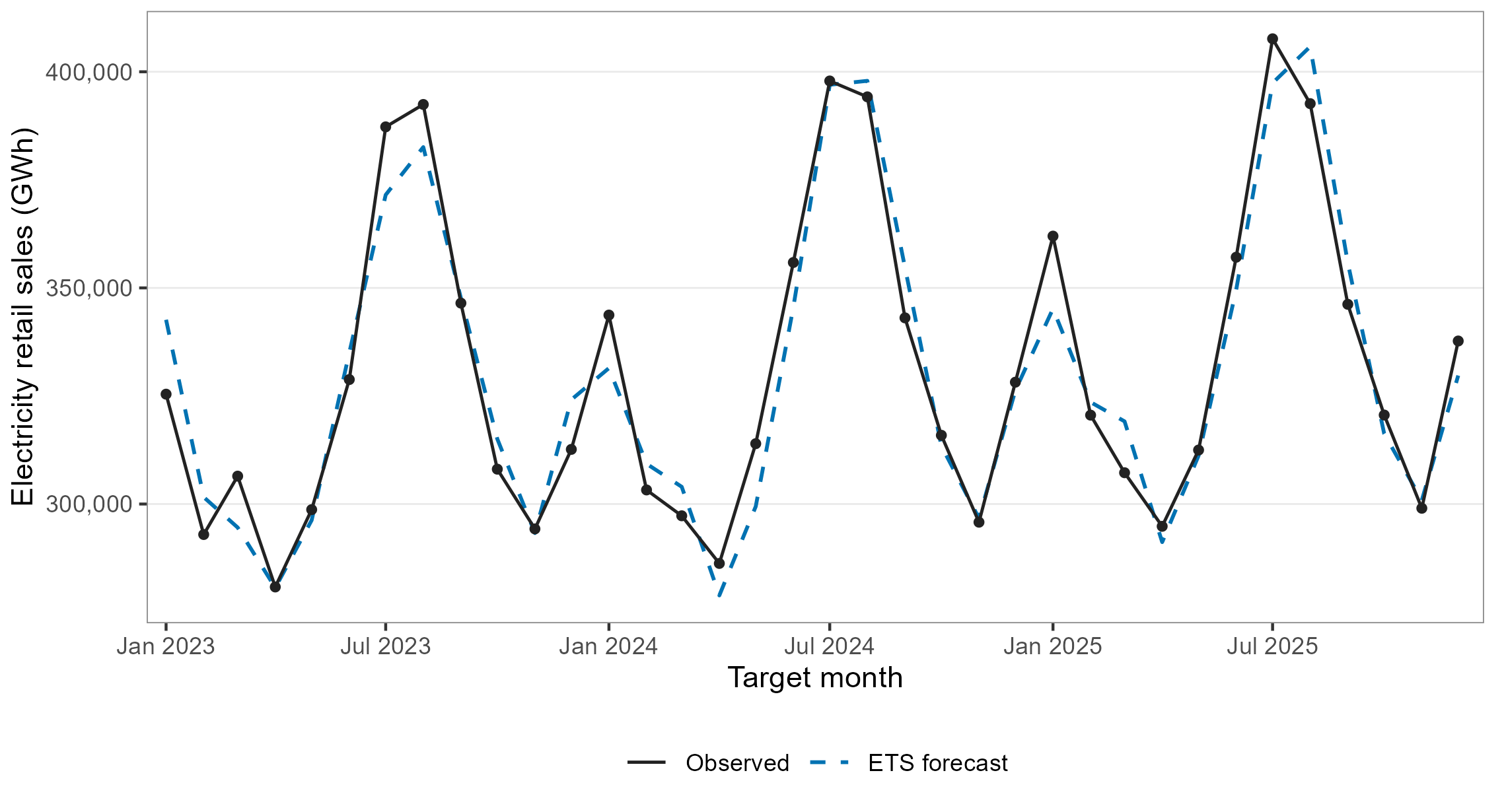
This study compared calibration windows for prediction intervals of monthly United States electricity retail sales. Data from January 2001 to December 2025 were used to evaluate one- and three-month-ahead forecasts over 2016–2025. Exponential smoothing in state space form (ETS) was the main model, and seasonal autoregressive integrated moving average (SARIMA) provided a robustness check. Native ETS intervals were compared with conformal intervals based on the latest 24 errors (CP24), the latest 60 errors (CP60) and an expanding window. Performance was measured by coverage, mean width, mean Winkler score and width stability at 80% and 95% nominal coverage. For one-month ETS forecasts at 80%, CP24 increased coverage from 71.67% to 80.00%, but mean width increased by 14.69% and the mean Winkler score increased. At 95%, CP24 reached 95.00% coverage, with a 32.76% increase in mean width. Native ETS intervals had the lowest mean Winkler score at three months at both levels. The expanding window had the most stable ETS widths. For SARIMA, CP60 increased coverage and mean width at both horizons and nominal levels, while its mean Winkler score changed little. Width stability improved in only one of the four settings. These results suggest that improved coverage needs to be considered together with the increase in width and the change in the mean Winkler score.
Show more
Read Article PDF
Cite
Research Article Open Access
Predicting the Status of Overdue Loans in the US Banking System: Evidence from the US Banking System's Call Reports
Article thumbnail
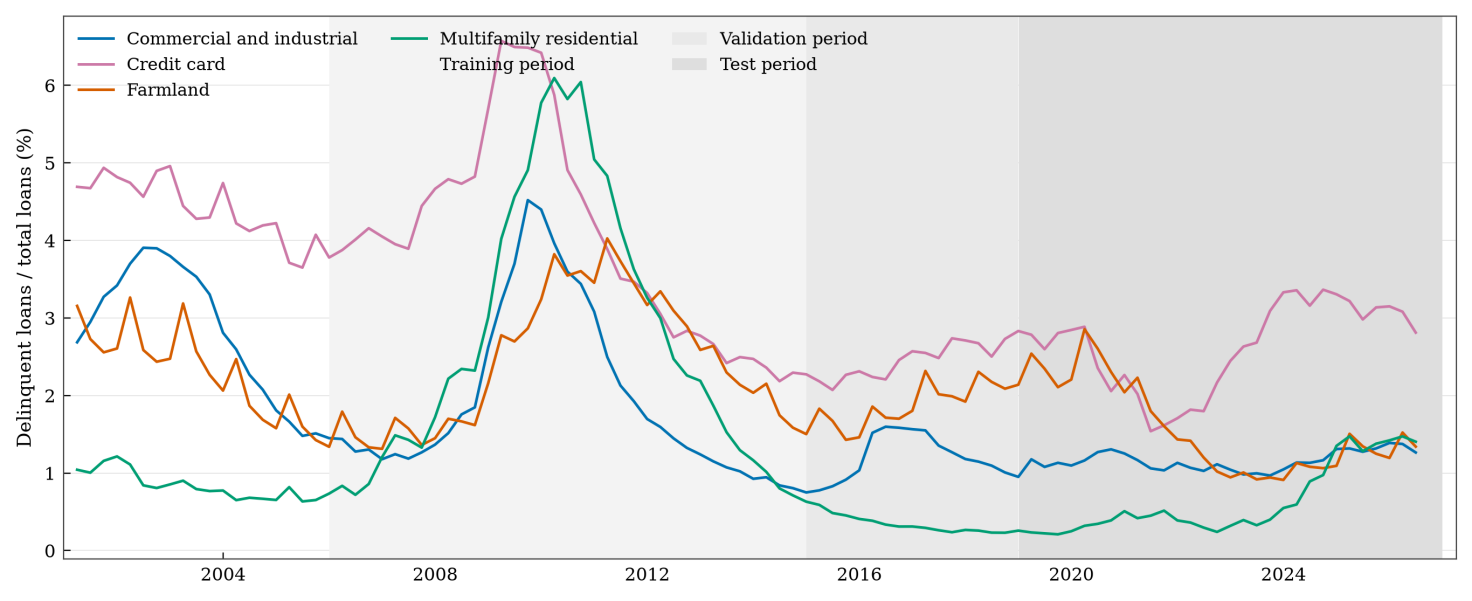
The quarterly Call Reports of FFIEC will be used in this paper to forecast the two-quarter-later delinquency status of commercial and industrial loans, agricultural loans, multi-family residential loans, and credit card loan portfolios. There are 288,396 observations of test data from all loan types at 288 banks, and the sample event rate is 2.43%. LightGBM model AP is 0.13, which has exceeded both the original delinquency rate of 0.0759 and the logistic regression model's 0.10. The 95% confidence intervals for the AP relative to the two initial benchmarks are [0.04, 0.07] and [0.03, 0.04]. Modify the delinquency threshold and change the reporting deadline, and then LightGBM's AP consistently leads the ranking of the initial rate in all four loan sectors and different bank-size groups under ten random seeds. Weighting by loan balance increased the AP of LightGBM, and the ranking of the initial delinquency rate can help to identify more loans in the top ten percentile groups of the target event earlier. The last submission time in the FFIEC database was used to find the old data.
Show more
Read Article PDF
Cite
Research Article Open Access
Market Challenges and Strategic Responses of Costco in Mainland China
Costco has an annual membership fee and a small number of products that it sells at low margins. This paper discusses the appropriateness of the model in mainland China in the context of household needs and purchasing behaviors. The qualitative case study is based on published research, reports and prices gathered from Costco's flagship store on JD.com. As of 12 September 2026, every one of the 49 Kirkland Signature products sampled offered non-member prices exactly 1.20 times member prices, representing a member discount of approximately 16.7 percent. With this premium, the 299-yuan annual fee can be recovered through 1,495 yuan worth of purchases at member prices, assuming that the delivery fee and discount are not different between the two types of consumers. The Black Diamond charge is 688 yuan a year, with a 3 percent rebate on qualifying pre-tax purchases. The cost of upgrading could be canceled out if customers spend about 12,967 yuan on eligible purchases (assuming the reward is fully redeemed). The reported rate of renewals in the mainland, around 60 percent, is lower than the 70 percent management hoped to achieve, highlighting retention as an issue. Costco should experiment with smaller sizes of fresh foods and share basket price comparisons but continue to offer bulk packs of storable food items and maintain its limited variety and Kirkland Signature.
Show more
Read Article PDF
Cite
Research Article Open Access
The Impact of Xiaomi's ESG Information Disclosure on Enterprise Performance
Under the guidance of global sustainable development and domestic policies, ESG information disclosure has become an important standard for listed companies to measure comprehensive development strength. This article takes Xiaomi Group, listed on the Hong Kong Stock Exchange, as a research case and sorts out the development process and practical characteristics of its ESG information disclosure. Relying on GRI, ISSB international standards, and regulatory guidelines of the Hong Kong Stock Exchange, Xiaomi has built a standardised disclosure system that covers all dimensions of environment, society, and governance, taking into account the development of globalisation and localisation. This article analyses the two dimensions of financial and non-financial performance, and finds that ESG information disclosure has a significant two-way impact: in the long run, it can reduce information asymmetry, alleviate financing constraints, and help enterprises grow revenue and profits, but in the short term, it will increase operation and management costs, and there is a significant lag in income; at the same time, it can optimise supply chain management. Protect rights and interests, improve brand credibility, and shape the soft competitive advantage of enterprises. The conclusion of this research has limitations in its promotion. In this regard, this article suggests that science and technology manufacturing enterprises implement substantive ESG management and avoid formal disclosure. In the future, the research sample can be expanded to deepen the research on the impact mechanism of ESG disclosure on enterprise performance.
Show more
Read Article PDF
Cite
Research Article Open Access
Estimating Acquisition Prices in Corporate Mergers and Acquisitions
This paper examines whether the valuation evidence available at signing supports Microsoft's $95-per-share offer for Activision Blizzard. It reconstructs a discounted cash flow model as of 31 December 2021 using management forecasts prepared during negotiations and disclosed subsequently, and compares the results with listed-company and precedent-transaction benchmarks. Enterprise values calculated in this study are distinguished from the financial adviser's disclosed per-share ranges. With a 7.25% weighted average cost of capital and 2.50% perpetual growth, estimated standalone enterprise value is $72.030 billion. Terminal value contributes 82.04%, and increasing the discount rate to 8.00% reduces enterprise value by approximately 14.00%. The offer falls within the disclosed discounted cash flow (DCF) and precedent-transaction ranges but exceeds both comparable-company ranges. Differences between peer medians and adviser-selected multiples further demonstrate the importance of input choices. The findings support a conditional interpretation of the offer: several valuation benchmarks accommodate it, but they do not establish a positive buyer return. Recommendations emphasize testing forecast sustainability, evaluating net synergies separately and negotiating closing risk alongside price. The study is limited by reliance on management forecasts and disclosed adviser equity ranges, without a complete independent per-share reconstruction.
Show more
Read Article PDF
Cite
Research Article Open Access
Volatility Spillovers in China's Financial Markets During the 2015 Stock Market Crash: Evidence From DCC-GARCH and the DY Approach
Article thumbnail
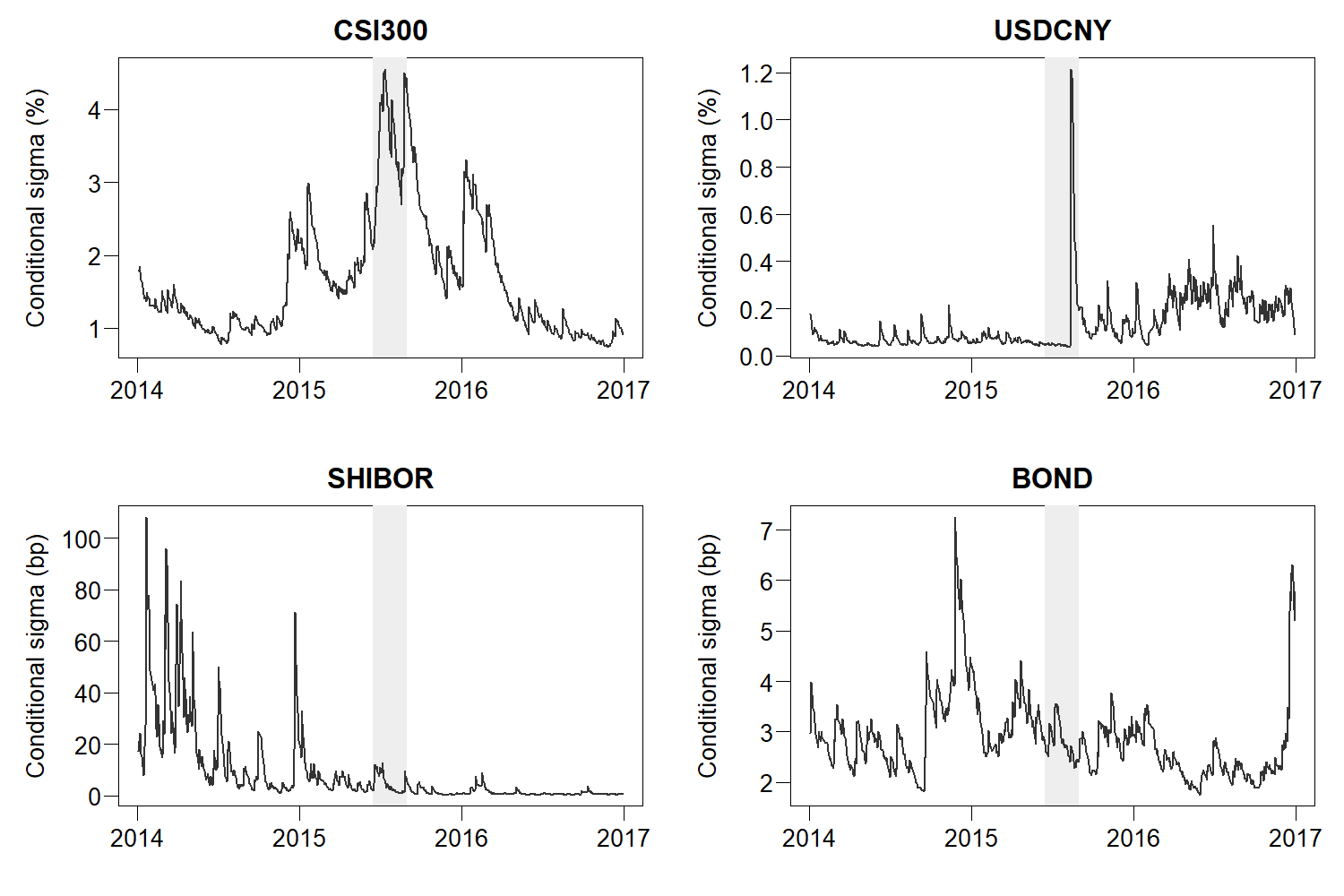
This paper examines volatility spillovers among the stock, foreign exchange, money, and bond markets of China during the 2015 stock market crash. Using daily series of the CSI 300 index, the USD/CNY central parity rate, the 7-day Shanghai Interbank Offered Rate, and the 10-year Chinese government bond yield from the Wind Financial Database over January 2014 to December 2016, conditional volatilities are extracted with univariate sGARCH(1,1) models, the dynamic correlations of returns and interest rate changes are captured by the DCC-GARCH model, and the directional predictive contributions among conditional volatilities are measured by the generalized Diebold-Yilmaz (DY) spillover index. To address stationarity concerns, the reported statistics rely only on rolling windows with a stable vector autoregression. In crisis-stable windows the stock market is a net receiver of volatility spillovers, whereas the exchange rate and the long-term interest rate are net senders, with average predictive contributions of 5.948 and 2.795 percentage points to stock volatility. The average total connectedness index during the crisis under a 200-day window is 4.260%, lower than 7.420% before the crisis, while shorter windows reverse this comparison, indicating that phase comparisons depend on the time scale. Descriptive event-window comparisons show consistent directional changes in dynamic correlations around the crash onset and increases in the within-window mean of the total connectedness index after the exchange rate reform; these comparisons are descriptive and are not formally tested. The results document directional and phase-specific differences in volatility spillovers; interpretation is bounded by stationarity and rolling-window diagnostics.
Show more
Read Article PDF
Cite