Articles in this Volume

Research Article Open Access
Analysis of Le Labo's Business Model
The main topic in this paper is to what extent personalization and exclusivity will help Le Lab construct its competitive advantage in the luxury fragrance market. Le Labo features a growth strategy that integrates a niche brand identity with growth strategy that integrates a niche brand identity with the individual customer service and geographically limited products.The study employs the 5C model to analyse the company, customers, collaborators, competitors, and the general market environment. It studies the second-hand information utilized, including public information of enterprises, industry reports, and related research on luxury consumption, customization, and perceived value. The analysis results show that emotional value can be enhanced by personalization, and the social worth of customers may utilize products to show their individual identity, the perceived exclusivity will enhance the feeling of scarcity and differentiation. But this model has shortcomings: personalization is replicable by other luxury brands, and the excessive global expansion may also dilute the sense of scarcity on which Le Labo relies and impact its market position. The paper will conclude that Le Labo's competitive advantage is not only based on expanding, but also on whether it will be able to maintain its distinctive brand image as it meets changes in customer demands.
Show more
Read Article PDF
Cite
Research Article Open Access
From Emotional Impulse to Recurring Revenue: Consumer Psychology, Unit Economics, and VC Investment Evaluation of AI Companion Hardware for Gen Z
Article thumbnail
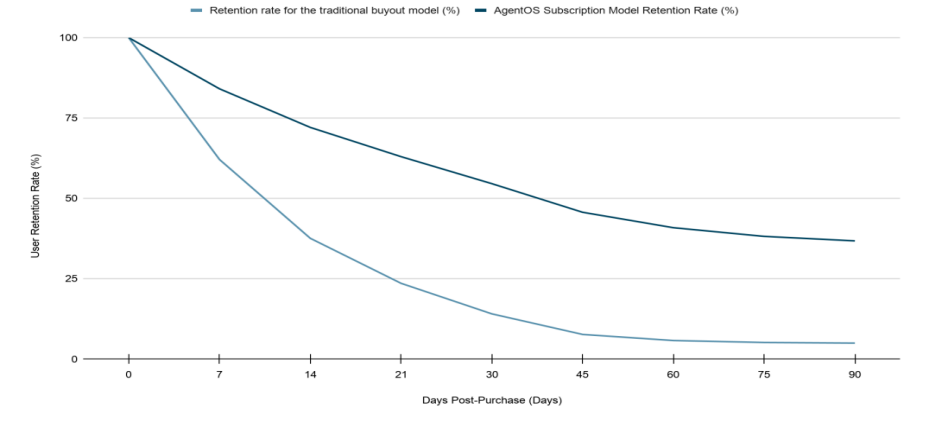
With the rapid convergence of Large Language Models (LLMs) and embodied intelligence, AI companion hardware targeted at Generation Z (e.g., desktop AI pets and smart emotional robots) has emerged as a premier track for venture capital (VC) investment. However, these conceptual devices frequently face severe Unit Economics crises characterized by high customer acquisition costs (CAC), elevated initial product returns, and steep user churn rates. This paper examines the psychological drivers behind Gen Z's willingness to pay (WTP) high emotional premiums for feature-incomplete AI hardware, and investigates how hardware enterprises can leverage proactive retention mechanisms to optimize LTV/CAC ratios and valuation multiples . This paper conducts a literature review that synthesizes theoretical frameworks from behavioral finance, consumer psychology, human-computer interaction (HCI), and venture capital valuation models. The study reveals that Gen Z's demand for loneliness compensation and social status validation provides firms with strong initial pricing power and gross margins. However, sustaining long-term commercial viability requires overcoming the "novelty decay trap" through proactive AgentOS interactions and dynamic memory graphs. Transforming hardware from a one-off transaction into an Annual Recurring Revenue (ARR) subscription model substantially improves capital efficiency, expanding valuation multiples from 1.0x–2.0x P/S to 8.0x–12.0x P/S.
Show more
Read Article PDF
Cite
Research Article Open Access
Regulatory Changes and Strategic Responses of Digital Platforms — A Study on Market and Non-Market Synergy in SHEIN's European Operations
In 2026, SHEIN faces three institutional pressures simultaneously in the European market: a formal investigation under the Digital Services Act (DSA), intensified environmental enforcement by EU member states, and the EU's removal of the small-package tariff exemption. These pressures are not isolated policy shocks but jointly erode the regulatory arbitrage space on which SHEIN's cross-border direct-shipping model has long depended. Based on an "narrative–signal–audience" integrated framework that combines strategic narrative theory with signaling theory, this paper finds that SHEIN's response constitutes a differentiated strategic narrative system. Specifically, a "resilience narrative" directed at investors and supply chain partners, and a "localization narrative" directed at national governments, have relatively high credibility because they are matched by observable, high-cost action signals. In contrast, a "responsibility narrative" directed at regulators and consumers remains largely discursive at present, and its effectiveness still requires further testing. The deeper commonality underlying the three pressures is that the regulatory arbitrage space that SHEIN previously relied upon is being progressively closed off.
Show more
Read Article PDF
Cite
Research Article Open Access
Green Credit Policy and Financing Costs in China's New Energy Vehicle Supply Chain
Against the backdrop of China's carbon peaking and carbon neutrality goals, green credit has become an important policy instrument for directing financial resources toward low-carbon industries. This study examines financing-cost patterns among 15 Chinese A-share listed firms in the new energy vehicle (NEV) supply chain from 2015 to 2022. Using 115 firm-year observations, the analysis combines descriptive statistics, period comparison, pooled OLS regression, and two-way fixed-effects estimation. The results show that average financing costs are lower in 2019-2022 than in 2015-2018, but the difference is not statistically significant. In the pooled OLS model, firm size is negatively associated with financing cost, whereas the later-period indicators, profitability, and debt-to-equity ratio, are statistically insignificant. After controlling for firm and year fixed effects, the association between firm size and financing cost weakens substantially, and none of the examined firm characteristics remains statistically significant. These findings highlight the importance of accounting for firm heterogeneity and time effects when examining financing-cost patterns in China's NEV supply chain.
Show more
Read Article PDF
Cite
Research Article Open Access
Volkswagen Group Financial Statement and Ratio Analysis (FY2021–FY2025): Evaluating Financial Performance and the Sustainability of Its NEW AUTO Strategy
The global automotive industry is undergoing a profound transition driven by electrification, software-defined vehicles, and intensifying regional competition, which places sustained pressure on the margins and capital returns of incumbent manufacturers. This study examines the financial performance of Volkswagen Group over fiscal years 2021–2025 and evaluates the sustainability of its NEW AUTO strategy. Financial statement trend analysis, ratio analysis, and DuPont decomposition are applied to data drawn from the group's annual reports. Four research questions are addressed: the evolution of profitability, the DuPont driver behind the decline in returns, the contribution of NEW AUTO to long-term competitiveness, and the resulting investment stance. The results show that sales revenue rose from €250.2 billion in 2021 to €321.9 billion in 2025, while earnings after tax fell from €15.4 billion to €6.9 billion. Return on assets declined from 2.9% to 1.1% and return on equity from 10.6% to 3.4%, driven almost entirely by a fall in net profit margin from 6.2% to 2.1%, whereas asset turnover and financial leverage remained broadly stable. The analysis concludes that transformation costs have materialized ahead of their returns, and a conditional hold position on Volkswagen shares is supported.
Show more
Read Article PDF
Cite
Research Article Open Access
Statistical Methods for Measuring Financial Market Risk: A Literature Review
Financial market risk arises from adverse changes in asset values and is commonly assessed through volatility, Value at Risk (VaR), and tail risk. This literature review compares the variance–covariance method, Generalized Autoregressive Conditional Heteroskedasticity (GARCH) models, historical simulation, and Extreme Value Theory (EVT). Quantile regression is considered as a supplementary approach to dynamic VaR estimation. The methods are evaluated according to their statistical assumptions, predictive accuracy, tail-risk identification, data requirements, computational complexity, and practical suitability. The literature indicates that the variance–covariance method is efficient but vulnerable to distributional and linearity assumptions. GARCH models respond to time-varying volatility, although their performance depends on model specification and the innovation distribution. Historical simulation is transparent and accommodates portfolio revaluation, but relies on the relevance of past observations. EVT provides a direct framework for extreme losses but is sensitive to threshold selection and limited tail data. Backtesting remains necessary because theoretical flexibility does not ensure accurate forecasts. No method consistently dominates across all market conditions. Reliable measurement requires model selection to reflect return characteristics, portfolio structure, forecast purpose, and data availability. In some applications, combined methods provide a more appropriate representation of volatility dynamics and tail severity.
Show more
Read Article PDF
Cite