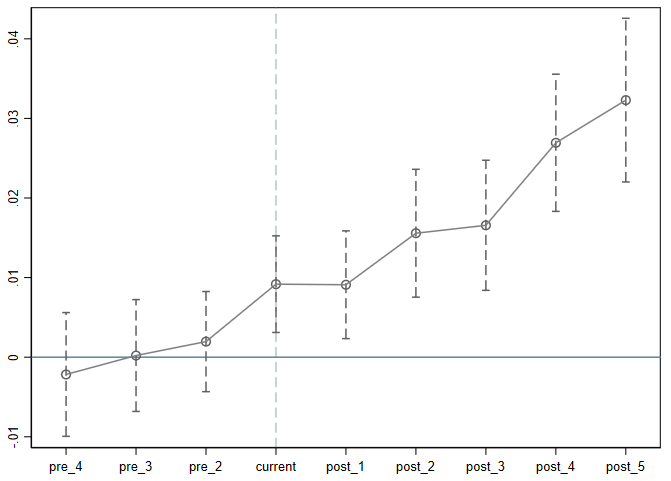
This study regards China's regional carbon trading pilot schemes as a quasi-natural experimental scenario, and adopts the double-difference (DID) estimation model to carry out an in-depth exploration of the impact results, operational paths and differential traits generated by this policy on the sustainable development performance reflected in corporate ESG dimensions. The empirical outcomes of the investigation indicate that the carbon emission trading mechanism can markedly elevate the comprehensive ESG rating levels of enterprise subjects. Its internal logic is realized through a composite mechanism of "external supervision-internal value creation-capital coordination", that is, while the policy strengthens market attention and reputation supervision, it promotes the transformation of ESG from compliance cost to development capital by improving green profitability and alleviating financing constraints. Heterogeneity analysis shows that there are structural differences in policy effects, which are particularly significant in non-capital-intensive, non-heavy-polluting enterprises and those with CEO duality separation, reflecting the moderating role of resource flexibility and governance efficiency. From the perspective of transmission mechanism and heterogeneity, this study reveals the internal process of market-oriented environmental regulation reshaping the resource and incentive structure of enterprises, and provides empirical evidence for improving carbon market design and implementing differentiated ESG strategies.