Articles in this Volume

Research Article Open Access
Xiaomi Auto Marketing Strategy: SWOT and 4P Analysis
This study examines Xiaomi Auto's marketing strategy using SWOT and 4P frameworks, with a focus on its entry into the competitive electric vehicle (EV) market in China. With a bold investment of $10 billion, Xiaomi, recognized for its technology products, entered the electric vehicle market and introduced the SU7 in 2024. The research assesses Xiaomi's advantages, such as its ecosystem integration, extensive user base, and competitive pricing strategy. Weaknesses, including limited automotive expertise and challenges with brand positioning, are also addressed. Xiaomi's growth opportunities are emphasized, especially in utilizing government incentives, technology convergence, and expanding into international markets. Examination is given to threats posed by intense competition, worries about safety, and doubts from consumers. Xiaomi's product positioning, pricing strategy, distribution methods, and promotional tactics are detailed in the 4P analysis, which emphasizes value-based pricing and ecosystem integration. In conclusion, the paper offers Xiaomi strategic recommendations that emphasize quality, after-sales service, and transparent communication as means to foster long-term consumer trust and loyalty in the automotive sector.
Show more
Read Article PDF
Cite
Research Article Open Access
When Nudges Backfire: The Effect of Social Norms, Framing Effects, and Default Options on the Pension Saving Decisions in China
This study investigates the impact of behavioral nudges—social norms, loss aversion framing, default options, and positive narrative—on voluntary pension saving decisions in China. Using a randomized controlled trial administered via an online survey with 220 participants, we examine how these interventions influence both the willingness to contribute and the proportion of income allocated to pension savings. Contrary to prevailing international evidence, our results indicate that all nudges significantly reduce willingness to contribute relative to a control group, with the most substantial backfire effects observed for positive narrative and default option nudges. Furthermore, we identify important heterogeneity effects across income groups and emphasize the moderating roles of education, gender, and financial motivation. These findings underscore the critical importance of cultural, institutional, and individual factors in the design and implementation of behavioral interventions. Policy measures tailored to specific demographic segments and focused on financial education and trust-building are recommended.
Show more
Read Article PDF
Cite
Research Article Open Access
Impact of Content Marketing on Purchase Intention and Brand Loyalty among Generation Z
Digital content now shapes how Gen Z hears about brands, makes a choice, and decides to return. This paper reviews recent studies on young consumers. It asks a simple question: when does content move intention, and when does it build loyalty? Across the literature, three patterns repeat: clear information that reduces doubt, emotion and story that make a message stick, and social cues that travel through peers. Context matters. In high-involvement or tech markets, how-to guides and specs drive decisions. In tourism and other experience goods, vivid and persuasive framing works better. Loyalty needs more than a one-off post. It forms when good experiences become trust. Engagement keeps that trust alive, especially in places where people can interact, co-create, and return. Creator voice and visible honesty help. Over-scripted promotions hurt. Platform rules shape delivery. Long video supports story and depth. Short feeds reward an early moment of value and light interaction. This review turns the patterns into practice: pair one fact with one human scene; keep a steady cadence; host small community spaces; measure saves, replies, replays, and returns, not only views. In short, effective content for Gen Z blends clarity, feeling, and participation. It can spark intention today and earn loyalty over time.
Show more
Read Article PDF
Cite
Research Article Open Access
Skill-Task Substitution Matrix: How Artificial Intelligence Reshapes Labor Market Structure and Exacerbates Income Polarization among Groups
As artificial intelligence (AI)—a core driver of the Fourth Industrial Revolution—continues to permeate the economy and society, its impact on labor market structure and income distribution patterns has grown increasingly salient. Grounded in the "skill-task substitution matrix" framework, this paper examines how AI promotes employment structural polarization and deepens income disparities among groups by restructuring labor division and job demands. Building on a systematic review of relevant literature, the study employs empirical analysis using China’s provincial panel data (2020–2024), combined with the Gini coefficient and AI industry indicators. Results reveal that while AI adoption boosts production efficiency and high-skilled employment, it also accelerates the displacement of routine task-based jobs, widening income gaps between regions and demographic groups. Finally, the paper proposes policy recommendations for coordinated governance across technology, institutions, and culture to mitigate AI’s adverse effects on social equity.
Show more
Read Article PDF
Cite
Research Article Open Access
The Impact of CEO’s Overseas Backgrounds on Firm Market Value: A Tobin’s Q Perspective
Article thumbnail
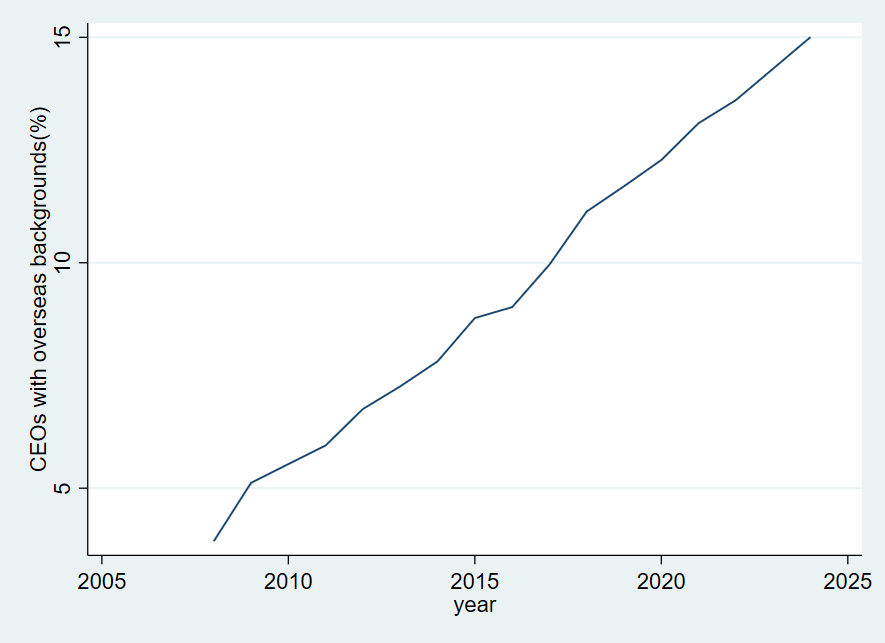
Grounded in upper echelons theory, this study examines the effect of CEOs’ overseas backgrounds on firm value, measured by Tobin’s Q. Using 33,995 CEO-year observations from Chinese A-share listed firms between 2008 and 2024, we find that overseas experience significantly enhances firm value. This effect is robust across the pre- and post-COVID-19 periods, and is particularly pronounced in smaller firms and among middle-aged CEOs. Further analyses indicate that firm size and CEO age moderate the relationship, while internationalization strategy, innovation capability, and investment efficiency serve as key mechanisms. The findings contribute to research on managerial human capital and provide practical implications for executive selection and globalization strategies.
Show more
Read Article PDF
Cite
Research Article Open Access
Digital Marketing-driven Growth of Small and Medium Enterprises
The high proliferation degree of technology has caused that consumers are more dependent on electronic devices for what the opens more rooms for the development of digital marketing. The development of digital marketing has a significant impact on the business development, and it is a vital part of the strategy of millions of businesses. Research focused on how small and medium sized businesses resist the crisis during the pandemic by using digital marketing and how they become stronger by using digital marketing. Research reveals that SMES used digital marketing strategies comprehensively to open new spaces for products marketing. New channels of innovation attracted consumers’ attention by using innovative digital channels to achieve better products display and market penetration. So as to improve their brand influence. Only when we combine the traditional marketing and digital marketing can we make a really significant breakthrough. Digital marketing extends the channels of marketing communication and traditional marketing. In addition, innovative thinking must be embedded into all promotional activities, and the true consumer needs must be mastered deeply.
Show more
Read Article PDF
Cite
Research Article Open Access
Digital Infrastructure and the Reshaping of Labor Mobility: A Regional Economic Analysis of the "East Data West Computing" Initiative
The "East Data, West Computing" (EDWC) initiative represents a landmark in China's digital infrastructure strategy, aiming to redistribute computing capacity and foster balanced regional development. While prior research has emphasized industrial and energy outcomes, its impact on labor mobility remains underexplored. This paper examines how EDWC shapes interregional labor flows, treating key receiving regions as the treatment group and others as controls. Building on infrastructure and migration literature, it proposes three mechanisms—lowering information and matching costs, fostering industrial clusters, and narrowing regional disparities—through which digital infrastructure may influence population movements. The study expands existing debates from traditional transportation infrastructure to digital networks, offering empirical evidence and policy insights into how large-scale digital infrastructure projects reshape labor allocation and regional economic dynamics.
Show more
Read Article PDF
Cite
Research Article Open Access
Research on the Driving Mechanism of Consumers' Purchase Intention for Sugar-Free Beverages Under the Backgroundof Health Anxiety
Against the backdrop of global health anxiety and the shift of healthy consumption to a social norm, the sugar-free beverage market has grown rapidly—China’s market scale expanded from 5.66 billion yuan in 2018 to 31.28 billion yuan in 2023 with an annual growth rate over 40%. Using Yuanqi Forest and Coca-Cola Zero as typical examples, this study investigates the factors that influence customers' purchase intentions for sugar-free beverages under health anxiety. It also looks into how consumer attitudes and behavioral intention are influenced by perceived health benefits, brand communication, and emotional assurance. The study also looks at how cultural health views, marketing narratives, and product positioning variations affect the psychological process from worry to purchase decision. Adopting systematic literature review (screening 32 core documents following PRISMA 2020) and SWOT analysis, it identifies health anxiety as a core driver, with product value and brand awareness as mediating factors. Results show both brands excel in health-aligned products and channel innovation but face homogenization, safety controversies, and price wars. Recommendations cover product innovation (e.g., allulose R&D), targeted marketing, channel diversification, and industry standardization, providing insights for sustainable market development.
Show more
Read Article PDF
Cite
Research Article Open Access
The Impact of Corporate Digital Transformation on Green Technology Innovation
This research is based on two key needs—national climate strategy and corporate sustainable development—and does an empirical study on how digital transformation affects corporate green technology innovation. It uses a complete set of data on Chinese listed firms, with coverage from 2000 to 2023, and also examines the mediating role of ESG ratings along with how the effect shifts based on a firm’s property rights structure and scale. The findings of this study show three main results: first, digital transformation has a clear positive effect on green technology innovation, and this effect is proven reliable; second, analysis of its mechanism finds that improved ESG ratings act as a partial mediator in this relationship; third, the effect is heterogeneous—it is stronger in large-scale firms than in SMEs, and brings far greater benefits to non-state-owned enterprises than to state-owned ones. This study also provides valuable empirical evidence and policy recommendations, which help promote better synergy between corporate digitalization and green innovation and in turn support the achievement of China’s “Dual Carbon” goals.
Show more
Read Article PDF
Cite
Research Article Open Access
An Analysis of Starbucks' Marketing Strategies Based on the 4P Models
Article thumbnail
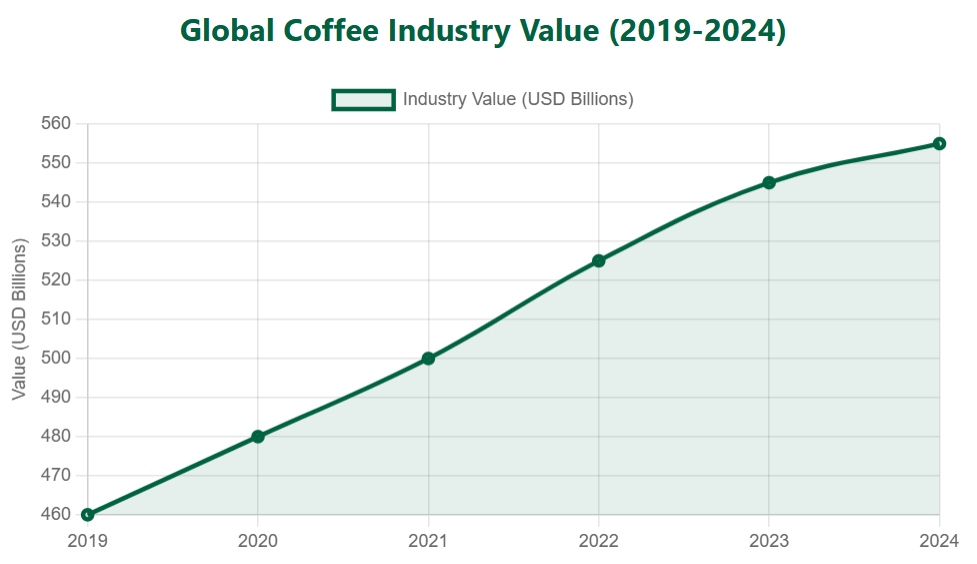
This paper examines Starbucks’ marketing performance through the classic marketing 4P and SWOT frameworks to comprehensively evaluate its strategic effectiveness and long-term marketing. On the basis of in-depth exploration of industry trends, market dynamics, and consumer preferences in the global coffee sector, it further identifies key competitive advantages, prominent operational challenges, and potential global expansion opportunities within Starbucks’ strategic landscape. The results clearly reveal that what makes Starbucks succeed is its strong capability of focusing on the quality of products, service experience, and global layout, but challenges such as insufficient localization adaptation in diverse regional markets, overly rigid pricing strategy that lacks flexibility, as well as intense market rivalry may impede the company's long-term development process; Meanwhile, the researchers put forward targeted and actionable optimization suggestions according to the actual situation and conduct in-depth reflections on how Starbucks can achieve sustainable growth in the highly competitive and dynamically changing global coffee market.
Show more
Read Article PDF
Cite