Articles in this Volume

Research Article Open Access
The Evolution of Financing Strategies: A Pre- and Post-IPO Analysis of Pinduoduo
Global internet companies commonly face the paradox of high growth coupled with persistent losses, with financing strategy as the key solution. This paper uses Pinduoduo as a single case study to analyze the changes and impact of its financing strategies before and after IPO. Findings reveal: Pre-IPO, via three private equity rounds and Tencent’s support, Pinduoduo established a “capital and resources” model, validating its “social group-buying and low-price” strategy and achieving a $12.5 billion pre-IPO valuation. During IPO, Pinduoduo avoid underperformance at discount, and used an AB share structure to balance financing and control, with minority shareholder disputes. Post-IPO, Pinduoduo shifted to diversified financing to support Temu and supply chain upgrades. Financially, it shifted from losses in 2018 to profitability in 2023, capturing a large proportion of the sinking market. Pinduoduo’s divergence from Alibaba (debt financing) and JD.com (asset-heavy equity financing) stems from its business model and cash flow dynamics. This study offers insights for high-growth enterprises, however, due to single-case limitation, the conclusions' universality needs further validation.
Show more
Read Article PDF
Cite
Research Article Open Access
The Current Development Status Analysis of the Chinese Animation Industry
Article thumbnail
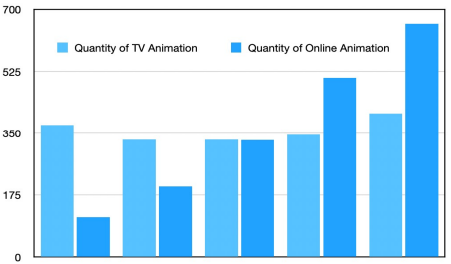
The paper presents an examination of China's animation industry development from 2008-2025, with particular focus on the transformative period between Nezha I (2019) and Nezha II (2025), while identifying persistent challenges in content diversity and market operations. To start with, this paper introduces the ecosystem of the Chinese animation industry and market for recent years by listing government policies to enhance the industry development, presenting domestic broadcasting trends of different categories of animation, including TV animated series, online animated series, animated films, and online comics, and comparing data from different dimensions within the main online platforms. In addition, this study conducts a quantitative analysis of the distribution patterns between 2D and 3D animation productions in China. Subsequently, it identifies five critical challenges currently constraining the industry: content homogenization, creative bottlenecks, difficulties in foreign broadcasting, immature companies’ operations, and underdeveloped market operations. Ultimately, the concluding section synthesizes these findings and proposes strategic recommendations for fostering sustainable industry advancement.
Show more
Read Article PDF
Cite
Research Article Open Access
U.S. vs. China: Digital-Trade Policies and E-commerce Infrastructures' Effects on Medium-Sized Enterprises' Export Performance
Digital trade governance and e-commerce infrastructure jointly shape how medium-sized enterprises (MEs) access foreign customers, manage compliance, and scale internationally. This paper compares the United States and China, showing how differences in cross-border data governance, payment systems, and logistics ecosystems produce distinct internationalization pathways for MEs. Through comparative policy and text analysis, synthesis of open empirical studies, and two firm-level vignettes, the paper identifies mechanisms by which data regulations, platform interoperability, payment settlement systems, and logistics capabilities affect export intensity, time to market, and compliance costs. The United States’ open cloud orientation supports scalable digital service exports but creates administrative complexity through fragmented privacy and national-security rules. China’s integrated platform and payment stack accelerates platform-led scaling for product exporters while its data-sovereignty measures raise compliance costs for cross-jurisdictional data processing. The paper concludes with policy and managerial recommendations to reduce export frictions for medium-sized firms and outlines empirical strategies for future causal work.
Show more
Read Article PDF
Cite
Research Article Open Access
Seeking the Optimal Equilibrium: Amazon's Strategy for Balancing Debt and Equity
Against the backdrop of the retail industry’s digital transformation and intensified global competition, capital structure has become pivotal in underpinning corporate strategic implementation and risk resilience. This study focuses on Amazon, adopting a single case study as the approach. By synthesizing insights from 11 authoritative literatures, it dissects the dynamic adjustments of Amazon’s capital structure across its life -cycle stages: growth, expansion, and maturity. In the growth stage, Amazon leverages debt financing to drive business expansion; during the expansion phase, it deploys asset-backed financing to fuel logistics and technological advancements; and in the maturity stage, it taps into supply chain finance to boost capital efficiency. This analysis validates the applicability of the business-capital synergy theory within the retail sector. Notably, Amazon’s capital structure optimization offers a paradigmatic reference for retail enterprises. It enriches the theoretical discourse on capital structure optimization in the retail industry and provides actionable guidelines for firms to balance capital efficiency and risk management, enabling adaptation to digital transformation imperatives and fostering the sustainable development of the retail sector.
Show more
Read Article PDF
Cite
Research Article Open Access
Strategic Brand Management of Technology Brands Entering the Automotive Sector in China—A Case Study of Xiaomi Auto
Nowadays, China’s new energy vehicle (NEV) industry has experienced rapid growth, driven by government policies and technological innovation. This study focuses on Xiaomi Auto as a representative case to explore how a technology company can transfer into NEV market through strategic brand management. Using semi-structured interviews with diverse consumer groups and a literature review, the research applies an integrated analytical framework combining the SWOT analysis. Research found that Xiaomi has strength in generating public attention and interest, through its technological and youthful brand image, mature ecosystem and marketing capability. However, the purchase actually may be influenced by concerns over safety, reliability, after-sales service, etc. The SWOT analysis shows that there is a trust deficit, which highlights Xiaomi Auto’s weaknesses in previous automotive experience despite significant opportunities from smart mobility trends. According to the survey results, it is recommended that Xiaomi continue to leverage the advantages of its fan community and reinforce its image of intelligence, high performance, and a mature ecosystem. Also, it is vital to strengthen service capability and improve safety in order to convert consumer interest into actual purchases. Based on brand management principles, these strategies can also provide actionable insights for other technology brands entering the traditional manufacturing industry.
Show more
Read Article PDF
Cite
Research Article Open Access
Study on the Dilemma of Smart Payment for the Elderly and Its Solution Paths — From the Perspective of the Digital Divide and Knowledge-Gap Theory
Article thumbnail
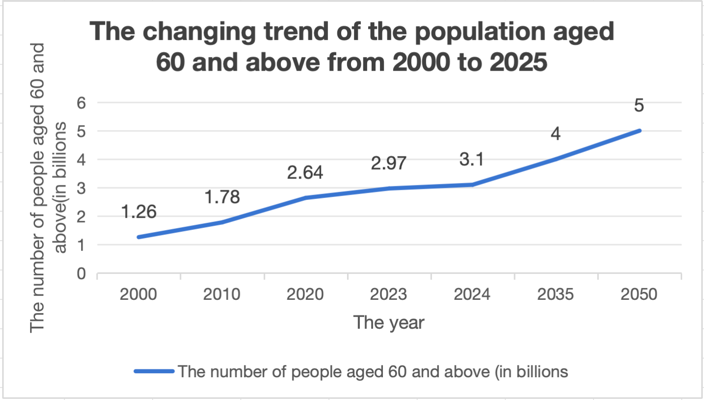
China is in an accelerated phase of deep aging. By the end of 2024, the population aged 60 and above had reached 310 million. While smart payment has become the mainstream, the elderly group faces significant difficulties in using it due to the digital divide. Based on the Digital Divide Theory and Knowledge-Gap Theory, this paper explores the dilemmas of the elderly in using smart payment and the corresponding solution paths, using data from 135 questionnaires covering more than 30 provincial-level administrative regions across the country. The study finds that the "three-level barriers" under the Digital Divide Theory and the "information differentiation" under the Knowledge-Gap Theory have jointly led to the elderly facing such dilemmas as insufficient operational skills, prominent security anxiety, poor physiological adaptation, narrow usage scenarios, and single social support. Accordingly, the following suggestions are put forward: The government should coordinate policies and digital literacy education; financial institutions should upgrade elderly-friendly products and branch services; payment platforms need to optimize functions and user guidance; and society should organize voluntary assistance and exchange activities. Multiple subjects should work together to help the elderly integrate into the digital payment environment.
Show more
Read Article PDF
Cite
Research Article Open Access
The Evolving Role of ESG in Investment Decisions: From Financing Cost Implications
Environmental protection issues, amid growing global concerns over climate change and ecological balance, have sparked in-depth reflections on sustainable development. Today, sustainable development has evolved into a comprehensive social-economic strategy guiding long-term growth, directly spurring the emergence of responsible investment. As social values shift toward equity and environmental stewardship, and economic governance systems advance, responsible investment has expanded its scope-gradually forming three core pillars: Environmental, Social Responsibility, and Governance (ESG). Since then, ESG investment has gained rapid global traction, with institutional investors increasingly integrating it into their decision-making. Enterprises disclose ESG-related information in accordance with industry standards, while rating agencies collect data from corporate reports, third-party audits, and public records to assign ESG scores. These ratings now serve as a key benchmark for investors to assess enterprises, long-term operational risks and intrinsic investment value. In China, backed by national policies, including green finance development guidelines and mandatory ESG disclosure requirements for key industries, ESG system construction thrives. Corporate ESG performance has drawn wide attention from investors, regulators, and the public, and its role in easing financing constraints for enterprises has become increasingly prominent. Compared with mature international markets where ESG investment has decades of development, China's ESG concept emerged relatively later. This paper, combining an analysis of China's ESG development status and relevant theoretical, foundations, empirically studies the link between firms' ESG performance and their financing costs (covering both equity and debt financing).
Show more
Read Article PDF
Cite
Research Article Open Access
Impact of Financial Literacy on Household Saving: Evidence from Hungary and Portugal
Article thumbnail
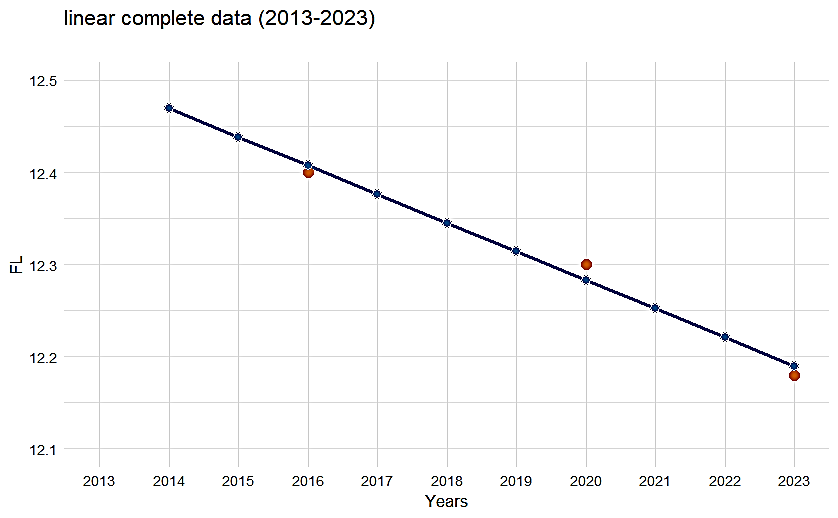
With economic globalization, the management of personal assets has become increasingly important, and rational saving behavior is also a crucial skill. Financial literacy is globally endorsed for enhancing economic resilience, the problem is that its impact on saving behavior remains context-dependent. This study investigates the relationship between financial literacy and household saving rate. This paper also explores whether higher financial literacy translates into higher personal saving rates across different national contexts. Using discontinuous time-series data for financial literacy scores, by constructing simple linear regression models for a comparative analysis between two distinct economies. The findings of this paper reveal a significant positive correlation in Portugal, whereas the relationship is statistically insignificant and highly unstable in Hungary, indicating that macroeconomic and institutional settings profoundly mediate this link. This research provides empirical support for tailoring financial education programs and informs policymakers on designing context-specific strategies to enhance public financial preparedness and protect household assets.
Show more
Read Article PDF
Cite
Research Article Open Access
The Double-Edged Sword: Shock, Resilience, and Strategic Transformation of Chinese Enterprises Amid Sino-American Trade Friction
This study explores how the U.S.-China trade friction has affected Chinese companies since 2018. The study uses a mixed-methods approach. First, it measures the economic impact by examining changes in trade volumes, export structure, and global trade patterns. The analysis shows a sharp drop in Chinese exports to the United States. At the same time, Chinese firms began shifting their focus to other international markets. Second, the study uses case studies from the technology and manufacturing sectors to understand how firms responded. These case studies show that the trade war caused clear economic harm. However, they also show that it pushed many companies to make strategic changes. U.S. tariffs and sanctions sped up efforts to diversify supply chains and develop domestic technology. Many firms also started building stronger, more globalized business models. The paper concludes that the trade conflict has had both negative and positive effects. It caused disruption, but it also helped create a new wave of Chinese companies that are more adaptable and better prepared for global economic challenges.
Show more
Read Article PDF
Cite
Research Article Open Access
Japan’s “Lost Decades” and China’s Economic Slowdown: Structural Challenges and Policy Lessons
Article thumbnail
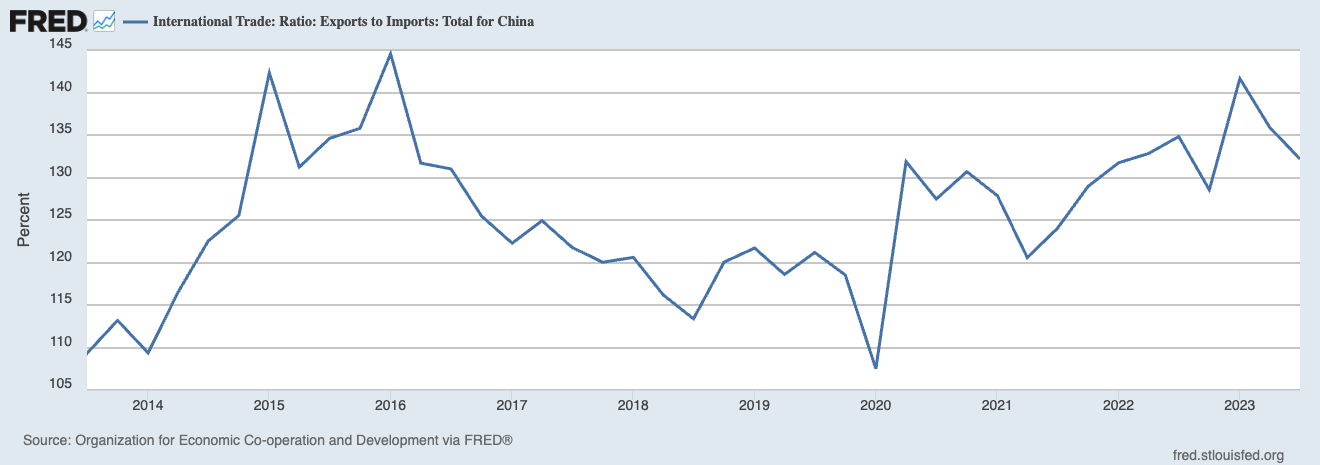
The Chinese economy has shown rapid growth throughout multiple decades, yet its growth rate has dramatically decreased since COVID-19 emerged. The combination of weak domestic demand and rising debt and a struggling property sector has led scholars to draw parallels between China's current economic situation and Japan's 'Lost Decades' period during the 1990s and 2000s when an asset bubble collapse caused extended stagnation. This paper investigates the similarities between Japan's past economic challenges and China's present-day economic difficulties. The paper demonstrates that China's economic slowdown stems from basic structural problems which include its dependence on real estate and high corporate and local government debt levels and declining household spending. This research employs a comparative case study methodology to evaluate secondary data from reliable sources regarding demand shortages and macroeconomic policy actions in Japan and China. The paper draws attention to Japan's stagnation period policy errors which included early fiscal tightening and delayed banking reforms to guide Beijing during its current economic difficulties. The research shows that historical comparisons remain relevant, but China can prevent a lost decade by fixing its core structural problems. The research reveals critical information about potential risks and policy alternatives that will determine China's sustainable recovery trajectory.
Show more
Read Article PDF
Cite