Articles in this Volume

Research Article Open Access
Digital Inclusive Finance: Boosting Substantive Green Innovation or Indulging Strategic Green Innovation? Empirical Evidence from Chinese A-Share Listed Companies
Article thumbnail
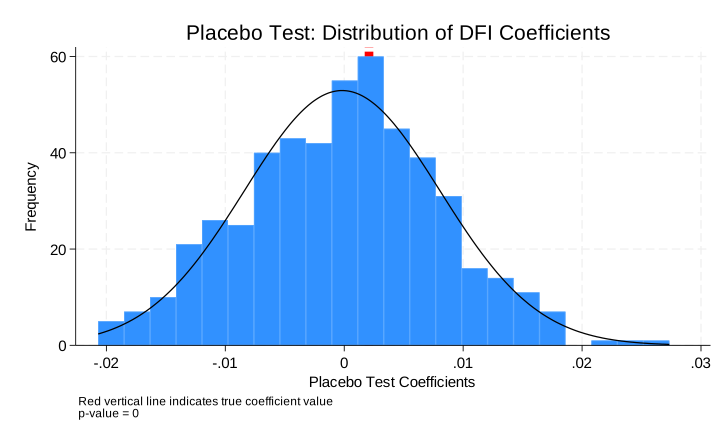
Amid the more and more intense global digital transformation and the more and more pressing demand of green development, digital inclusive finance—an innovative combination of financial inclusion and digital technologies—has become a key transformative power that rearranges the global financial framework and pushes forward social and economic progress. At the same time, it has also become a key foundation for China to rearrange its financial system and develop inclusive economic growth, whose position in the national development strategy is being more and more strengthened. This research divides green innovation into two completely different types—substantive green innovation and strategic green innovation—and limits its analysis range to the different influences that digital inclusive finance brings to corporate green innovation actions. Using a panel dataset of Chinese A-share listed companies from 2011 to 2023, the study makes an empirical analysis of the different effects and inner mechanisms through which digital inclusive finance affects these two different parts of green innovation, while at the same time exploring the detailed meanings coming from industrial heterogeneity. Empirical proof shows that the promoting power of digital inclusive finance on corporate green innovation mainly shows in substantive green innovation, but it cannot produce a noticeable encouraging effect on strategic green innovation activities. The key transfer mechanisms through which digital inclusive finance pushes substantive green innovation include two separate but connected parts: the reduction of financing difficulties and the increase of market competition intensity. Furthermore, this promoting effect is more obvious in non-high-polluting industries and high-tech sectors. Based on the research conclusions, this study puts forward suggestions including the improvement of digital inclusive finance support policies, the different empowerment of green innovation in different industries.
Show more
Read Article PDF
Cite
Research Article Open Access
The Impact of Symbolic and Substantive Environmental Expenditures on Accounting Stability: A Comparative Case Study of Environmental Leaders and Environmental Followers
The core research objective of this study is to analyze the different environmental expenditure patterns chosen by enterprises based on their strategic positioning - specifically including symbolic expenditures and substantive expenditures - and their differential effects on the formation of enterprise accounting stability. This study is based on the theories of legitimacy, agency, and stakeholders, and selects two typical enterprises for comparative case studies: one is the environmental-leading company, Baoshan Iron and Steel Co., Ltd., and the other is the environmental-following company, Shandong Iron and Steel Co., Ltd. Through the research, it is concluded that the environmental-leading enterprises that adhere to a long-term development strategy will further enhance their accounting stability by conducting substantive environmental expenditures and capitalizing them; while the environmental-following enterprises, whose core goals are short-term compliance and improving the external image of the company, mostly have symbolic expenditures and handle them as expenses, which will weaken the accounting stability of the enterprises. This study not only constructs a systematic method for identifying and regulating the symbolic environmental responsibility behaviors of enterprises, but also proposes targeted practical suggestions for enterprise supervision, corporate governance, and the improvement of accounting information disclosure standards.
Show more
Read Article PDF
Cite
Research Article Open Access
Designing Non-Price Allocation: A Market Design Analysis of NHS Healthcare Distribution
This essay examines how scarce healthcare resources are allocated within the National Health Service and argues that the current framework fails to achieve adequate efficiency or fairness. Although NHS funding aims to secure equal access for equal need, the mechanisms that govern individual access,such as waiting-time rules, priority categories, and cost-effectiveness assessments, often operate at cross-purposes. Drawing on insights from mechanism design, this essay demonstrates how these rules resemble well-documented allocation challenges in non-price environments, where rigid priorities and overly broad classifications reliably generate inefficiencies. Ethical concerns reinforce these structural issues. QALY (Quality-Adjusted Life Year)-based assessments risk disadvantaging already vulnerable groups, while priority structures commonly fail to reflect morally relevant differences in severity. Combining these economic and ethical perspectives, the essay evaluates how existing NHS mechanisms distort access and why they struggle to align with the moral urgency of healthcare need. It then proposes reforms grounded in mechanism design, including fine-grained priority scoring, welfare-sensitive tie-breaking, flexible allocation rules, and adjustments to regional capacity. The analysis shows that a fair healthcare system cannot rely on fragmented procedures. Instead, it must be guided by coherent design principles that integrate both welfare consideration and moral judgment.
Show more
Read Article PDF
Cite
Research Article Open Access
Research on Topic Evolution and Investors' Attitudes of Gold Price Investment Comments on Weibo — Based on Multilingual Text Analysis with BERTopic
Article thumbnail
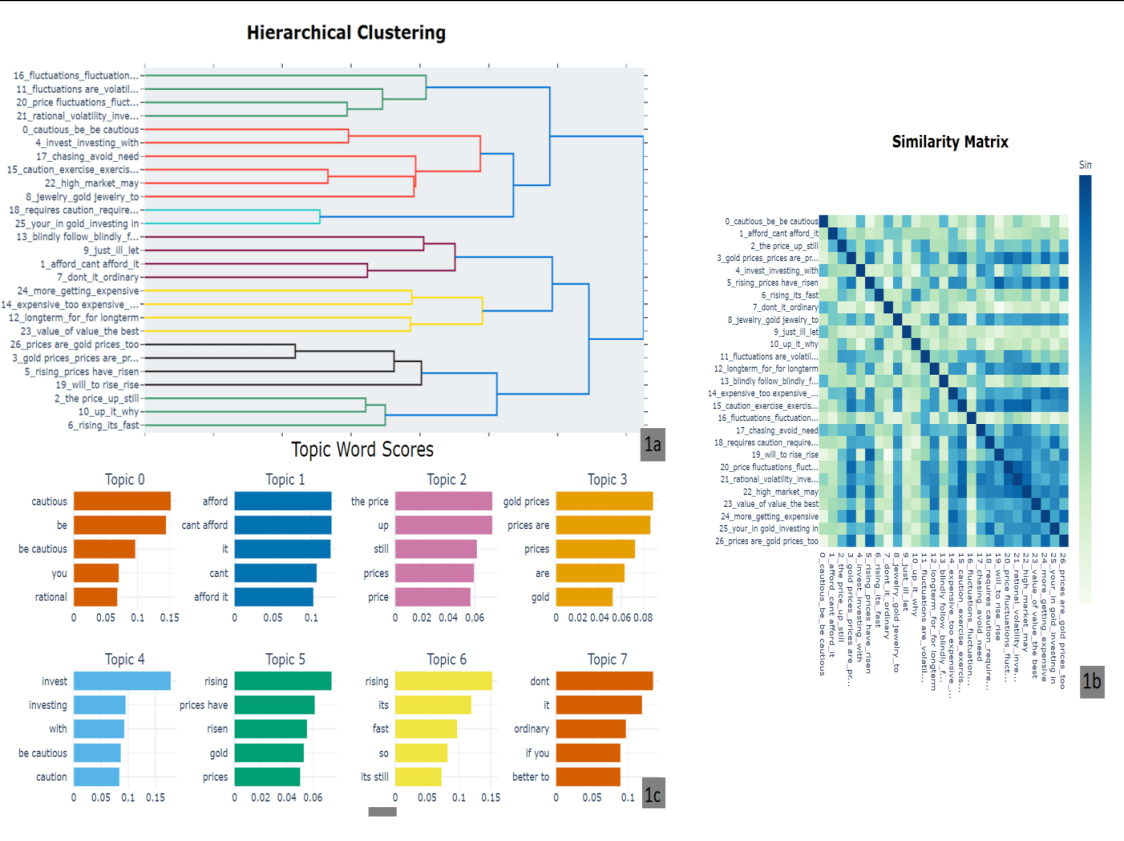
Gold prices keep changing all the time. More and more people care about gold prices. Weibo is a main social platform in China. Many people share their ideas about gold price investment here. Investing in precious metals has become a hot topic on this open platform. This paper uses Python to find hot topics about gold prices. We also use the BERTopic multilingual topic model. We combine it with the belief framework of the Theory of Planned Behavior (TPB) to analyze topics. We sort out the features of the topics investors talk about, their inner thoughts and how their feelings change. Finally, we find that the change of gold prices makes many people care about it. Most investors are careful about gold investment. It shows that people think carefully when they invest in precious metals.
Show more
Read Article PDF
Cite
Research Article Open Access
The Impact Mechanism of Social Media Algorithmic Recommendations on Consumers' Impulse Buying
As a result of developments in artificial intelligence technologies, there has been an increase in recommendation systems on social media platforms, with a focus on providing personalized product and service recommendations for end-user consumption. As a result, there has been a paradigm shift in the manner by which buying decisions have been made among consumers. A literature and theoretical analysis will be employed within this research with the objective of exploring and interpreting the manner in which algorithm-driven product recommendations on social media platforms affect impulse buying among consumers. A detailed theoretical framework will be put forth with a focus on cognitive processes and behavior, affective pathways, and purchases. The theoretical result highlights that algorithm-driven recommendations have an overall influence on impulse buying and affect it through cognitive pathways, affective pathways, and purchases. Based on these theoretical interpretations, a three-way perspective approach will be adopted. It provides a theoretical lens for understanding algorithm-driven consumer behavior, offers practical implications for platform optimization and policy formulation.
Show more
Read Article PDF
Cite
Research Article Open Access
Forecasting Post-Crisis Volatility: An ARIMA Model Application to European Natural Gas Prices
Article thumbnail
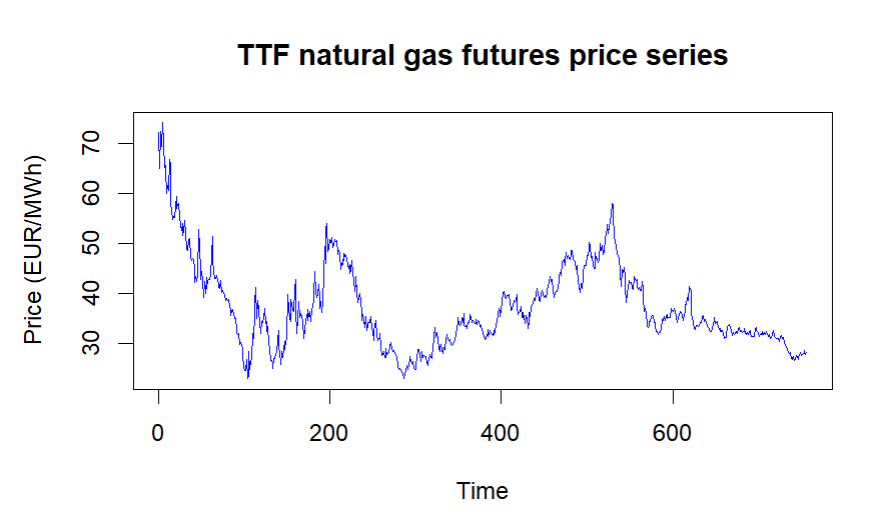
Geopolitical upheavals and the ongoing energy transition have significantly heightened volatility in the European natural gas market, elevating the critical need for reliable price forecasts. Here, the autoregressive integrated moving-average (ARIMA) model is employed to forecast gas prices in Europe. To improve the reliability and generalization ability of the model, the dataset comprising daily closing prices of Dutch TTF Natural Gas Futures from January 1, 2023, to December 31, 2025, is incorporated into the model. Stationarity was ensured by applying the Augmented Dickey-Fuller (ADF) test and differencing where necessary. Model order (p, q) was selected by minimizing the Akaike Information Criterion (AIC). The ADF test shows that the original series is non-stationary; further, stabilized data sequences are obtained for the ARIMA model by differentiating the series. A reliable ARIMA(3,1,2) model was selected based on AIC minimization and validated through rigorous residual diagnostics. The study provides a validated statistical framework for short-term gas price forecasting. The model and its findings offer valuable quantitative insights for policymakers, traders, and risk managers navigating the post-crisis European gas market, supporting decisions related to security of supply, cost management, and investment.
Show more
Read Article PDF
Cite
Research Article Open Access
Analysis of the Impact of Corporate Social Responsibility Report Tone on Corporate Profitability
This paper uses Chinese A-share listed companies from 2008 to 2024 as its research sample. Based on impression management theory, agency theory, and situational theory, it employs a multiple regression model to empirically examine the impact of Corporate Social Responsibility (CSR) reporting tone on corporate profitability, as well as the moderating effects of external supervision and the post-pandemic context. The study constructs a CSR reporting tone index using the Loughran and McDonald financial sentiment dictionary (LM dictionary), measures corporate profitability with ROE, and after controlling for variables such as debt-to-equity ratio and growth, finds that: a positive CSR reporting tone is significantly negatively correlated with corporate profitability; this negative impact is more significant when external supervision is weak; and the negative effect of CSR tone on profitability is further enhanced after the COVID-19 pandemic. The results provide new empirical evidence for understanding the signaling value and "greenwashing" effect of CSR reporting tone, and also offer a reference for companies to optimize their information disclosure strategies and for stakeholders to rationally interpret CSR reports.
Show more
Read Article PDF
Cite
Research Article Open Access
RBV-Driven Strategic Innovation and Transformation of Established Large Firms: A Perspective
This paper looks at the strategic innovation of large companies when they follow the RBV and talks about the "forced feeding" managers problem. In the age of digitalizing and sustainability, companies need to use their resources advantageously and not get stuck in the trap of mistaking and inertia. The study reviews RBV's change, RBV integrate with dynamic capability and digital transformation theory. Resources reconfiguration under 3 major tensions: product vs. platform, firm vs. ecosystem, people vs. tool. The study shows that the 'force-feeding' problem is caused by misaligned resource strategies, governance is rigid, and the organization is sluggish. The article puts forward an integrated management framework with five aspects: strategic orientation, modular architecture, dynamic governance, ambidextrous learning, and resilience establishment. The paper gives both theoretical wisdom and real-world coaching on how to do resource-based, sustainable creation in tricky situations.
Show more
Read Article PDF
Cite
Research Article Open Access
Research on the Internal Transmission Mechanism and Quantitative Assessment of ESG Value Creation
This research aims to deeply explore the internal transmission mechanism and quantitative evaluation methods for ESG value creation, to answer the key question: "How does ESG investment specifically translate into corporate value?" This paper uses literature reviews, case analyses, and quantitative model development to examine the internal mechanisms by which ESG initiatives improve efficiency, reduce risks, and enhance brand value. It develops methodologies and toolkits for quantitatively evaluating the microeconomic benefits of ESG initiatives and, at the same time, builds a set of strong, persuasive internal communication cases. The study finds that a clear internal transmission mechanism and quantitative evaluation results can effectively help business managers strengthen their ESG investment decisions and provide strong support for promoting the sustainable development of enterprises. In addition, this research enriches the field of management research on ESG value creation and lays a foundation for subsequent related research.
Show more
Read Article PDF
Cite
Research Article Open Access
A Study on the Impact of the Rise of Sam's Club on Walmart's Financial Performance: Evidence from the Chinese Market
Article thumbnail
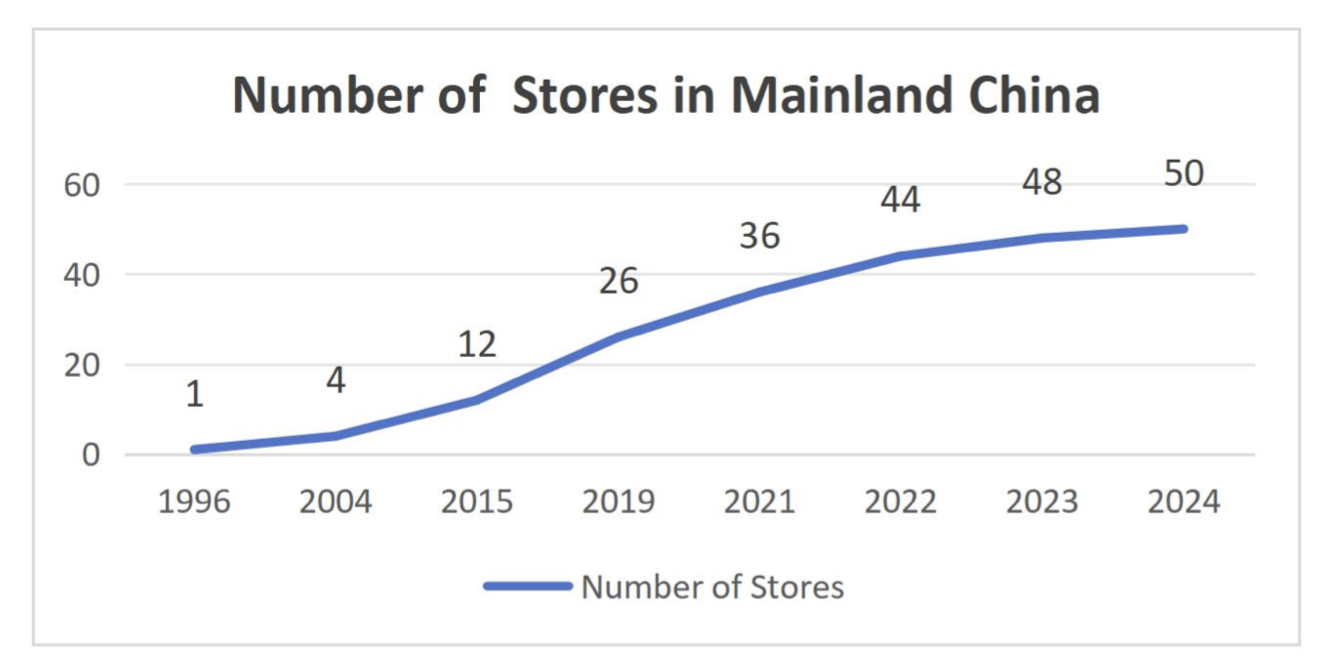
In recent years, driven by digital transformation and consumption upgrading, China's retail industry has exhibited a pronounced trend of differentiation. Traditional hypermarkets have faced slowing growth and a contraction in offline stores, while membership-based warehouse clubs, represented by Sam's Club, have continued to expand rapidly. Taking the rise of Sam's Club in the Chinese market as a point of departure, this paper examines its impact on the financial performance and business structure of its parent company, Walmart. This study employs case analysis, comparative analysis, and the DuPont analysis method to decompose Walmart's financial data from 2019 to 2024 and integrates industry reports and market research data to assess the substitution effects of emerging retail formats on traditional supermarkets. The paper focuses on three core questions: the key drivers of growth under the Sam's Club model, its influence on Walmart Group's revenue and profitability, and whether membership-based new retail is replacing the traditional hypermarket format in China. The findings indicate that Sam's Club has achieved rapid expansion through a membership fee system, bulk-package sales, and private-label brand development. These strategies have enhanced revenue quality and asset turnover in the Chinese market, contributing positively to Walmart's return on equity. Meanwhile, new retail formats exhibit a clear substitution effect on traditional hypermarkets in first- and second-tier cities.
Show more
Read Article PDF
Cite