
Articles in this Volume

Research Article Open Access
Chinese Land Policy: Reasons for High Housing Prices and Possible Solutions
Article thumbnail
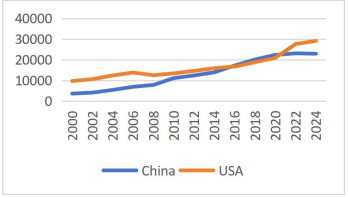
Since 2000, housing prices in China have risen steeply, maintaining high levels similar to those in the US despite China's lower GDP per capita, increasing local residents’ pressure and challenging the stability of the Chinese financial market. The core issue lies in China's land policy. In China, urban land is owned by the government, and developers must pay land transfer fees to gain usage rights. These fees constitute 30%-50% of housing prices and are a major source of local government revenue, covering about 50% of their income. High land transfer fees are closely linked to local governments' financial needs and the pursuit of land-based fiscal revenue. The high housing prices caused by this have led to serious impacts such as local governments' excessive reliance on land transfer fees, increased debt risks, and low birth rates. This paper explores the causes of China's high housing prices and the issues arising from high land transfer fees and discusses the feasibility of various solutions, like fiscal substitution, to alleviate the current situation.
Show more
Read Article PDF
Cite
Research Article Open Access
The Impact of Live Houses on Local Economies: Evidence from Beijing
As urban economies in the post-pandemic era confront slowed growth and shifting consumption patterns, live houses, as small-scale music venues, have emerged as new nodes of experiential and community-oriented cultural consumption. While their cultural and social contributions have been widely studied, their role as an economic driver remains underexplored. This study investigates the impact of China’s live house industry on local economic development, examining the mechanisms and determinants underlying these effects. Using a case study approach, we combine policy analysis, field observations, and secondary data from venue operations, audience behaviors, and platform activities. An Economic Impact Model and PESTEL analysis (Political, Economic, Social, Technological, Environmental, and Legal factors) are employed to systematically capture the multi-dimensional influences on local economic growth. Our findings suggest that live houses not only stimulate cultural participation but also generate small-scale economic circulation across creative sectors. Different live houses exhibit complementary effects that are moderated by their micro-environments. The study highlights their potential as low-threshold incubators for emerging musicians and as vital infrastructure for resilient cultural economies, offering practical implications for urban governance and creative industry development.
Show more
Read Article PDF
Cite
Research Article Open Access
The Political Economy of Carbon Pricing in Canada: Economic Impacts, Governance Challenges, and Policy Evolution
Canada’s carbon pricing system is one of the most ambitious national efforts to balance environmental sustainability with economic growth and fairness. Established under the Greenhouse Gas Pollution Pricing Act (GGPPA) in 2018, the federal carbon tax sets a standard price for greenhouse gas (GHG) emissions across provinces. It aims to account for environmental costs and encourage clean innovation. However, this policy has developed in a politically and economically challenging environment marked by regional differences, reliance on energy, and debates over the constitution. This paper looks at the political economy of Canada’s carbon tax from two main perspectives: (1) its economic effects on national competitiveness, industry structure, and family welfare; and (2) its political aspects, including federal–provincial relations, public opinion, and policy legitimacy. Using data from Statistics Canada, the International Monetary Fund (IMF), and the Organization for Economic Co-operation and Development (OECD), this study examines how carbon pricing affects GDP growth, inflation, and distribution outcomes from 2018 to 2025. The findings show that Canada’s carbon tax has led to significant emissions reductions and ongoing green investment, with minimal negative effects on GDP. Still, the policy remains politically delicate, reflecting deeper issues in Canada’s federal system and energy landscape. By exploring the connection between economics and politics in carbon pricing, this paper argues that Canada’s experience provides valuable insights for managing fairness, environmental responsibilities, and political stability in climate policy.
Show more
Read Article PDF
Cite
Research Article Open Access
Case Analysis of JP Morgan Chase Merging First Republic Bank and JP Morgan Chase Merging Washington Mutual Bank
In recent years, bank mergers have been intensive, which is one of the important forms of restructuring the financial industry. Introduced the merger strategy of the financial industry with the merger case of JPMorgan Chase, pointing out that the merger strategy should be consistent with the market positioning and strategic direction of the enterprise. Among them, JPMorgan Chase is one of the largest financial service enterprises in the United States and the main practitioner of banking consolidation. In 2008, JPMorgan Chase merged with Washington Mutual Bank. To analyze the causes and effects of banking Mergers and Acquisitions (M & A) in different contexts, and to evaluate the impact of M & A activities on enterprise performance in different situations, as well as the final impact of banking M & A activities on enterprise performance, to deeply interpret the general law of the impact of the main factors affecting banking M & A on financial markets. The author focuses on the two extreme M & A cases that JPMorgan Chase successively acquired First Republic Bank and Washington Mutual Bank, and summarizes the origin, procedure and impact of the two M&A & a cases by using literature research methods, and makes a comparison.
Show more
Read Article PDF
Cite
Research Article Open Access
Research on the AHP-TOPSIS Logistics Channel Model under the Cross-border E-commerce Comprehensive Pilot Zone Policy
Policies for China’s Cross-Border E-Commerce Comprehensive Pilot Zones (CBEPs) have been continuously advanced, forming a development network for cross-border e-commerce (CBEC) that spans border, coastal, and inland regions. However, traditional empirical decision-making for logistics channels struggles to balance multiple factors, such as transport capacity, cost-effectiveness, and timeliness. Therefore,this study develops a composite decision-making model based on the Analytic Hierarchy Process-Technique for Order of Preference by Similarity to Ideal Solution (AHP-TOPSIS) to solve the multi-criteria optimization problem of cross-border e-commerce logistics channels. The model’s objective layer focuses on selecting the optimal logistics channel; the criterion layer incorporates five indicators such as the economic efficiency of transportation capacity, and the alternative layer includes overseas warehouses, dedicated lines, international express and postal parcels. This model is validated via AHP-based methods, including weight calculation and consistency testing. Results show that the‌ overseas warehouse model demonstrates distinct comprehensive advantages. Based on these findings, a novel decision-making scheme is proposed.
Show more
Read Article PDF
Cite
Research Article Open Access
Geopolitical Conflict and Financial Market Volatility in the Middle East: Evidence from the Syrian Civil War
This study takes the Syrian civil war as a case, selecting key conflict events such as the Battle of Aleppo (2012), the chemical weapons crisis (2013), and the Russian military intervention (2015). By using event study methods and volatility comparison analysis, it systematically examines the immediate impacts of these events on the financial markets of major Middle Eastern countries and their regional spillover effects. Based on UCDP conflict data and daily stock indices, exchange rates, and credit default swap (CDS) spreads of Syria, Turkey, and Israel, this study constructs a "source-receiving end" shock transmission model. Under the control of global macroeconomic factors, it deeply analyzes the transmission mechanism of cross-border diffusion of geopolitical risks. The results indicate that key conflict events significantly increased Syrian financial market volatility, with stock indices declining, exchange rates depreciating, and CDS spreads widening, thereby confirming H1. The shocks were rapidly transmitted to neighboring countries, with the Turkish market responding most sensitively, while the Israeli market showed a slightly delayed reaction but still exhibited significant abnormal volatility. Spillover intensity decreased with geographic distance, supporting H2. Exchange rates and CDS were more sensitive to short-term uncertainty shocks, reflecting the critical role of capital flows and risk premiums. The study emphasizes the importance of establishing regional financial monitoring collaboration mechanisms, improving exchange rate and capital flow early-warning systems, and implementing contingency-based regulation for key events, providing empirical guidance for understanding the transmission of geopolitical risks in the Middle East, investor risk management, and policy-making.
Show more
Read Article PDF
Cite
Research Article Open Access
The Impact of Narcissistic Leadership on Employees Across Cultures: A Comparative Analysis of Japan and the United States
Narcissism, a personality construct that has received substantial academic attention, is typically characterized by arrogance, egocentrism, diminished empathy, and a fragile self-concept. Paradoxically, however, this personality profile is frequently observed among highly effective or prominent leaders. This study aims to investigate whether cultural contexts influence the factors contributing to the success of leaders with narcissistic personality traits. Specifically, the research employs individualistic culture (the United States) and collectivistic culture (Japan) as independent variables, with employee performance serving as the dependent variable. Through a comparison, the study finds that narcissistic leadership tends to have a more positive impact on employees in individualistic cultures. In contrast, in collectivist cultures, narcissistic leadership often results in negative outcomes. The study concludes that cultural differences play a significant role in determining the effectiveness of narcissistic leadership, and multinational companies should carefully consider these differences when designing leadership strategies in diverse cultural environments. This research offers valuable insights into the role of narcissistic leadership in cross-cultural management and provides recommendations for organisations seeking to optimise leadership styles across diverse cultural settings.
Show more
Read Article PDF
Cite
Research Article Open Access
The Benefit Management Mechanism of Elderly-Friendly Products Based on Multiple Case Comparisons
Article thumbnail
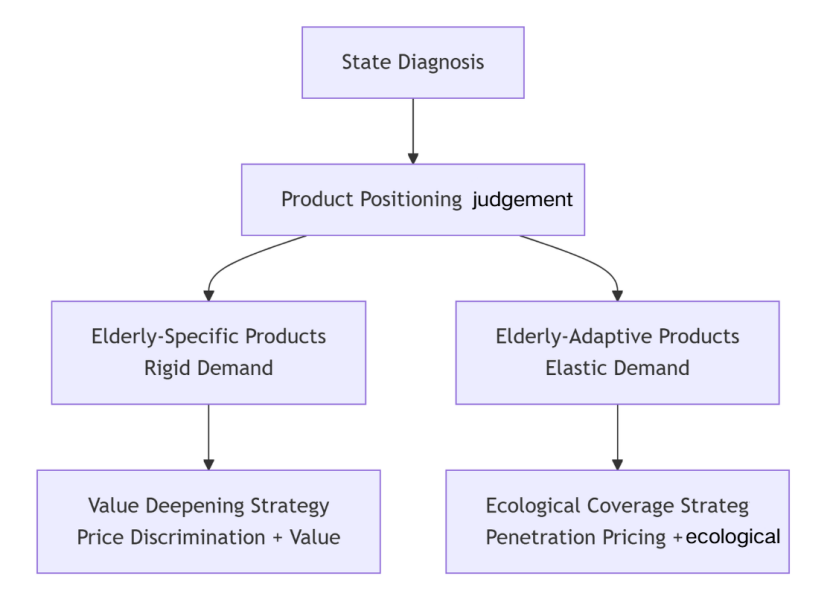
China has entered a moderately aging society, indicating that the silver economy has broad market prospects, but there is a serious mismatch between supply and demand in elderly-friendly products on the market. Existing research mainly focuses on the macro-strategic level or the micro-level of consumer characteristics, lacking studies on revenue management mechanisms that connect the two. To fill this gap, this study adopts a consumer segmentation perspective and employs a multiple-case comparative research method, selecting the Yuwell blood pressure monitor and Xiaomi Mi Band as representatives of "specialized elderly products" and "elderly-adaptive products," respectively The study finds that the "value deepening" model is suitable for specialized elderly products with inelastic demand, maximizing profits through price discrimination and product value-added services, whereas the "ecosystem coverage" model fits elderly-adaptive products with elastic demand, expanding market share through penetration pricing and ecosystem linkage. Furthermore, an integrated revenue management model is constructed, providing a theoretical framework for enterprises to select market strategies and offering theoretical implications for promoting the high-quality development of the silver economy.
Show more
Read Article PDF
Cite
Research Article Open Access
Multi-dimensional Construction of Urban Climate Resilience—A Systematic Review of Infrastructure, Governance Model and Financial Mechanism
Against the background of the risk of global climate change and the need for urban sustainable development, building systematic, dynamic and adaptive urban climate resilience is an important topic of common concern of the international community. Focusing on three core dimensions (infrastructure, governance models and financial mechanisms), this paper combs through the existing research on urban climate resilience and puts forward a three-dimensional analytical framework. The study finds that cities currently have three challenges in responding to climate risks: infrastructure systems themselves have clear mutual vulnerability; governance with clear cross-level and cross-sectoral coordination mechanism; model not yet to stable and sustainable funding mechanism. This paper further argue that in future resilience building, there is a need to build resilience beyond single domain approaches, but systematically recognize the transportity of engineering measures, institutional design, and financial instruments; to enhance dynamic assessment and digital empowerment; conceive and create differentiated, multi-stakeholder implementation strategies suited for regional characteristics. By incorporating perspectives from multiple disciplines, this study provides a theoretical framework and practical policy insights for urban climate resilience, while also revealing the existing gaps in empirical research, evaluation standards and practices in non-western contexts, indicating directions for further in-depth study.
Show more
Read Article PDF
Cite
Research Article Open Access
Addressing Path Identification for ESG-driven Corporate Sustainability Through Mediated Effects Modelling
In the context of ecological civilisation construction, environmental, social and governance(ESG) performance as a crucial measure of a company's capacity for sustainability, its value creation path still needs to be explored in depth. Considering data from Chinese A-share companies that were listed between 2015 and 2022, this study constructs a theoretical model with green innovation efficiency (GIE) as the core mediating variable, and empirically uses the fixed effect model and mediated effect analysis to examine how ESG performance influence the business sustainable development ability The study finds that ESG performance significantly enhances corporate sustainability, and GIE plays a partly mediating role in it, and the conclusion is still valid after the robustness test. This study reveals the intrinsic path of ESG driving sustainable development through optimising green innovation resource allocation. The study provides solid theoretical support and a forward-looking action plan for companies to deepen their ESG practices and transform their innovation efficiency.
Show more
Read Article PDF
Cite